
Paint Protection Film (PPF) is designed to take the abuse that would otherwise reach your vehicle’s paint. For drivers in Mississauga, Oakville and throughout Southern Ontario, that means protection from stone chips, road debris, scratches, winter grime and everyday wear.
But PPF isn’t maintenance-free.
Even a premium film can become stained, scratched or damaged if it’s repeatedly washed incorrectly or exposed to products that aren’t compatible with its topcoat.
At It’s aWrap™, we’ve been installing automotive films in Mississauga since 2010 and have earned more than 700 five-star reviews. Here are 10 of the most common PPF care mistakes we recommend avoiding.
1. Washing the Vehicle Too Soon After PPF Installation
After installation, the film and adhesive need time to settle and any remaining installation moisture needs to dissipate.
Avoid washing the vehicle immediately after picking it up. Your installer should provide a recommended waiting period based on the film used, installation conditions and time of year.
At It’s aWrap™, we’ll provide specific aftercare instructions before you leave the shop. Following those instructions is especially important during colder Ontario weather, when the installation may take longer to fully settle.
2. Using Automatic Brush Car Washes
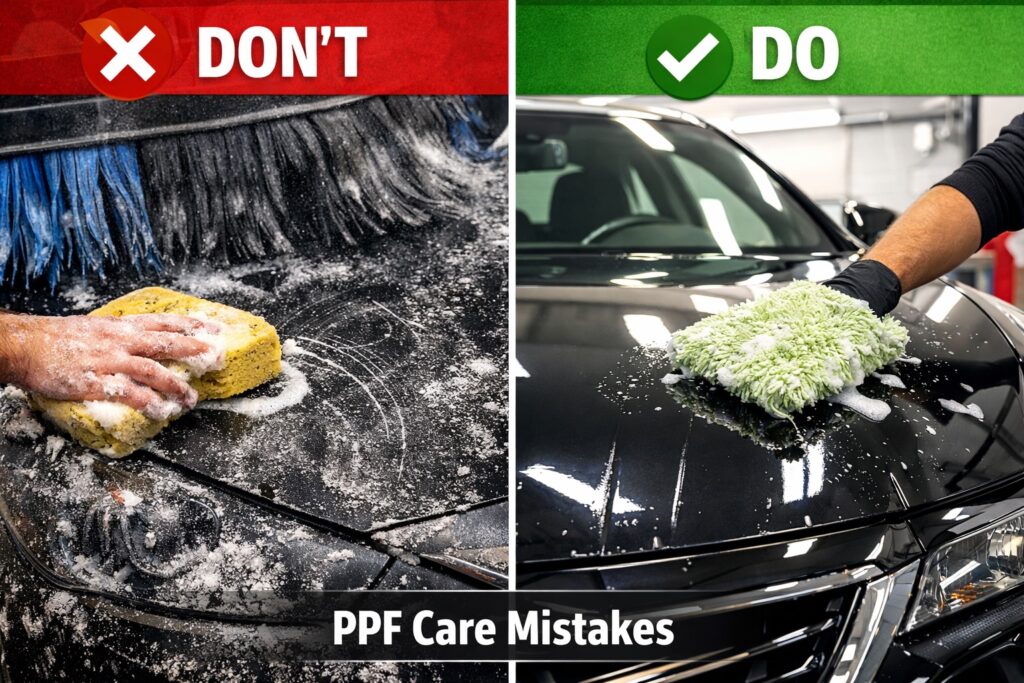
One of the easiest ways to unnecessarily wear the surface of your PPF is repeatedly running it through an automatic brush wash.
Rotating brushes can hold dirt and abrasive particles from previous vehicles. That contact can create fine scratches and unnecessary wear on both protected and unprotected surfaces.
A careful hand wash is the preferred option. Touchless washes can also be useful during an Ontario winter when hand washing isn’t practical, although harsh chemicals and high-pressure water still make it important to choose the wash carefully.
For a more complete routine, see our PPF care and maintenance guide.
3. Letting Winter Grime Sit on the Film for Too Long
PPF is designed to protect your paint, but that doesn’t mean you should leave months of salt, road film and winter grime sitting on its surface.
Vehicles driven regularly on the QEW, 401, 403 and other GTA highways can accumulate significant contamination during winter.
Regular rinsing and washing helps prevent contaminants from building up on the film and makes the vehicle considerably easier to maintain.
Pay particular attention to:
- Front bumper
- Rocker panels
- Lower doors
- Wheel arches
- Rear bumper and hatch area
4. Using Harsh or Abrasive Cleaning Products
Not every automotive cleaning product is appropriate for every PPF.
Abrasive compounds and incompatible chemicals can affect the film’s surface or topcoat. For routine washing, use a quality automotive shampoo and products that are compatible with your particular PPF.
If you’re dealing with stubborn contamination such as tar, sap or adhesive residue, don’t automatically reach for the strongest solvent in your garage. Check the film manufacturer’s care instructions or ask your installer which products are safe to use.
5. Leaving Bird Droppings, Bugs and Tree Sap on the Film
PPF gives you an additional sacrificial layer between contaminants and your factory paint, but contaminants shouldn’t be left on the surface indefinitely.
Bird droppings, bug residue, tree sap and other organic contamination can become increasingly difficult to remove and may stain the film if neglected.
Remove them as soon as reasonably possible using a PPF-compatible cleaner and a soft microfibre towel. Avoid aggressively scrubbing dried contamination, which can create unnecessary surface marks.
6. Using the Wrong Wax, Polish or Compound
Before applying wax, polish, sealant or another detailing product, make sure it’s approved or suitable for use on PPF.
This is particularly important with matte or satin films, where products designed to increase gloss can alter the appearance of the finish.
If easier cleaning and additional hydrophobic performance are priorities, a ceramic coating compatible with PPF can be applied over the film.
Just remember that ceramic coating and PPF serve different purposes: coating improves surface properties and ease of maintenance, while PPF provides the physical barrier against stone chips and impacts.
7. Pressure Washing Directly Into PPF Edges
A pressure washer can be used around a PPF-protected vehicle, but technique matters.
Don’t place a high-pressure nozzle immediately against the film or direct concentrated water pressure underneath an exposed edge. Doing so can contribute to lifting, particularly if an edge has already been damaged.
Use sensible pressure and distance, and spray across film edges rather than trying to force water underneath them.
If you’re unsure about the recommended pressure-washing procedure for your particular film, follow the manufacturer’s care instructions.
8. Trying to Repair Lifted PPF With a Heat Gun
If you notice an edge lifting, a bubble developing or an area of film becoming distorted, don’t immediately attack it with a household heat gun.
PPF is heat-responsive, but excessive or incorrectly applied heat can deform the film or make a small problem worse.
Have the area inspected by an experienced installer instead. Depending on the cause and condition of the film, the section may be repairable or the affected panel may need replacement.
If you need an installation inspected, our Mississauga PPF team can assess the condition of the film and recommend the appropriate solution.
9. Forgetting About Rocker Panels and Lower Sections
The most visible areas of a vehicle aren’t necessarily the areas that collect the most contamination.
Rocker panels, lower doors, wheel arches and lower bumpers take a significant amount of road spray, especially during an Ontario winter.
These areas deserve just as much attention during washing as the hood and upper body panels. Thoroughly rinsing lower sections helps remove accumulated road grime and makes it easier to spot damaged or lifted film before the issue becomes more significant.
10. Assuming PPF Makes Your Vehicle Maintenance-Free
PPF is extremely effective at protecting paint, but it isn’t an invisible force field.
It can dramatically reduce damage from stone chips, minor scratches, road debris and everyday wear, but the film itself remains a surface that needs to be cleaned and maintained.
It can also be damaged by sufficiently severe impacts, accidents, deep scratches or improper washing.
The advantage is that when PPF takes the damage instead of the factory finish, the affected film can often be replaced while leaving the original paint underneath intact.
What About Self-Healing PPF?
Many premium modern PPF products feature self-healing topcoats that can reduce the appearance of light surface marks when exposed to warmth.
But “self-healing” doesn’t mean every scratch disappears.
Deep scratches that penetrate the film, stone impacts that tear it, damaged edges and heavily abraded areas may still require professional attention or film replacement.
This is another reason proper washing matters: the less unnecessary abrasion you introduce, the better the film can maintain its original finish.
How Often Should You Wash a PPF-Protected Car in Ontario?
There isn’t a mandatory schedule that applies to every vehicle.
A garage-kept weekend car has very different maintenance requirements from a daily driver commuting between Mississauga and Toronto through January.
Instead, wash according to use and contamination. During winter, more frequent rinsing can be beneficial because road grime accumulates quickly. During summer, don’t allow bug residue, bird droppings or tree sap to remain on the surface unnecessarily.
The goal is simple: keep the film reasonably clean without subjecting it to excessive or aggressive washing.
How Long Should Properly Maintained PPF Last?
There is no single lifespan for every PPF product.
Longevity depends on the specific film, manufacturer, installation, vehicle storage, environmental exposure and maintenance. Premium films are commonly backed by multi-year manufacturer warranties, but the exact warranty terms and expected service life vary by product.
That’s why we recommend looking at the specific film being installed rather than relying on broad claims that all PPF lasts a certain number of years.
PPF Care Is Simple When You Get the Basics Right
You don’t need an elaborate detailing routine to maintain PPF. Most problems can be avoided by following a few fundamentals:
- Allow newly installed film to settle before washing
- Choose hand washing whenever practical
- Avoid aggressive brushes and abrasive products
- Remove contamination before it becomes stubborn
- Use products compatible with your specific film
- Don’t pressure wash directly into exposed edges
- Have lifting or damaged film inspected professionally
Final Thoughts
Quality PPF is designed to protect your vehicle through everyday driving, highway debris and Ontario’s demanding seasons. Taking care of it doesn’t have to be complicated, but the way you wash and maintain the film can influence how well it looks and performs over time.
By avoiding these common PPF care mistakes, you can help preserve the film’s clarity, finish and protective properties while keeping the factory paint underneath in better condition.
If you’re considering PPF or need an existing installation inspected, explore our paint protection film services in Mississauga and Oakville.