

If you commute between Mississauga, Oakville, Milton, Burlington, or Toronto, you know how exhausting long drives can become. Harsh sunlight, glare from glass towers, reflections from snow, oncoming headlights, and eye fatigue from constant stop-and-go traffic can all contribute to eye strain and headaches. Many GTA drivers ask us: “Can window tint actually help with this?”
With more than 15 years of experience and over 600 five-star reviews, the team at It’s aWrap™ has seen how the right tint dramatically improves driving comfort — especially for commuters who spend 1–2 hours per day on the road. While window tint is best known for heat control and privacy, its impact on eye health is often underrated.
This guide explains how high-quality tint reduces eye strain, prevents headaches, and makes daily commuting across the GTA more comfortable and safer.
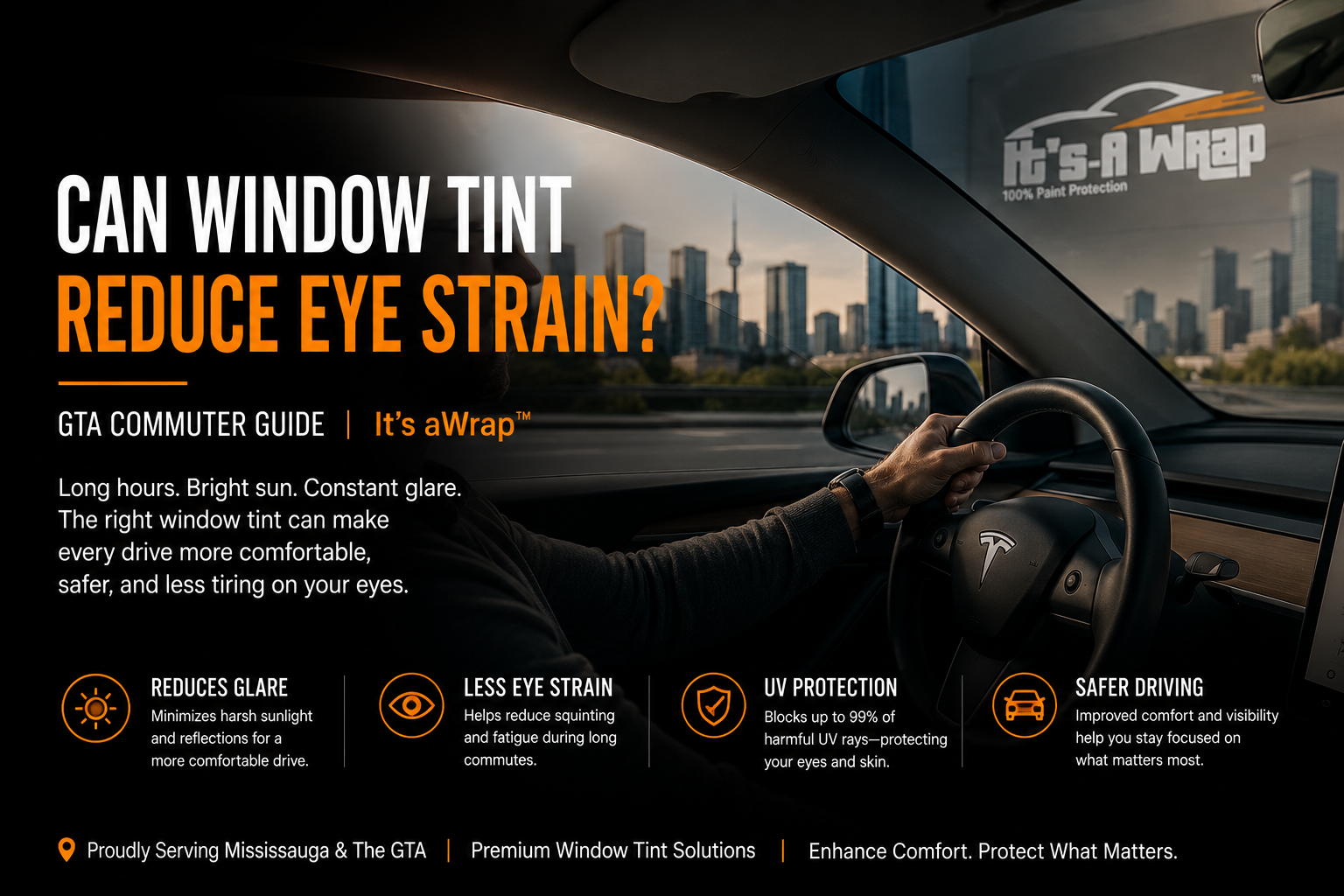
Why Driving in the GTA Causes Eye Strain
The Greater Toronto Area presents several visual challenges for drivers, including:
- Low-angle sunlight during morning and evening commutes
- Glass tower reflections downtown or along the Gardiner
- Bright LED headlights from oncoming traffic
- Snow glare in winter that makes roads harder to see
- Digital screen exposure (GPS, instrument cluster, centre display)
Over time, these factors cause fatigue, dryness, squinting, and headaches — especially for sensitive eyes or drivers who spend hours behind the wheel.
How Window Tint Helps Reduce Eye Strain
1. Blocks Harsh Sunlight and Reduces Glare
Glare is one of the biggest triggers of headaches while driving. Quality tint filters harsh, direct light so the eyes don’t have to constantly adjust. Even a lighter shade provides noticeable relief.
For winter conditions, our seasonal tint guide explains how tint impacts visibility during snow and low winter sun.
2. Reduces Eye Fatigue on Long Commutes
Constant contraction of the eye muscles (squinting) creates tension headaches. Tint reduces the strain by softening overly bright visual environments, especially on highways like the QEW and 401.
3. Helps with Night Driving Comfort
Not all tint helps with night driving — but quality carbon and ceramic films reduce headlight glare and prevent “halo effects” from bright LED beams.
Ontario drivers looking to upgrade should review the benefits of using advanced tint materials in our ceramic tint advantages guide.
4. Improves Comfort for Smartphone & Display Use
Modern vehicles rely heavily on digital screens. Between GPS, infotainment systems, and digital clusters, light bouncing around the cabin can create visual strain. Tint reduces internal reflections, making screens easier to see without overwhelming the eyes.
5. Protects Against UV Exposure
UV rays pass through untinted glass even during cloudy days. Over time, UV exposure contributes to eye dryness, discomfort, and headaches. Automotive tint blocks nearly all UV radiation, keeping eyes more comfortable on long drives.
What Type of Tint Works Best for Eye Comfort?
Not all tint provides equal protection from glare and strain. Here’s how film types compare:
Dyed Tint
- Provides privacy, but minimal glare reduction
- Least effective for eye comfort
Carbon Tint
- Excellent glare control
- Stable, non-fading colour
- A strong choice for commuters
Ceramic Tint (Best Choice)
- Superior glare reduction
- Blocks more infrared and UV than any other film
- Highest clarity — ideal for long-distance driving
For a detailed comparison, see our ceramic vs carbon guide.
How Tint Helps During Winter Driving
Winter glare is particularly severe in Ontario. Sun reflecting off snow can be blinding, and long commutes in low-angle light worsen headaches. Tint helps by:
- Softening harsh white winter reflections
- Reducing snow glare on the windshield
- Making icy roads easier to visually interpret
For more on how tint performs in both seasons, refer to our window tint protection guide for Ontario drivers.
How Tint Affects Commuters Using Highways Daily
Drivers travelling along the QEW, 401, 403, or Gardiner often face aggressive sunlight, reflective surfaces, and constant stop-and-go motion. Tint provides a more stable visual environment, reducing the visual “stress load” many commuters experience.
Benefits include:
- Reduced blinking and dry-eye symptoms
- Lower risk of squint-related headaches
- Better focus on traffic flow and road signs
Ontario Case Study: Mississauga-to-Toronto Commuter
A client who commutes from Mississauga to downtown Toronto along the Gardiner reported daily headaches from bright morning sunlight and glare from building glass. After installing ceramic tint on all side and rear windows, they experienced:
- Significant reduction in glare
- Fewer headaches on morning drives
- Better visibility during snow reflection
- Improved comfort using digital navigation displays
They described the difference as “night and day” for daily commuter comfort.
When Tint Won’t Help Eye Strain
Tint can make a major difference, but it’s not a cure-all. It may not fully resolve eye strain if:
- Your prescription needs updating
- Your windshield is severely pitted or scratched
- Your cabin lighting is too bright at night
- You use excessively dark tint that reduces night visibility
For balanced visibility, our 35% tint guide explains why many GTA drivers choose lighter, safer shades.
Final Thoughts
Window tint can significantly reduce eye strain and headaches for Ontario commuters. By minimizing glare, blocking harsh sunlight, reducing reflections, and stabilizing cabin brightness, high-quality tint creates a more comfortable and safer driving experience.
If you spend long hours on the road each week, consider a professional ceramic or carbon tint solution designed for GTA conditions. Visit our Mississauga & Oakville tint services page to explore your options.