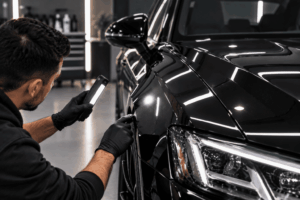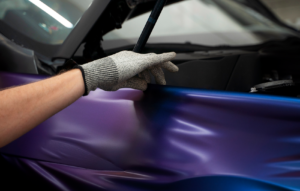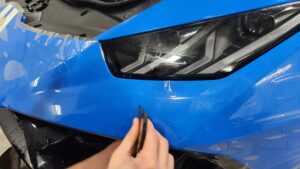
A bubble appears. An edge starts lifting. A stone leaves a mark in the front bumper. The film changes colour. A panel is damaged in a collision. Each of those situations involves PPF, but they are not necessarily the same type of warranty claim.
The easiest way to understand PPF warranty coverage is to separate problems into three categories: defects in the film itself, issues related to the installation, and damage caused by normal use or an outside force. Manufacturer warranties are primarily designed for the first category. Installation concerns are generally handled by the installer, while physical road damage is usually outside a manufacturer’s product warranty altogether.
A PPF Warranty Is Mainly a Product Warranty
Paint Protection Film is designed to take abuse that would otherwise reach the paint, but the manufacturer’s warranty is not a promise that nothing will ever damage the film.
Instead, the warranty generally protects the customer when the film itself fails in a way attributable to its material or manufacture. Depending on the product and manufacturer, that can include conditions such as abnormal yellowing, cracking, delamination, bubbling or adhesive failure where the manufacturer determines that the film is responsible.
That distinction matters. A piece of road debris can damage perfectly good PPF. A scratch can penetrate the top coat of perfectly good PPF. Neither situation automatically means the material was defective.
The film may have done exactly what it was installed to do: absorb damage before it reached the paint.
Manufacturing Defects Have to Be Separated From Installation Problems
A bubble under PPF is a good example of why the cause matters more than the appearance.
If the film develops abnormal blistering because of a confirmed material defect, that can fall within manufacturer coverage. A pocket caused by residual installation moisture, contamination underneath the film or an improperly finished edge is a different issue.
STEK’s current warranty language explicitly separates manufacturing-related bubbling and adhesive failure from installation conditions such as moisture marks, temporary curing changes, contamination, overstretching, edge lifting and poor surface preparation.
That does not mean an installation issue should simply be accepted by the customer. It means the responsibility sits in a different place. A professional installer should inspect workmanship concerns and determine what correction is appropriate rather than trying to submit every installation imperfection as a manufacturer claim.
This is also why our guide to bubbles, haze and water pockets after PPF installation focuses heavily on giving fresh film time to settle before deciding that a temporary curing condition is a defect.
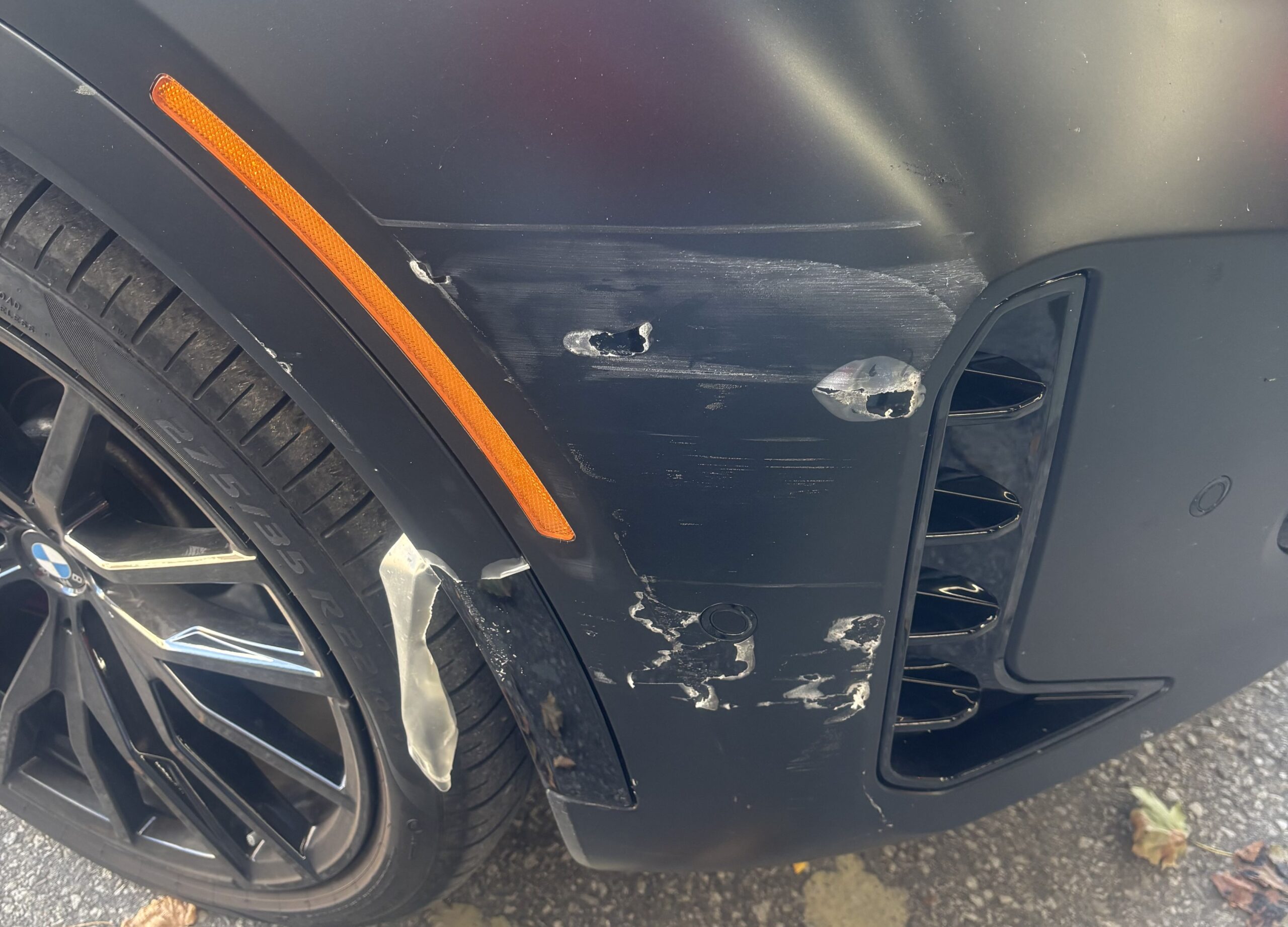
Rock Chips and Impact Damage Are Usually Not Warranty Defects
This is probably the most important limitation for a PPF owner to understand.
PPF is installed specifically because front bumpers, hoods, fenders, rocker panels and other exposed areas are vulnerable to stones and road debris. The film substantially improves the level of protection those surfaces receive, but it cannot guarantee that every impact will leave the film untouched.
A sufficiently sharp or forceful stone can gouge, tear or puncture the urethane. A parking incident can scrape a protected bumper. A collision can destroy the film on an entire panel.
Those are examples of external physical damage, not evidence that the PPF was manufactured incorrectly.
Both 3M and STEK currently exclude physical impact and accident-related damage from their product warranties. A warranty therefore should not be understood as free replacement every time the film takes a hit.
In many cases, the fact that the film is damaged while the original paint underneath remains intact is evidence that the protection has done its job.
Self-Healing Does Not Mean Every Scratch Disappears
The same principle applies to scratches.
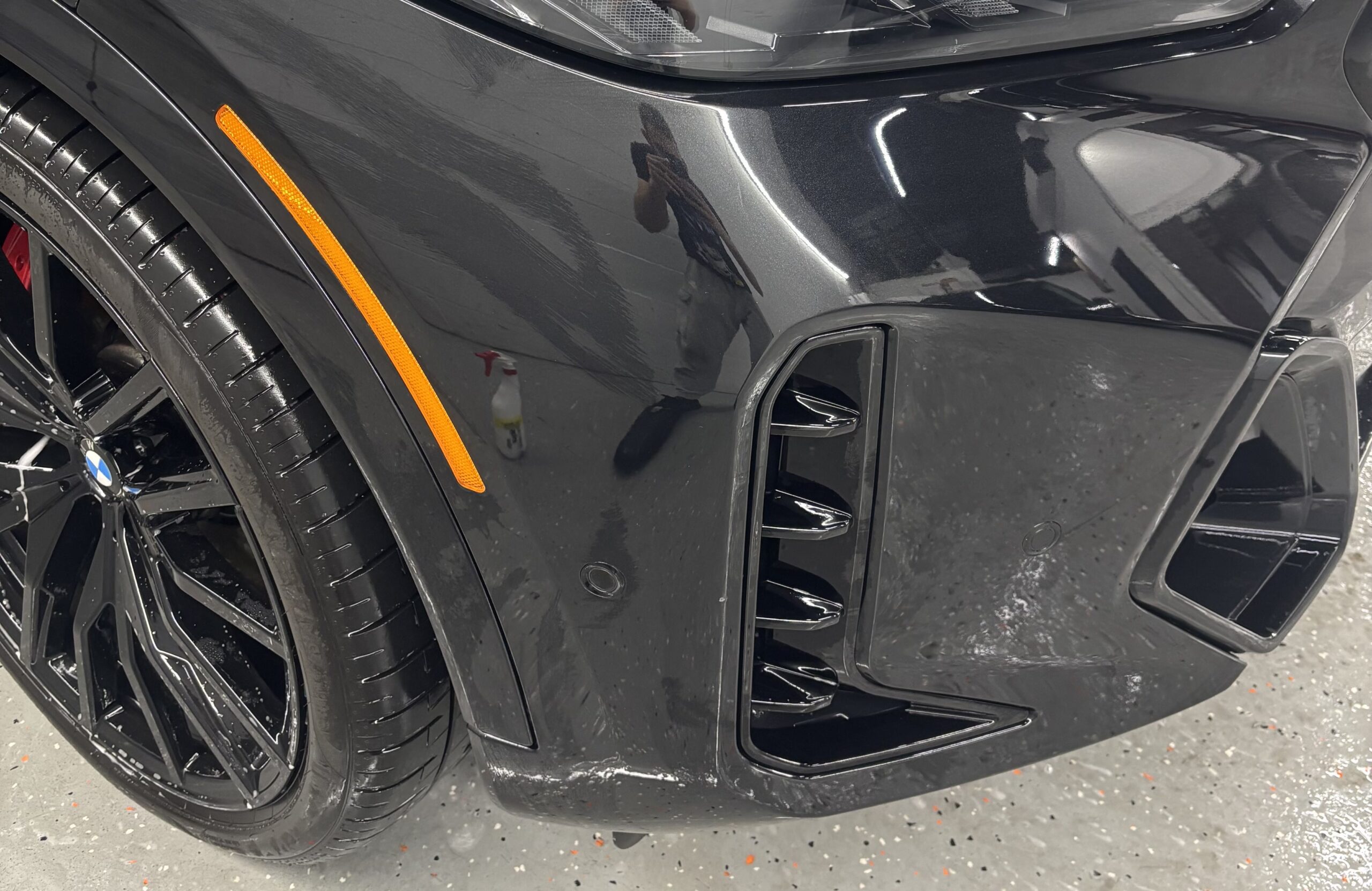
Many modern PPF products use a self-healing top coat that can reduce light surface marks when exposed to sufficient warmth. That feature is valuable for normal wash-induced micro-scratches and light marks in the film surface.
It does not make the material impossible to scratch.
If a scratch cuts through the top coat or deeply damages the urethane, the film cannot rebuild material that has physically been removed. STEK’s current warranty terms specifically distinguish loss of self-healing performance caused by a material defect from scratches that penetrate the top coat or result from external damage.
So a visible scratch is not automatically a warranty claim. The installer first needs to determine whether the film is damaged or whether the film itself has failed to perform as designed.
Yellowing Can Be Covered—but the Cause Still Matters
Yellowing is commonly associated with PPF warranties, but even here the wording deserves attention.
3M’s current Pro Series 200 warranty includes yellowing among the material and manufacturing defects covered during its warranty period.
STEK’s current terms are more specific about causation. Yellowing or discoloration may qualify where STEK determines that a material or manufacturing defect caused it, while discolouration related to environmental exposure, contamination, improper maintenance or other excluded conditions may not qualify.
This is an important reason to follow the maintenance requirements of the film actually installed rather than assuming that the length printed beside the warranty is the only condition that matters.
Maintenance Can Affect Whether the Warranty Remains Valid
A multi-year warranty does not mean the film can be installed and ignored for the next decade.
Manufacturers set care requirements because PPF remains exposed to road film, mineral deposits, bug residue, chemicals, UV exposure and repeated washing throughout its life.
STEK’s current DYNO warranty, for example, ties coverage to its registration and maintenance requirements and identifies STEK PPF care procedures as part of maintaining warranty eligibility. It also recommends hand washing and warns against abrasive tools, harsh chemicals and directly pressure-washing film edges.
3M likewise excludes damage related to misuse and ordinary wear from its consumer warranty.
This is why long-term care should be treated separately from the warranty itself. Our PPF care and maintenance guide covers washing and ownership practices in detail; the important point here is simply that improper care can turn an otherwise valid product into a difficult warranty claim.
The Warranty Length Depends on the Film You Actually Bought
There is no single universal “PPF warranty.” Even within the same manufacturer, different film families can carry different terms.
| Film | Current Manufacturer Warranty Position | Important Notes |
|---|---|---|
| STEK DYNOlite | 7 years | Separate lightweight DYNO product with its own warranty term. |
| Qualifying STEK DYNO Series | Up to 12 years under current STEK terms | Regional terms, STEK ONE registration and maintenance conditions apply. Exact eligibility should be confirmed for the installed product. |
| 3M Scotchgard™ PPF Pro Series 200 | 10 years | Current 3M consumer warranty covers qualifying manufacturing defects such as yellowing, bubbling and cracking. |
At It’s aWrap™, we install professional STEK and 3M PPF systems and register qualifying film warranties as part of the installation process. The exact product matters, so the warranty associated with the film actually installed on the vehicle should always take priority over a generic warranty number quoted online.
For STEK in particular, current global terms note that coverage can vary by region and maintenance conditions. We therefore confirm the applicable coverage at the time of installation rather than assuming every product carrying the DYNO name has identical terms.
Registration Is Not Just Paperwork
Manufacturer warranties generally need an installation record linking the product, vehicle, installer and installation date.
STEK currently uses its STEK ONE system. Its published DYNO terms require registration within the manufacturer’s specified timeframe and activation of the warranty, along with supporting installation information and maintenance requirements.
3M Canada also requires warranty registration and asks for information including the vehicle identification number, the authorized installer and installation details.
At It’s aWrap™, we handle the warranty-registration process for the PPF products we install so there is a record of the vehicle and installation. Customers should still retain their invoice and any manufacturer warranty confirmation they receive. Those documents can become important years later if the film needs to be inspected or a claim has to be submitted.
Warranty Transfer Rules Are Not the Same Between Manufacturers
Warranty coverage can also change when a protected vehicle is sold.
3M’s current United States and Canada consumer warranty for Pro Series 200 is provided to the original consumer purchaser and is non-transferable.
STEK’s current global DYNO terms describe the warranty as generally non-transferable but allow a conditional transfer in specific circumstances. The new owner must provide the required proof and notification within the manufacturer’s timeframe, complete the transfer through STEK ONE and continue meeting the applicable maintenance requirements.
Anyone buying a vehicle with existing PPF should therefore not assume that a remaining “ten-year” or “twelve-year” term automatically follows the car. The manufacturer, film, original registration and transfer requirements need to be checked.
A Warranty Claim Starts With Identifying What Actually Happened
When a customer notices a problem, the first step should normally be an inspection rather than deciding in advance that the film is defective.
An installer can look at where the issue is occurring, whether it is isolated or widespread, how the film has been maintained and whether the appearance is consistent with an installation issue, an outside impact or a possible material defect.
For manufacturer claims, documentation may include photographs, proof of purchase, product information, installation records and maintenance information. STEK’s current terms direct owners to contact the original authorized installer first, and 3M Canada also provides a formal warranty-claim process for registered installations.
If the issue is installation workmanship rather than a film defect, it should be handled through the installer instead of being presented as though the manufacturer supplied faulty material.
If the film was damaged by a stone, collision, vandalism or another outside event, the next conversation may instead be about replacing the affected PPF—not filing a product warranty claim.
The Warranty Is Valuable When You Understand What It Is Protecting
A strong PPF warranty matters because quality film is expected to remain stable for years. If the material begins cracking, delaminating, blistering or otherwise failing because of a legitimate manufacturing problem, the owner should have a process for getting that issue reviewed.
What the warranty does not do is make the film indestructible or turn every mark into a free replacement.
The simplest way to think about it is this: manufacturer defect, installation workmanship and external damage are three different things. A professional installer should be able to help determine which category an issue belongs to before recommending the next step.
You can review our broader warranty and aftercare information or learn more about our Paint Protection Film services in Mississauga. If you already have PPF installed by us and notice a possible issue, contact the shop so the film can be inspected before attempting to repair or remove it yourself.