A ceramic coating can make water bead and leave the surface more easily, but any water that remains behind can still contain dissolved minerals. When that water evaporates, the water disappears and the minerals do not. What remains can range from a light surface deposit that washes away relatively easily to a more stubborn mark that has begun affecting the coating or finish underneath.
The difference matters because not every water spot should be attacked with stronger chemicals or polishing. The safest approach is to identify how severe the problem appears to be, start with the least aggressive cleaning method and escalate only when necessary.
Hydrophobic Does Not Mean Water-Spot-Proof
Water beading is one of the most visible characteristics of a ceramic-coated vehicle. Instead of spreading broadly across the panel, water tends to form tighter beads and move away from the surface more readily.
That behaviour helps during washing and drying, but it cannot change what is dissolved in the water itself. Municipal tap water, well water and sprinkler systems can contain calcium, magnesium and other minerals. Once a bead of that water is allowed to dry, those dissolved solids can remain on the surface.
This is particularly noticeable when a wet vehicle is parked in direct sun. The water can evaporate quickly while the panel is hot, leaving a visible ring or cloudy deposit behind. The same problem can occur after driving through a sprinkler, allowing rinse water to air dry after washing or leaving rain mixed with existing contamination on the vehicle for an extended period.
The coating has not necessarily failed when this happens. It may still be providing hydrophobicity, chemical resistance and easier cleaning while mineral deposits are sitting on top of it.
A Surface Deposit and an Etched Water Spot Are Different Problems
Fresh water spotting is often primarily a contamination problem. Mineral residue has dried onto the coating and is sitting on the surface. When caught early, it may respond to a proper wash or an approved mineral-removal or decontamination product.
Etching is more serious. Instead of material simply sitting on top of the coating, the deposit has remained long enough—or has been exposed to enough heat and environmental stress—that a visible mark remains after normal cleaning.
That distinction is not always obvious from a photograph. Two white rings can look almost identical while requiring completely different levels of correction.
A useful sign is what happens after the vehicle has been thoroughly washed. If the marks disappear, the issue was likely loose contamination. If they remain visible but respond to an appropriate coating-safe treatment, they were more strongly bonded deposits. If the mark persists after safe chemical decontamination, the surface may need professional inspection to determine whether polishing or another corrective step is appropriate.
The objective is not to label every stubborn spot as permanent etching. It is to avoid jumping directly to an aggressive remedy before the easier possibilities have been ruled out.
Sprinklers and Hard Water Are Common Culprits
Some of the worst water spotting we see does not come from rain. It comes from irrigation systems.
Sprinkler water can contain substantial mineral content, and a vehicle parked beside landscaping may be sprayed repeatedly without the owner realizing it. If that water lands on a warm panel and dries in direct sunlight, the mineral residue can become very noticeable very quickly.
Washing at home can create the same problem if the vehicle is rinsed with hard water and then left to air dry. This is why drying is not an optional finishing step on a coated vehicle. Even though the coating encourages water to bead, those beads should still be removed before evaporation leaves their mineral content behind.
Our ceramic coating wash and maintenance guide covers the broader washing routine, including safe hand washing, drying and winter maintenance.
Where possible, washing out of direct sunlight, working on cool panels and drying the vehicle promptly all reduce the opportunity for mineral deposits to form.
Start With a Proper Wash Before Reaching for a Water-Spot Remover
If spotting appears, the first step should usually be the least aggressive one: wash the vehicle properly.
Road film, dust and other contamination can change the way water dries on the paint and may make the surface look worse than it actually is. A proper wash lets you evaluate the marks on a genuinely clean surface rather than trying to treat mineral deposits through a layer of dirt.
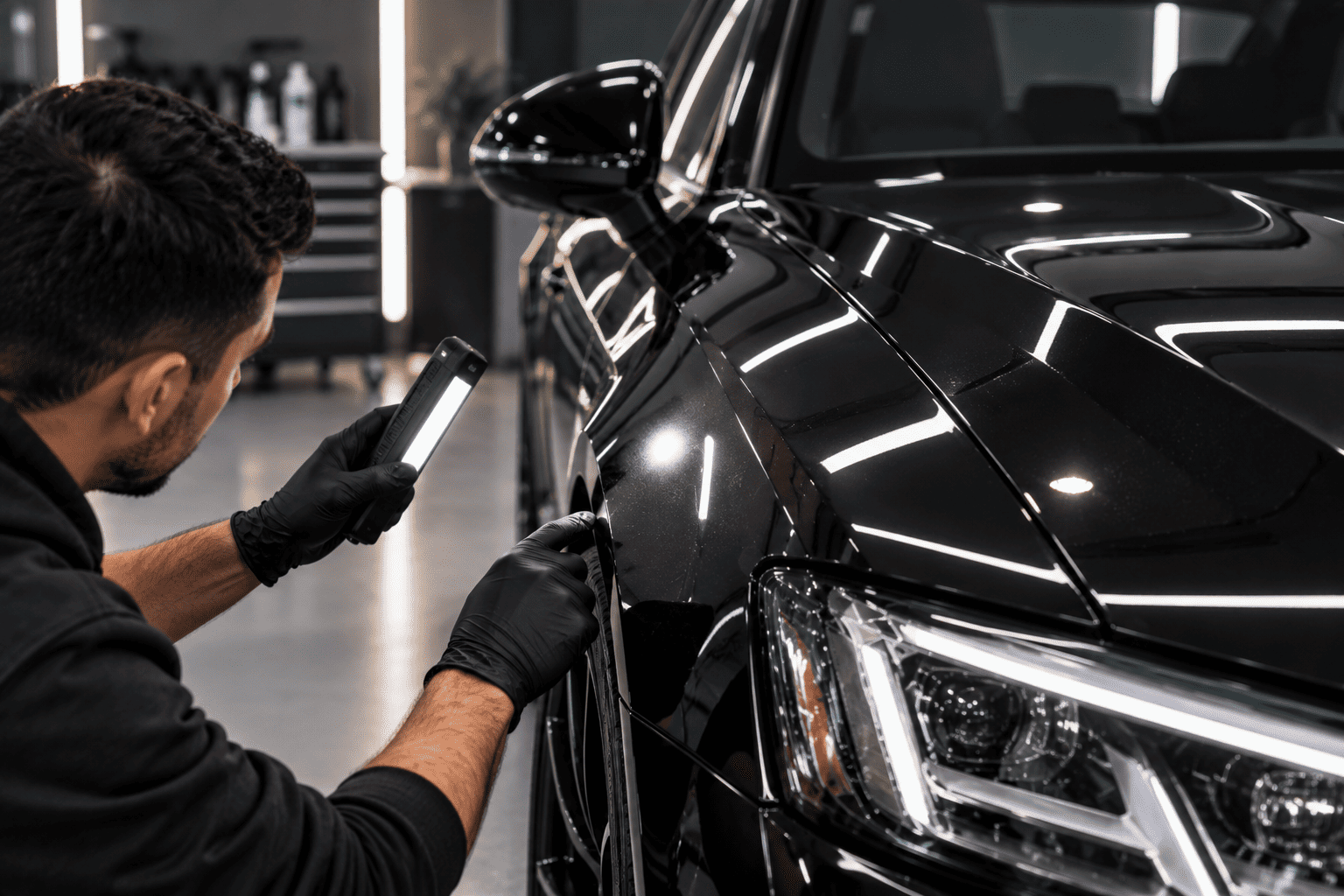
After washing, dry the vehicle thoroughly and inspect the affected area under good lighting. Light spotting may already be gone.
If visible mineral deposits remain, the next step should be a product that is compatible with the installed coating system and intended for the type of contamination being treated. At It’s aWrap™, we prefer manufacturer-recommended or coating-safe products rather than improvised household chemical mixtures.
This is an area where stronger is not automatically better. Acidic cleaners, aggressive all-purpose cleaners or abrasive compounds can alter the coating or create a second problem while attempting to solve the first one.
Avoid DIY Acid and Vinegar Experiments
There is no shortage of online advice suggesting vinegar, household acids or homemade chemical mixtures for removing water spots. The problem is that the person following the advice often has no reliable way of knowing the chemistry of the installed coating, the concentration of the homemade solution or how the product will behave on surrounding trim, PPF or other surfaces.
A coating has already been installed specifically to create a controlled protective layer over the vehicle. Introducing an unknown cleaning mixture defeats much of that control.
That does not mean mineral deposits cannot be removed chemically. Professional and manufacturer-approved water-spot or decontamination products are designed for exactly that purpose. The distinction is using a known product according to its instructions rather than experimenting with whatever acidic substance happens to be available at home.
If the problem is not responding to a normal wash and suitable coating-safe treatment, that is the point where professional assessment makes more sense than repeatedly increasing chemical strength.
Polishing Can Remove a Spot—and the Coating With It
When a water spot has progressed beyond surface contamination, polishing may eventually become part of the correction process. That is not the same as cleaning the coating.
Abrasive polishing physically levels the surface. If a coated panel is polished aggressively enough to remove an etched defect, some or all of the ceramic coating in that area will normally be removed as well.
That means the process may become: inspect the defect, determine whether polishing is appropriate, correct the affected finish, properly prepare the surface again and then reapply protection to the corrected area.
For this reason, polishing should not be the first response to every visible ring. A water spot that could have been removed chemically does not justify unnecessarily abrading the finish and sacrificing the coating.
There are also cases where a defect may extend beyond the coating itself. If mineral etching has affected the automotive clear coat, the decision becomes similar to other paint-correction work: improve the defect as safely as possible without removing excessive clear coat simply to chase perfection.
Water Spots Do Not Automatically Mean the Coating Has Failed
A spotted coating and a failed coating are not necessarily the same thing.
Contamination sitting on top of the coating can change its appearance and water behaviour. A heavily contaminated panel may stop feeling as slick, water may no longer bead uniformly and the finish may look duller even though the coating is still present beneath the buildup.
This is one reason professional maintenance can restore performance that an owner assumed had disappeared. Removing mineral deposits, road film and other bonded contamination allows the coating surface to behave normally again.
At It’s aWrap™, we recommend annual professional ceramic maintenance for our three-year-and-longer coating packages. That gives us an opportunity to inspect the surface, deal with contamination that normal washing has not removed and apply the appropriate maintenance treatment. Customers do not need to wait for the annual visit if they notice persistent water spots, unusual contamination or a meaningful change in how the coating behaves.
Prevention Mostly Comes Down to Not Letting Water Dry
The most effective water-spot strategy is far less complicated than the removal process.
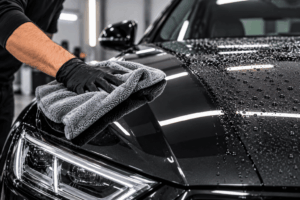
When washing the vehicle, work out of direct sunlight whenever practical and avoid allowing rinse water to dry across the panels. Dry the vehicle with clean, soft microfiber towels or appropriate forced air, particularly around mirrors, trim and panel gaps where trapped water can continue running onto the paint after the main wash is finished.
If sprinklers hit the vehicle, remove the water rather than allowing repeated cycles of wetting and drying. The same applies after an unexpected hard-water exposure.
Regular washing also matters. A clean coating generally releases water more effectively than one covered in road film and bonded contamination, so basic maintenance supports the hydrophobic behaviour that made the coating easier to care for in the first place.
None of this requires obsessively drying every raindrop that touches the vehicle. The practical concern is repeated or concentrated mineral-rich water being allowed to dry on the finish, especially on hot panels.
Deal With Persistent Spots Before They Become a Bigger Correction
A few fresh water marks are usually much easier to address than months of repeated mineral buildup. The longer stubborn deposits remain on the vehicle, the greater the chance that removing them will require a more involved process.
If a normal wash restores the finish, there is little reason to do more. If the spots remain, move to the appropriate coating-safe treatment rather than scrubbing harder. If that does not work, have the surface inspected before reaching for abrasive polish or aggressive chemistry.
That escalation—from washing, to approved decontamination, to professional inspection—is the approach we prefer because it preserves as much of the existing protection as possible.
If your coated vehicle has persistent water spots or no longer looks or behaves the way it did after installation, learn more about our ceramic coating services in Mississauga and Oakville or contact It’s aWrap™ so the surface can be assessed before more aggressive correction is attempted.