

If you understand what ceramic coating actually does, the maintenance routine makes more sense. The coating is there to protect the finish and make cleaning easier; your job is to keep that protective surface free of the contamination that gradually masks its performance.
Give a Fresh Coating Time Before the First Wash
The first few days after installation are different from normal ownership because the coating is still curing. At It’s aWrap™, we tell customers to wait at least seven days before washing the vehicle. When practical, giving the coating up to two weeks before the first proper wash is even better.
During that initial period, the priority is simple: leave the surface alone. There is usually no reason to wipe the vehicle down because of a little dust, chase isolated marks with a quick detailer or run it through a wash simply because it no longer looks freshly detailed. Unnecessary contact during the curing period creates more risk than benefit.
If something unusual lands on the paint during that time—especially bird droppings, tree sap or another aggressive contaminant—contact the installer for guidance rather than scrubbing at the surface. The right response depends on what is on the vehicle and how recently the coating was installed.
A Safe Hand Wash Should Be the Normal Routine
Once the initial curing period has passed, a careful hand wash is the preferred way to maintain a ceramic-coated vehicle. You do not need an elaborate process, but the tools should be clean and the wash solution should be compatible with coated surfaces.
Start by thoroughly rinsing loose dirt from the vehicle before making physical contact with the paint. This matters most around the rocker panels, rear bumper and lower doors, where road grit tends to collect. A pre-rinse or appropriate pre-wash can remove a surprising amount of contamination before a wash mitt ever touches the surface.
For the contact wash, use a clean microfiber or other coating-safe wash mitt with a suitable automotive shampoo. STEK’s current maintenance line includes a pH-balanced shampoo and coating-safe products, which reflects the broader principle we follow in the shop: use automotive products designed for protected finishes rather than harsh household cleaners.
Work from the cleaner upper sections of the vehicle toward the dirtier lower areas and rinse the wash media regularly. Wheels should have their own brushes and towels rather than sharing tools with painted panels. None of this is unique to ceramic coating—it is simply good wash practice—but it becomes especially important when the goal is to preserve a corrected and coated finish for years rather than continually introduce new wash marks.
Drying Is Part of the Wash, Not an Optional Extra
A vehicle should not be left covered in rinse water and allowed to air dry, particularly where the water supply contains significant mineral content. Once the water evaporates, calcium, magnesium and other dissolved material can remain behind as visible spots.
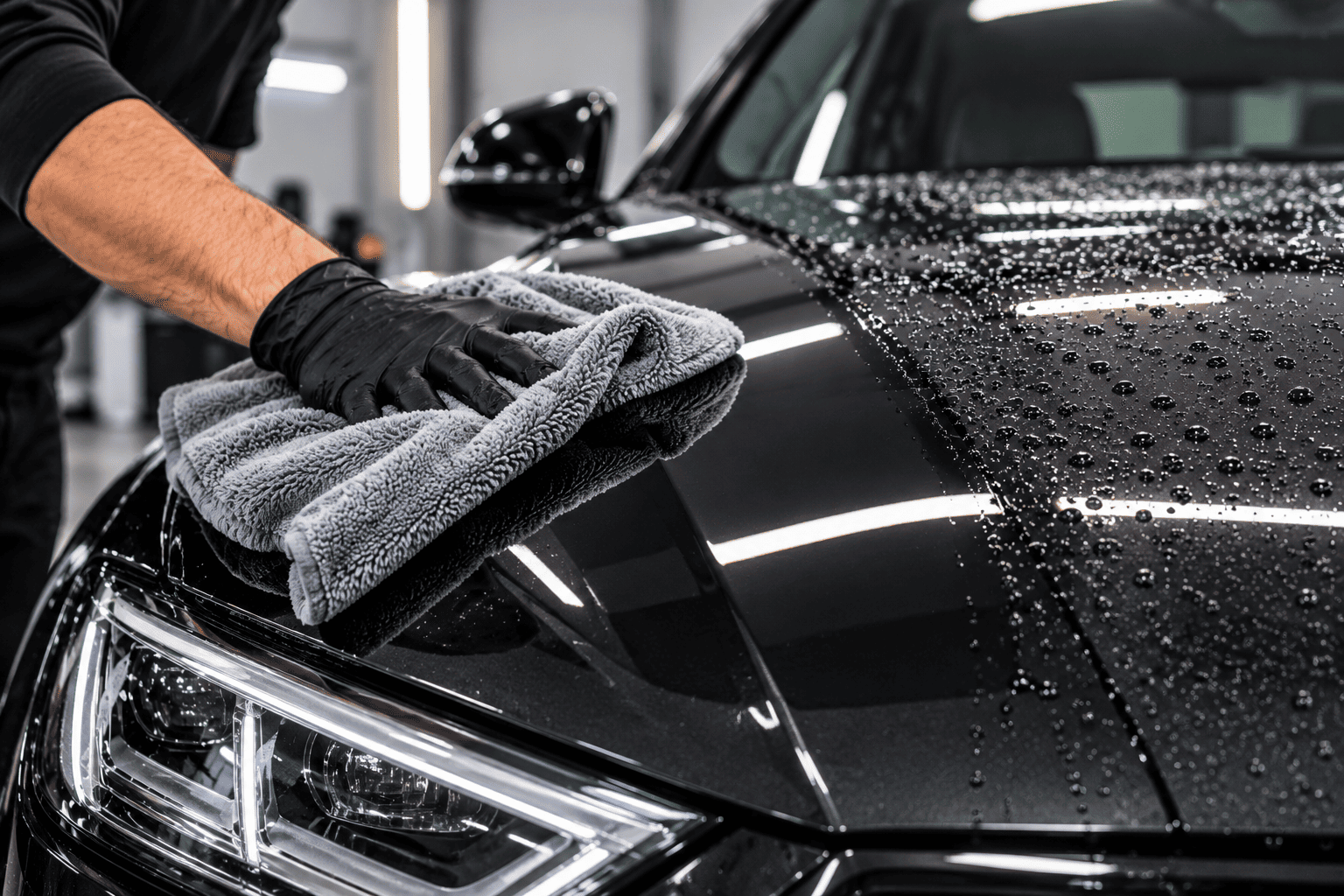
Use a clean, soft drying towel with enough absorbency that you are not repeatedly dragging a saturated towel over the paint. Air drying with a suitable blower can also be useful around mirrors, grilles, trim and other areas that continue dripping after the main panels have been dried.
This is one area where ceramic coating can create a misleading impression. Strong water beading looks impressive, but those beads still need somewhere to go. If they sit on a hot hood or roof until they evaporate, the hydrophobic coating has not failed—the minerals were simply left behind on the surface.
Drying the vehicle properly is therefore one of the simplest ways to prevent a maintenance problem before it starts.
Touchless Washes Are Useful, but They Should Not Become the Whole Maintenance Plan
We prefer hand washing because it gives you better control over the chemicals, wash media and physical contact touching the vehicle. That does not mean a coated car can never go through a touchless wash.
During an Ontario winter, there are times when removing salt and road grime matters more than waiting for perfect hand-washing weather. If needed, an occasional touchless wash is a reasonable way to remove heavy contamination between proper washes. At It’s aWrap™, we are comfortable with customers using a touchless wash periodically—roughly once a month when needed—rather than allowing winter salt to remain on the vehicle indefinitely.
The distinction is touchless. Brush and cloth automatic washes introduce uncontrolled physical contact from equipment that has been touching other dirty vehicles all day. A ceramic coating does not make the paint immune to the abrasion that can come from contaminated brushes.
Touchless washes also tend to rely on stronger chemistry because they are trying to clean without physical agitation. That is another reason we consider them a practical winter tool rather than the ideal year-round maintenance method.
Ontario Winter Care Is Mostly About Not Letting Salt Accumulate
Winter changes the maintenance priorities. The vehicle may go for longer periods without a full hand wash, and it is constantly exposed to salt, brine, slush and dirty spray from surrounding traffic. A coating helps because that contamination is generally easier to release from the surface, but it still needs to come off.
You do not need to wash the vehicle every time there is salt on the road. There is no universal interval that makes sense for every owner, especially when weather, mileage and storage conditions vary so much. A commuter covering hundreds of kilometres of salted highway every week has a different maintenance requirement from a vehicle that spends most of the winter in a garage.
Use the condition of the vehicle as the guide. If the lower doors and rear of the car are visibly coated in salt and road film, remove it when conditions allow. Pay attention to panel seams, wheel arches and lower areas where contamination accumulates most heavily. Waiting months simply because the coating is supposed to be “protecting” the paint defeats much of the purpose of having an easier-to-maintain surface.
When temperatures permit, return to a proper hand wash. A touchless wash is useful for knocking back winter contamination, but a periodic contact wash is still needed to remove the road film that touchless chemistry does not always release completely.
When Beading Changes, Clean the Surface Before Blaming the Coating
One of the most common reasons owners think their coating has worn off is that the vehicle no longer beads water the way it did after installation. Sometimes a coating genuinely has degraded, but contamination is often the more immediate explanation.
Road film, mineral deposits, iron contamination and other bonded material can sit on top of the coating and change the way the surface behaves. The paint may feel less slick, water may spread differently and washing may stop feeling as effortless even though the coating remains underneath.
The correct response is not to immediately polish the vehicle or cover the problem with another product. Start with a thorough wash and determine whether the surface needs professional decontamination. If normal cleaning does not restore the expected behaviour, that is when an inspection becomes useful.
The same restraint applies to ceramic “boosters” and toppers. Additional maintenance products can be useful when they are compatible with the installed coating system, but more product is not automatically better. Random waxes, sealants or sprays can change the surface behaviour and make it harder to determine what the coating itself is doing. We prefer manufacturer-compatible maintenance products rather than layering unrelated chemistry over the coating.
Annual Maintenance Keeps Small Problems From Becoming Bigger Ones
At It’s aWrap™, we recommend a professional ceramic maintenance visit each year for our longer-term packages, with an annual ceramic boost for packages rated three years and longer. Customers can also bring the vehicle back sooner if the surface has persistent contamination, water spotting or a noticeable change in performance.
The purpose of that yearly visit is not simply to create dramatic water beading again. It gives us an opportunity to inspect the condition of the coating, remove contamination that routine washing may not address and deal with isolated problems before they become more difficult to correct.
A coating that has accumulated twelve months of Ontario driving can have iron deposits, mineral residue, road film and other bonded contamination on its surface even when the car is washed regularly. Professional decontamination can remove that buildup without assuming the coating itself has failed.
This is also why we avoid treating an advertised coating duration as a maintenance interval. A multi-year coating is not designed to be applied and ignored for several years. The coating lasts because the protected surface continues to be cared for.
A Good Maintenance Routine Should Be Simple Enough to Follow
There is no benefit in making ceramic coating ownership unnecessarily complicated. For most customers, the routine comes down to a few habits: wait for the initial cure, hand wash with suitable products, keep the wash media clean, dry the vehicle rather than letting mineral-rich water sit on the finish, remove winter contamination when practical and have the coating inspected periodically.
What matters more than washing on an exact calendar schedule is preventing contamination from becoming heavily bonded or leaving the vehicle neglected for long periods. Someone driving daily in poor weather will naturally need to wash more frequently than a garage-kept weekend vehicle.
Ceramic coating should make caring for the vehicle easier, not turn ownership into a detailing ritual. If maintaining the finish starts requiring aggressive cleaners, repeated scrubbing or constant applications of additional products, something in the process deserves another look.
For information about our current coating system and professional maintenance options, visit our ceramic coating service in Mississauga and Oakville or contact It’s aWrap™ if your existing coating needs to be assessed.