If you’re researching paint protection film, you’ve probably spent time comparing PPF brands, coverage packages and prices. But there’s another decision that can have a major impact on the finished installation: how the PPF is actually fitted to the vehicle.
Professional installers generally work with two approaches: pre-cut PPF patterns and bulk PPF installation. You may also hear people claim that one method is automatically better than the other.
After more than 15 years working with automotive films at It’s aWrap™ in Mississauga, our view is more nuanced. There isn’t one PPF installation method that’s best for every panel on every vehicle. Pre-cut patterns, modified patterns and bulk installation can all produce excellent results when they’re used appropriately by an experienced installer.
The better question isn’t simply, “Is bulk PPF better than pre-cut PPF?” It’s which installation method makes the most sense for the particular vehicle, panel and desired finish?
Let’s explain the difference.
What Do We Mean by a PPF Installation Method?
Before comparing the methods, it’s important to separate three decisions that are often grouped together when people research PPF.
PPF brand refers to the manufacturer and film you’re installing.
PPF coverage refers to which portions of the vehicle you’re protecting, such as the front bumper, full front end or entire vehicle.
PPF installation method refers to how the film is cut, fitted and finished on those panels.
This article focuses specifically on that third decision.
If you’re comparing the films themselves, our guide to the top PPF brands covers that separately. If you’re deciding how much of the vehicle to protect, see our comparison of full-body vs. partial PPF coverage.
What Is Pre-Cut PPF?
Pre-cut PPF uses a digitally created pattern designed for a specific vehicle and panel. The film is cut before it is installed rather than starting with an oversized piece of material and performing all of the fitting manually on the vehicle.
For example, a pattern may be created specifically for the hood, front bumper, fender or mirror of a particular vehicle.
This gives the installer a repeatable starting point that closely follows the shape of the panel.
Advantages of Pre-Cut PPF
- Less cutting around the vehicle: Because much of the film has already been cut to shape, the installer can reduce the amount of trimming required directly beside painted surfaces.
- Consistent fitment: A well-designed pattern provides predictable dimensions for the specific panel.
- Efficient installation: Patterns can make installation more efficient, particularly on vehicles with accurate pattern data available.
- Useful for complex components: Certain bumpers, mirrors and intricate pieces can benefit from precisely designed patterns.
- Repeatability: This can be especially useful when an installer regularly works on the same vehicle models.
Pre-cut doesn’t mean the installer simply removes a piece of film from a machine and sticks it onto the vehicle. Positioning, stretching, alignment, contamination control and finishing still require considerable skill.
Potential Limitations of Pre-Cut Patterns
A pattern is designed around predetermined dimensions. Depending on how that particular pattern is designed, it may leave certain edges exposed rather than extending far enough for the installer to wrap them around the panel.
That doesn’t automatically make the installation poor.
In many cases, a properly positioned edge can be extremely difficult to see. There are also panels where wrapping every edge simply isn’t practical because of the way the vehicle is assembled.
The quality of a pre-cut installation therefore depends on more than whether a pattern was used. The quality of the pattern and the skill of the installer using it matter considerably.
What Is Bulk PPF Installation?
Bulk installation takes a different approach.
Instead of beginning with a pattern already cut to the final shape, the installer starts with a larger piece of PPF and fits the material to the panel.
The excess material is then carefully managed and trimmed as part of the installation.
This gives an experienced installer more control over how much film extends beyond certain boundaries and can allow edges to be wrapped where the vehicle construction permits it.
Advantages of Bulk PPF Installation
- Greater control over coverage: The installer determines how the film is positioned and where appropriate excess material is retained.
- More opportunities for wrapped edges: On suitable panels, additional material can be extended around an edge for a more concealed finish.
- Useful for custom applications: Bulk installation isn’t dependent on having an exact digital pattern available.
- Flexibility: An experienced installer can adapt the material to the particular panel rather than being limited entirely by predetermined pattern dimensions.
This flexibility is one reason some enthusiasts specifically ask for bulk PPF installation.
But it comes with an important qualification: bulk installation requires considerable installer skill.
Does Bulk PPF Mean the Installer Cuts Film on Your Car?
This is one of the biggest concerns vehicle owners have when they first learn how bulk PPF is installed.
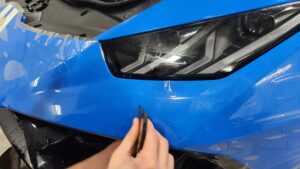
Because excess material may need to be trimmed during a bulk installation, knife control becomes extremely important. A professional installer needs to understand the film, the panel and how much pressure is appropriate when making a cut.
The objective is to cut the film—not the vehicle’s paint underneath it.
This is one reason we wouldn’t recommend choosing an installation method based purely on the assumption that “bulk is always better.” A bulk installation performed without sufficient experience can introduce risks that a properly designed pattern avoids.
For the customer, installer experience should matter more than simply requesting the technique that sounds the most premium.
Pre-Cut vs. Bulk PPF: Which Looks Better?
When both methods are performed properly, the difference may be extremely difficult for the average person to identify.
Bulk installation can offer an advantage when the panel allows the installer to hide more edges. But a high-quality pre-cut or modified-pattern installation can also look exceptionally clean.
The final appearance depends on factors including:
- How the pattern is designed
- Where seams and edges are positioned
- How much stretching is required
- The geometry of the panel
- Whether an edge can physically be wrapped
- The quality and clarity of the PPF
- Surface preparation
- Installer technique
It’s therefore misleading to judge an entire PPF installation solely by whether it was bulk or pre-cut.
Are Wrapped PPF Edges Always Better?
Wrapped edges are often considered one of the signs of a high-end PPF installation because hiding the film around the edge of a panel can make the protection less noticeable.
Where appropriate, wrapping an edge can create an extremely clean appearance.
But not every edge should—or even can—be wrapped.
Vehicle construction matters. Some panels provide accessible edges with sufficient clearance for the film to wrap around. Others meet trim, neighbouring panels, seals or components in ways that make wrapping impractical.
Trying to force an edge wrap simply because “wrapped edges are better” can also require unnecessary manipulation of the film.
The goal should be a durable, clean installation—not wrapping every possible edge at any cost.
Why Excessive Stretching Can Be a Problem
PPF is designed to conform to curved automotive surfaces, but that doesn’t mean the film should be stretched as aggressively as possible.
Complex bumpers are a good example.
An installer needs to distribute the film properly around curves, recesses and changes in direction. Excessive tension can affect how the film sits on the panel and place unnecessary stress on particular areas.
Professional PPF installation is therefore partly about knowing when to stretch, where to stretch and when not to force the material.
This is another reason a single installation rule doesn’t work for every vehicle.
Why Bumpers Are Different From Hoods and Fenders
Not every body panel presents the same installation challenge.
A relatively large hood may offer broad, accessible surfaces and edges. A modern front bumper can contain:
- Sharp contours
- Air intakes
- Sensors
- Recesses
- Grilles
- Complex curves
- Narrow sections of painted material
Those differences influence how the installer approaches the film.
On one vehicle, bulk installation may make sense for the hood while a carefully designed pattern works better around parts of the bumper. On another vehicle, the approach may be different.
That’s why we don’t believe the best PPF method should be defined by one technique used blindly across every panel.
Can a PPF Installer Use Both Pre-Cut and Bulk Methods?
Yes—and this is an important point that often gets lost in online comparisons.
Pre-cut and bulk PPF aren’t necessarily competing philosophies where an installer has to choose one and reject the other.
A professional installation can use different techniques depending on what produces the best result for a particular area.
Patterns may also be modified where appropriate rather than simply used exactly as supplied. This can provide some of the precision and repeatability of a pattern while giving the installer additional control over selected edges or coverage.
In practice, a hybrid approach can make more sense than insisting that every panel be installed using exactly the same method.
What Matters More: PPF Method or PPF Brand?
Both matter, but they solve different problems.
A premium film can offer excellent clarity, stain resistance, self-healing properties and durability. But buying premium film doesn’t guarantee premium installation.
Likewise, an excellent installer still needs a film capable of delivering the protection and finish the customer expects.
At It’s aWrap™, our current PPF offering includes premium films from STEK and 3M. But regardless of the film being installed, proper preparation, fitment and finishing remain critical.
If film selection is your main concern, we’ve covered that question separately in our comparison of leading paint protection film brands.
What About Full-Body PPF vs. Partial PPF?
This is another area where the word “method” can create confusion.
Full-body and partial PPF aren’t installation methods. They’re coverage choices.
A driver primarily concerned about stone chips may prioritize high-impact areas such as the front bumper, hood, fenders and mirrors. Someone who wants much broader protection against everyday paint damage may prefer full-body coverage.
We’ve broken down that decision in our full-body vs. partial PPF guide.
You can also see our guide to the highest-impact areas to protect with PPF if you’re trying to prioritize coverage.
What Is the Best PPF Method for a New Car?
For a new vehicle, the objective is usually to protect the factory paint before normal driving begins to leave its mark.
But even on a new car, we wouldn’t select an installation method based solely on whether bulk or pre-cut sounds better.
The vehicle itself should be considered first.
The installer can evaluate its panel geometry, edges, trim, complexity and the desired coverage before determining the appropriate approach.
For owners specifically researching protection immediately after purchasing a vehicle, our guide to choosing PPF for a new car covers that decision in greater detail.
What Should You Ask a PPF Installer Before Booking?
Rather than simply asking, “Do you bulk install PPF?”, we recommend asking questions that tell you more about the installer’s actual process:
- Do you use pre-cut patterns, bulk installation or both?
- Do you modify patterns when appropriate?
- Which edges can be wrapped on my particular vehicle?
- Where will visible PPF edges or seams remain?
- How do you approach complex bumpers?
- Which PPF brands do you install?
- What coverage would you recommend for how I use the vehicle?
- How should the PPF be maintained after installation?
Those questions reveal much more than simply choosing an installer based on whether they advertise one particular installation technique.
So, What Is the Best PPF Method in 2026?
The best PPF method is the one that produces clean, durable coverage for the specific vehicle and panel being protected.
For some areas, that may mean a well-designed pre-cut pattern. For others, an experienced installer may prefer bulk installation. In other situations, a modified pattern or combination of techniques can provide the best balance.
We wouldn’t recommend choosing PPF based on statements such as “bulk is always better” or “pre-cut is always safer.” Both simplify a much more technical installation process.
What matters is the complete installation:
- Quality PPF
- Proper surface preparation
- Appropriate pattern or bulk technique
- Controlled stretching
- Careful trimming
- Thoughtful edge treatment
- Experienced installation
That’s ultimately what determines whether a PPF installation looks clean and performs as intended.
Professional PPF Installation in Mississauga
It’s aWrap™ has been working with automotive films since 2010 at our Mississauga shop near the Oakville border. We install paint protection film for vehicles ranging from everyday daily drivers and EVs to luxury and performance cars, with coverage selected around the vehicle and owner’s priorities.
After installation, proper care also matters. Our PPF care and maintenance guide explains how to look after the film once it’s on the vehicle.
If you’re considering PPF in Mississauga, Oakville, Milton, Burlington or Toronto, contact It’s aWrap™ to discuss your vehicle, desired coverage and the installation approach that makes sense for it.