For drivers in Mississauga, Oakville, Milton, Burlington, and Toronto, choosing how much Paint Protection Film (PPF) to install is one of the biggest decisions when protecting a new or well-maintained vehicle.
You don’t necessarily need to cover the entire car. The front bumper, hood, fenders, mirrors, rocker panels, and other high-impact areas typically face much greater exposure than panels such as the roof or rear doors. The right PPF coverage therefore depends on how and where you drive, how long you plan to own the vehicle, and how much of the original paint you want to preserve.
At It’s aWrap™, we’ve been installing vehicle protection products in Mississauga since 2010. This guide compares partial, full-front, and full-body PPF to help you determine which level of protection makes the most sense for your vehicle.
What Is Partial PPF Coverage?
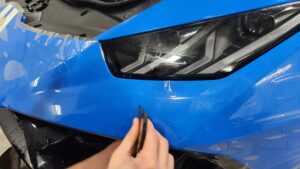
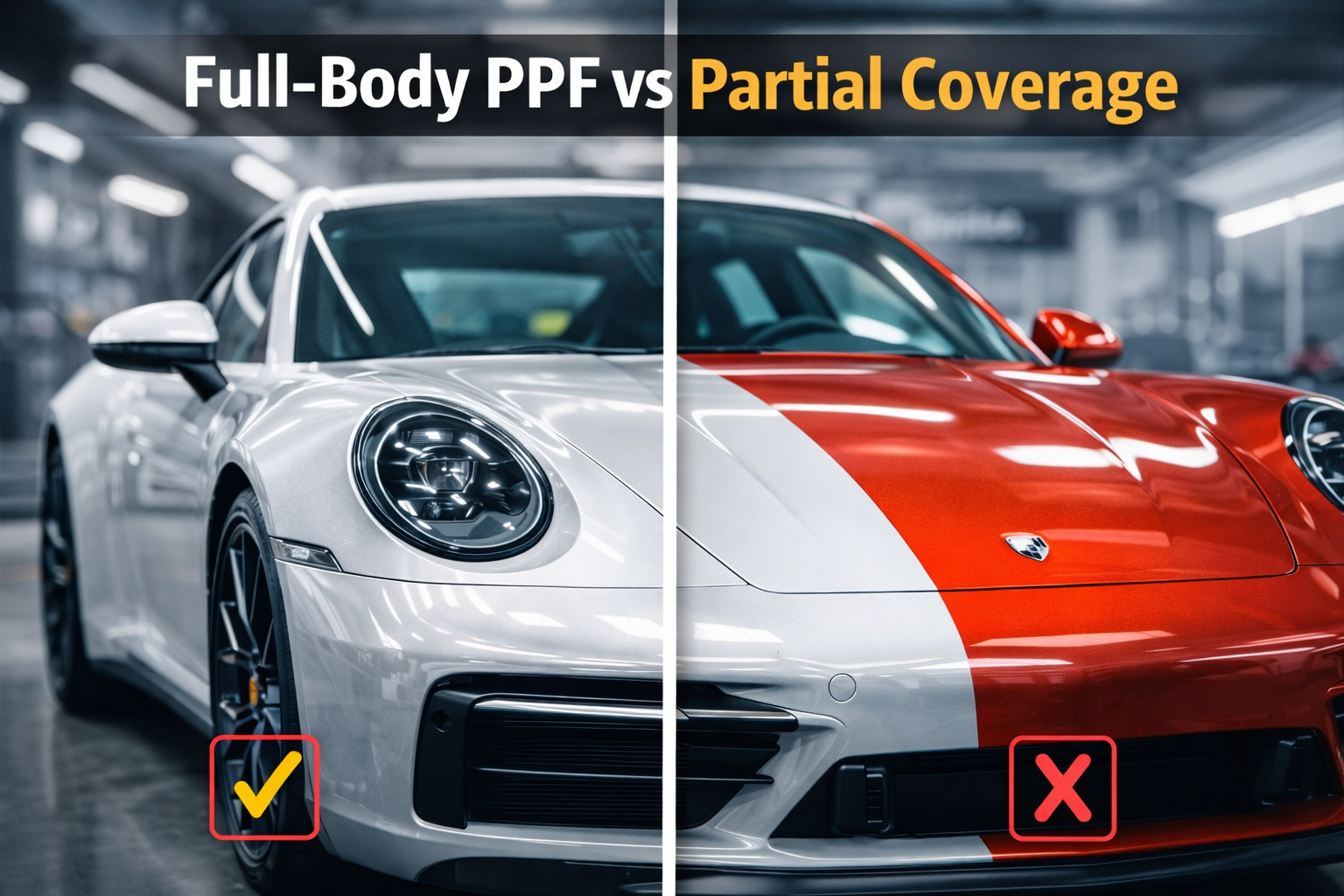
Partial PPF protects selected high-impact sections of the vehicle rather than covering complete panels or the entire car.
A partial-front package, for example, may cover areas such as:
- Front bumper
- Partial hood
- Partial front fenders
- Side mirrors
Coverage varies by package and vehicle. Additional areas such as rocker panels, door edges, rear bumper loading areas, or other vulnerable surfaces can also be protected individually.
If you’re deciding which panels matter most, see our guide to the most important high-impact areas for PPF.
Benefits of Partial PPF
- Lower upfront cost than more extensive coverage
- Targets areas most exposed to stone chips and road debris
- Can be customized around your driving habits
- Useful for drivers working within a specific protection budget
Limitations of Partial PPF
- Large portions of the vehicle remain unprotected
- A film line may be visible where partial hood or fender coverage ends
- Unprotected panels remain susceptible to scratches, chips, and environmental wear
Partial PPF can be a practical entry point, but drivers who care about avoiding visible film lines on the hood and fenders may prefer full-front coverage.
What Is Full-Front PPF?
Full-front PPF is one of the most popular options because it protects the vehicle’s highest-impact area while covering complete front panels.
A typical full-front package can include:
- Full front bumper
- Full hood
- Full front fenders
- Side mirrors
- Headlights, depending on the vehicle and package
Because the hood and fenders are covered completely, full-front PPF also avoids the horizontal film line associated with some partial-front packages.
For drivers who regularly use the 401, 403, QEW, 407, or other high-speed routes around the GTA, full-front coverage provides strong protection against the areas most directly exposed to stones and road debris.
What Is Full-Body PPF?
Full-body PPF extends protection beyond the front end to virtually every painted exterior panel of the vehicle.
Depending on the vehicle, coverage can include:
- Front and rear bumpers
- Hood and front fenders
- Doors
- Quarter panels
- Rocker panels
- Roof
- A-, B- and C-pillars where applicable
- Trunk or hatch
- Other painted exterior surfaces
Full-body PPF is typically chosen by owners who want comprehensive protection rather than focusing only on stone-chip-prone areas.
Benefits of Full-Body PPF
- Comprehensive protection against stone chips, minor scratches, scuffs, and road debris
- Consistent appearance across protected painted panels
- Protection for side and rear panels that front-end packages leave exposed
- Ideal for long-term ownership when preserving the original paint is a priority
- Available in gloss and, depending on the film selected, matte or satin-style finishes
Full-body PPF is especially popular for sports cars, luxury vehicles, EVs, enthusiast vehicles, and owners who plan to keep their cars for many years.
Limitations of Full-Body PPF
- Significantly higher upfront cost
- More installation time than partial or full-front coverage
- May provide more coverage than some daily drivers actually need
Full-body PPF provides the most extensive protection, but that doesn’t automatically make it the right choice for every vehicle or budget.
Which Areas Take the Most Damage in Ontario?
Southern Ontario driving presents several challenges for vehicle paint, including winter road debris, construction zones, highway driving, and seasonal contamination.
The areas we generally prioritize for protection include:
- Front bumper
- Hood
- Front fenders
- Side mirrors
- Rocker panels
- Lower doors on certain vehicles
- Rear bumper loading areas
Vehicles that spend significant time on highways such as the QEW, 401, 403, and 407 are particularly exposed to stones and debris travelling at higher relative speeds.
We cover these risks in more detail in our Ontario road hazards and PPF guide.
Partial vs Full-Front vs Full-Body PPF
| Coverage | Partial PPF | Full-Front PPF | Full-Body PPF |
|---|---|---|---|
| Coverage Level | Selected high-impact sections | Complete front-end panels | Virtually all painted exterior panels |
| Stone-Chip Protection | Targeted | Excellent at the front | Most comprehensive |
| Visible Film Lines | Possible on partial panels | Minimal when full panels are covered | Minimal when properly installed |
| Cost | Lowest | Mid-range | Highest |
| Best For | Budget-conscious protection | Daily and highway drivers | Maximum protection and long-term ownership |
How Much PPF Do You Actually Need?
There isn’t one package that’s right for every driver. The best approach is to match the coverage to the risks your particular vehicle faces.
Consider Partial PPF If You:
- Have a limited protection budget
- Want to protect only specific vulnerable areas
- Do relatively little highway driving
- Lease the vehicle or don’t expect to keep it long-term
Consider Full-Front PPF If You:
- Drive the vehicle regularly throughout the GTA
- Commute on the 401, 403, QEW, 407, or other highways
- Want to protect the panels most likely to encounter stone chips
- Want complete hood and fender coverage without partial-film lines
- Want a strong balance between coverage and cost
Consider Full-Body PPF If You:
- Want the most comprehensive paint protection available
- Plan to keep the vehicle for many years
- Own a sports, luxury, enthusiast, or premium vehicle
- Drive extensively year-round
- Want protection against scratches and scuffs on side and rear panels as well as stone chips at the front
- Want to preserve as much of the original paint as possible
Is Full-Body PPF Worth the Extra Cost?
That depends on what you’re trying to protect against.
If your main concern is stone chips from highway driving, full-front PPF often provides the strongest value because it concentrates your investment on the panels that receive the greatest direct impact.
If you’re equally concerned about parking-lot scuffs, scratches, rocker-panel wear, side-panel damage, and preserving the entire vehicle, full-body coverage offers benefits that a front-end package cannot.
The decision also changes with the value of the vehicle. Spending more to protect every panel of a premium sports car that you plan to own for ten years may make sense, while the same level of coverage may be unnecessary for a short-term leased daily driver.
That’s why we generally recommend choosing PPF based on the vehicle, ownership period, driving habits, and budget rather than automatically assuming more coverage is always better.
Can You Add More PPF Later?
Yes. You don’t necessarily have to choose full-body coverage immediately.
Some owners begin with front-end protection and later add areas such as:
- Rocker panels
- Doors
- A-pillars
- Rear quarter panels
- Rear bumper
This can be a practical way to expand protection over time. However, existing paint condition should be inspected before additional film is installed, particularly if the vehicle has accumulated scratches or chips since the original PPF installation.
Protecting PPF With Ceramic Coating
PPF and ceramic coating perform different jobs. PPF provides the physical barrier against impacts and scratches, while ceramic coating can make the protected surface easier to clean and maintain.
Applying a compatible ceramic coating over PPF can improve hydrophobic behaviour and help reduce how strongly dirt and contamination adhere to the surface. It does not replace PPF’s impact protection.
If you’re comparing the two technologies, see our PPF vs ceramic coating guide.
Full-Body or Partial PPF: The Final Verdict
You don’t need full-body PPF simply because it’s the most comprehensive option.
For many Ontario drivers, full-front PPF offers an excellent balance of protection and cost by covering the areas most exposed to highway debris. Partial coverage can reduce the initial investment further, while full-body PPF makes sense when preserving virtually the entire exterior is the priority.
The right choice comes down to where you drive, how long you’ll own the vehicle, the condition and value of the paint, and how much protection you actually want.
To compare coverage options for your vehicle, visit our Paint Protection Film services in Mississauga or contact It’s aWrap™ for a recommendation based on your vehicle and driving habits.