
When most people think about automotive window tint, they picture a sleek appearance, increased privacy, or a cooler cabin during the summer. While those are all excellent benefits, one of the biggest advantages of professionally installed window tint is often overlooked: protection against harmful ultraviolet (UV) rays.
Whether you’re commuting across the GTA, driving to work every day, or heading out on a weekend road trip, your skin and your vehicle’s interior are constantly exposed to sunlight. Over time, that exposure can contribute to premature skin aging, sun damage, and interior fading.
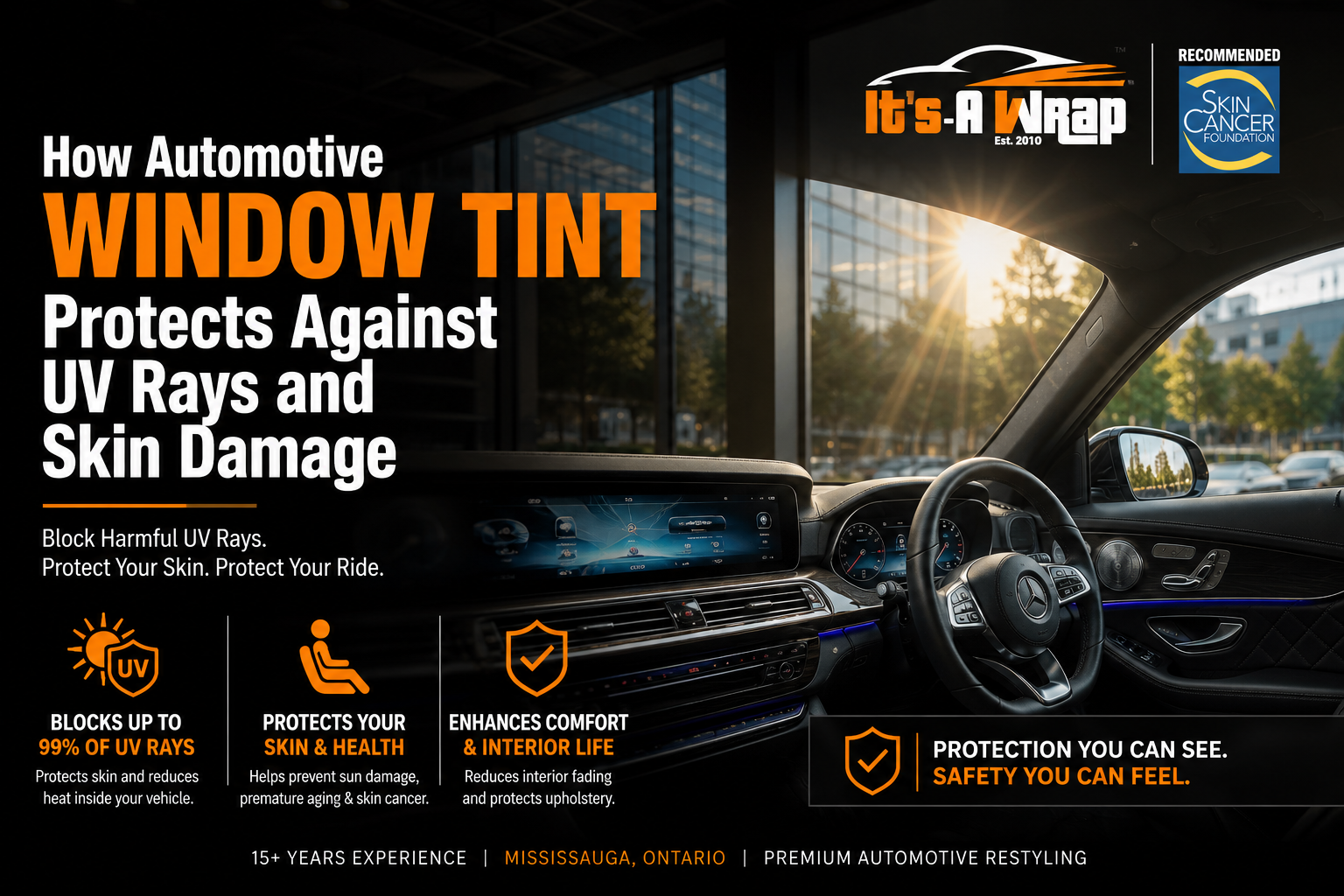
High-quality automotive window film can block up to 99% of harmful UV rays, helping protect both you and your investment. Here’s everything you need to know about how window tint works and why UV protection should be one of the main reasons you consider having it installed.
What Are UV Rays?
Ultraviolet (UV) radiation is invisible energy produced by the sun. Although you can’t see it, prolonged exposure can damage your skin and many of the materials inside your vehicle.
The two primary types of UV radiation are:
- UVA Rays – Penetrate deep into the skin and contribute to premature aging, wrinkles, and long-term skin damage.
- UVB Rays – Primarily responsible for sunburn and a major contributor to skin cancer.
While many people associate UV exposure with spending time outdoors, you can also be exposed while driving.
Can You Get Sun Damage While Driving?
Yes.
Your windshield is made from laminated glass that blocks most UVB rays, but the side and rear windows on most vehicles are constructed from tempered glass, which allows a significant amount of UVA radiation to pass through.
That means your skin can still be exposed during your daily commute—even if you never feel yourself getting sunburned.
Over the years, professional installers frequently notice that the driver’s side of a vehicle often shows noticeably more fading than the passenger side because it’s exposed to significantly more sunlight throughout the vehicle’s lifetime.
The same principle applies to your skin. Daily exposure may seem insignificant, but it adds up over months and years of driving.
According to The Skin Cancer Foundation, UVA rays can penetrate vehicle side windows and contribute to cumulative skin damage over time. The Foundation also recognizes professionally installed UV-protective window film as an effective way to help reduce UV exposure while driving.
How Automotive Window Tint Blocks UV Rays
Modern automotive window films are engineered with multiple protective layers that absorb or reflect harmful ultraviolet radiation before it reaches the vehicle’s occupants.
Unlike factory privacy glass, professionally installed window tint is specifically designed to improve UV protection while maintaining excellent visibility from inside the vehicle.
Premium films can block up to 99% of harmful UV rays, dramatically reducing daily exposure for both drivers and passengers.
This protection is built into the technology of the film itself, meaning UV rejection is not determined simply by how dark the tint appears.
UV Protection vs. Heat Rejection
These two benefits are often confused, but they serve different purposes.
| UV Protection | Heat Rejection |
|---|---|
| Helps protect skin from harmful UV radiation. | Reduces solar heat entering the cabin. |
| Helps prevent interior fading. | Improves driving comfort. |
| Blocks UVA and UVB rays. | Reduces infrared (IR) heat. |
| Provides long-term protection. | Helps reduce air conditioning usage. |
Premium ceramic window films deliver both outstanding UV protection and impressive heat rejection, making them one of the most popular choices for Ontario drivers.
Does Darker Window Tint Block More UV?
No.
One of the biggest misconceptions is that darker window tint automatically provides better UV protection.
In reality, the amount of UV blocked depends on the quality and construction of the film—not its shade.
A premium ceramic film with a lighter visible light transmission can often provide the same UV protection as a much darker film. The correct shade should be selected based on visibility, performance preferences, and the applicable window tint laws in Ontario.
Benefits of UV-Protective Window Tint
Protects Your Skin
If you spend hours behind the wheel every week, reducing daily UV exposure can be an important long-term benefit. While window tint shouldn’t replace sunscreen or other protective measures, it provides another layer of protection every time you drive.
Helps Preserve Your Interior
UV rays don’t just affect your skin—they also slowly damage your vehicle.
Without protection, prolonged exposure can cause:
- Leather seats to dry and crack
- Dashboard fading
- Discoloured trim
- Faded upholstery
- Premature aging of interior materials
Professional window tint significantly reduces UV exposure, helping maintain your vehicle’s appearance and resale value.
Improves Driving Comfort
Many premium window films also reject infrared heat, making your cabin noticeably cooler during the summer months.
Reduces Glare
By reducing harsh sunlight and reflections, window tint helps decrease eye strain while improving driving comfort during bright daytime conditions. Drivers who are particularly sensitive to glare may also benefit from learning more about how window tint can help reduce eye strain and driving discomfort.
Factory Privacy Glass Isn’t the Same as Window Tint
Many SUVs and trucks come equipped with factory privacy glass, but darker factory glass isn’t the same as professionally installed window film.
Privacy glass primarily changes the appearance of the window. Professional window tint adds advanced technology that provides UV rejection, heat rejection, and glare reduction.
Why Professional Installation Matters
The quality of the installation is just as important as the quality of the film.
Professional installation helps ensure:
- Clean, dust-free application
- No bubbles or peeling
- Proper edge finishing
- Long-lasting durability
- Manufacturer-backed warranty coverage
An experienced installer can also recommend the right film based on your driving habits, performance expectations, preferred appearance, and Ontario regulations. Understanding the best window tint percentage for Ontario can help you make a more informed decision before installation.
Choosing a Premium Window Film
When comparing automotive window films, don’t focus solely on darkness or price.
Instead, look for:
- High UV rejection
- Excellent infrared heat rejection
- Optical clarity
- Colour stability
- Strong manufacturer warranty
- Professional installation
The right product depends on how you use your vehicle, how much heat rejection you want, and the level of privacy and visibility you prefer. Our guide to choosing the right window tint for your vehicle explains the most important factors in greater detail.
At It’s aWrap™, we proudly install premium STEK automotive window films. Engineered for exceptional optical clarity, heat rejection, and up to 99.9% UV protection, STEK’s advanced window films help create a cooler, more comfortable driving experience while protecting both your skin and your vehicle’s interior from harmful UV exposure.
Why Choose It’s aWrap™?
With over 15 years of experience, It’s aWrap™ has helped thousands of vehicle owners throughout Mississauga, Oakville, Milton, Burlington, and Toronto protect their vehicles with premium automotive window tint.
Our experienced installers take the time to recommend the right film for your vehicle and ensure every installation meets the highest standards of quality and craftsmanship.
Frequently Asked Questions
Does automotive window tint really block UV rays?
Yes. Premium automotive window films can block up to 99% of harmful UV rays.
Can I get sun damage through my car windows?
Yes. UVA rays can pass through untreated side windows and contribute to cumulative skin damage over time.
Is darker window tint better for UV protection?
No. UV protection depends on the technology used in the film, not how dark it looks.
Does factory privacy glass provide the same protection?
No. Factory privacy glass is primarily cosmetic and doesn’t provide the same performance as professional automotive window film.
Is ceramic window tint worth it?
For most drivers, ceramic window tint offers the best combination of UV protection, heat rejection, clarity, and long-term performance.
Protect Your Vehicle—and Yourself
Automotive window tint is about much more than appearance. It’s a practical investment that helps protect your skin, preserves your vehicle’s interior, reduces glare, and makes every drive more comfortable.
If you’re considering professional window tint installation, choosing a premium film installed by experienced professionals ensures you’ll enjoy those benefits for years to come.