Some cosmetic imperfections can remain if the owner understands that they may still be visible through the vinyl. Other damage needs to be repaired before the vehicle should be wrapped at all.
At It’s aWrap™, we inspect the vehicle before committing to a colour-change wrap. The paint needs to provide a sound, stable surface for the film to bond to. If the underlying finish is already failing, covering it with vinyl does not fix the problem—it simply hides it temporarily while creating additional risk for the wrap.
Vinyl Follows the Surface Underneath It
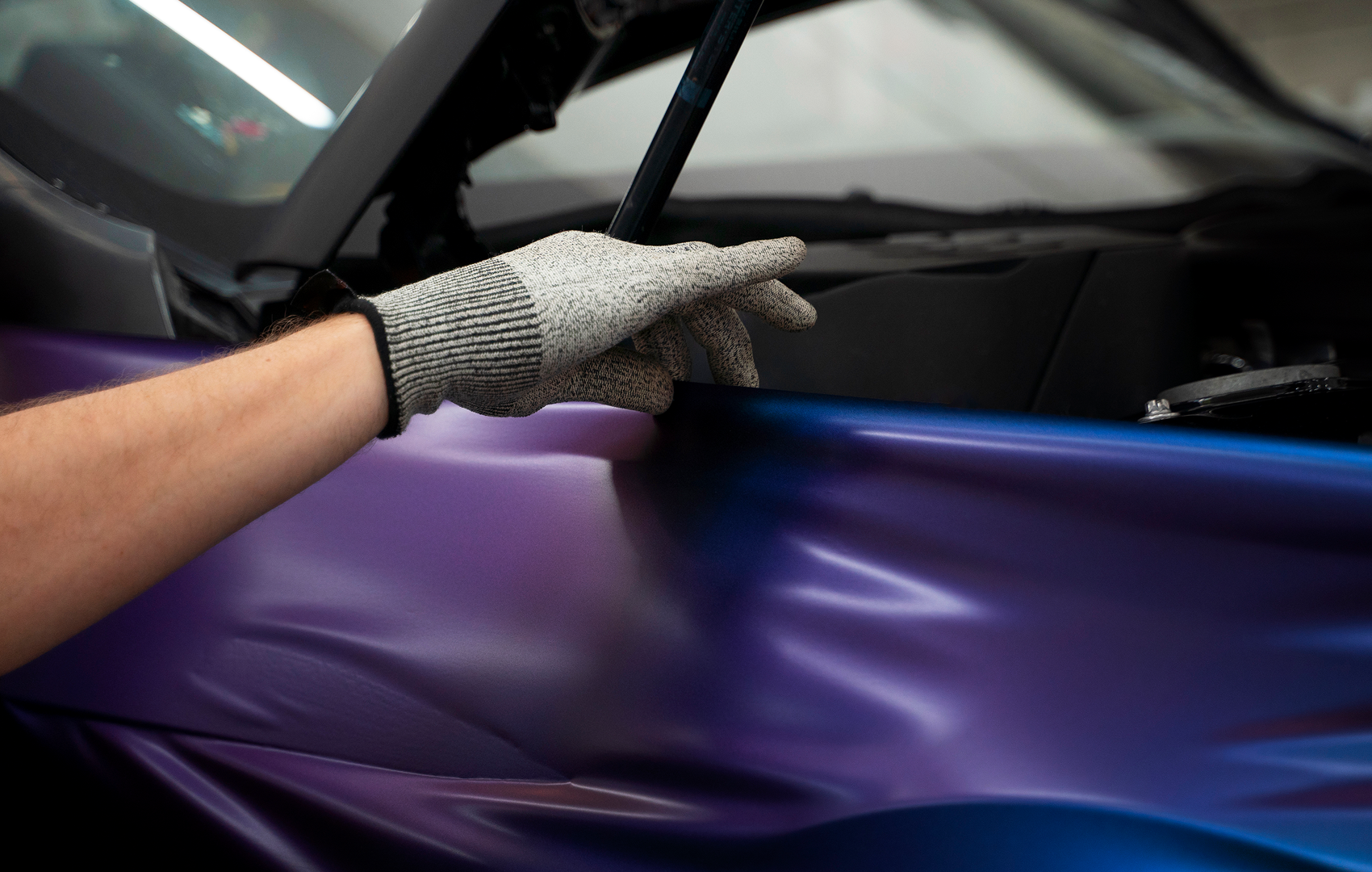
Automotive wrap film is thin and conformable by design. That flexibility is what allows an installer to work it across curves, body lines and complex panels, but it also means the vinyl does not behave like body filler.
If there is a dent in the door, the wrapped door still has a dent. If a deep scratch has physically changed the shape of the clear coat or paint surface, that line can still telegraph through the film. Raised rust, peeling paint and chipped edges can be even more obvious because the vinyl conforms around the irregular surface.
Changing from gloss paint to a satin, matte or darker wrap may make certain minor marks less noticeable from some angles, but that should not be confused with repairing them. The underlying panel is still in the same condition.
This is one reason inspecting the vehicle before choosing material matters. A wrap should be installed over a surface that can support the adhesive and produce the finish the customer is expecting.
Light Scratches Are Very Different From Chipped Paint
Not every scratch requires bodywork before a car can be wrapped. Very light surface marks that have not broken through the paint may have little effect on the finished installation, depending on their depth and the condition of the surrounding finish.
Deeper scratches are different. Once a scratch has cut through the clear coat or paint layers, the installer has to consider more than whether the line will be visible. The exposed or weakened area may no longer provide the stable painted surface the vinyl needs.
Paint chips are where our policy becomes much more straightforward. At It’s aWrap™, we do not wrap over chipped paint. The damaged area needs to be repaired first.
The problem is not simply cosmetic. Vinyl adhesive bonds to the surface directly underneath it. If that surface includes loose or fractured paint, the film may be adhering to material that is already separating from the panel. During installation or eventual removal, that weakened paint can come away with the vinyl.
This is also why the condition of the paint matters when people ask whether vinyl wrap can damage automotive paint. Healthy factory paint and compromised paint should not be treated as though they present the same risk.
A Dent Can Sometimes Stay – But the Wrap Will Not Hide It
Dents are somewhat different because the issue may be the shape of the metal rather than the condition of the paint.
If the paint over the dent is intact, stable and otherwise suitable for vinyl, the vehicle may still be wrappable. At It’s aWrap™, a customer can choose to leave a dent in place if they understand what the finished result will look like.
The important part is setting that expectation correctly: the dent will still be there after the vehicle is wrapped.
In some cases, changing the colour may make a shallow dent less obvious from a particular viewing angle. In others, a gloss or reflective finish can make the distortion easier to see because reflections bend across the damaged panel.
If the goal is a high-end colour change that looks as close to a properly painted vehicle as possible, repairing an obvious dent beforehand will usually produce the better result. Paintless dent repair may be an option where the paint is intact and the damage is suitable, while more significant damage may require conventional bodywork.
The key distinction is that a dent with stable paint can sometimes be a cosmetic choice. Failing paint is not.
Rust Needs to Be Repaired, Not Covered
Vinyl wrap is not a rust treatment.
If corrosion is developing underneath the paint, covering the panel does nothing to stop the underlying metal from continuing to deteriorate. Bubbling paint around a rusted area is also an unstable surface for adhesive. Even if the vinyl initially appears to stick, the substrate underneath it is already failing.
KPMF’s current vehicle-wrap guidance is explicit on this point: wrap film is not a cure for rust and should be fitted to paintwork that is in good condition. 3M similarly advises that rust, bubbling and other vehicle damage remain visible beneath film and can contribute to premature failure.
At our shop, visible rust has to be professionally repaired before the vehicle is wrapped. Simply sanding the top of a rusty area until it feels smoother is not the same as completing a proper corrosion and refinishing repair.
The same principle applies to rust bubbles that have not yet broken through the paint. If corrosion is pushing the paint outward, the fact that the surface is technically still painted does not make it a stable substrate.
Peeling Clear Coat and Failing Paint Are Deal-Breakers
Clear-coat failure is another condition that cannot be solved with vinyl.
When the clear coat is peeling, flaking or separating from the colour coat underneath, the wrap adhesive is no longer bonding to a reliable finish. It may stick perfectly well to the loose clear coat—but the clear coat itself is no longer securely attached to the vehicle.
That creates problems in both directions. The film can lift because the surface underneath it fails, and future removal can pull additional compromised coating from the panel.
The same concern applies to paint that is bubbling, delaminating or already coming away around previous repairs. Covering those areas may make them temporarily less visible, but it does not make the underlying finish stable enough for a professional wrap.
At It’s aWrap™, compromised paint must be repaired before installation. We would rather turn down or postpone the wrap than install expensive material over a surface we already know is unsuitable.
Previous Bodywork Can Be Wrapped – But the Repair Has to Be Finished Properly
Having bodywork done does not automatically prevent a vehicle from being wrapped. The question is whether the repaired panel has been properly finished and whether the new paint has had enough time to cure.
Fresh body filler, bare primer and unfinished repair areas are not acceptable final surfaces for a colour-change wrap. The bodywork needs to be completed by the appropriate repair facility and finished with a stable automotive paint system.
After repainting, the new finish also needs sufficient curing time before vinyl is installed. There is no responsible universal answer such as “wait exactly seven days” because paint systems and body-shop procedures differ. 3M’s current installation guidance specifically advises allowing newly finished surfaces to cure for the entire period specified by the paint manufacturer, noting that some finishes can require considerably longer cure times.
At It’s aWrap™, we do not perform collision or paint repair as part of the wrap itself. If repairs are required, the customer has the bodywork completed first and allows the repaired finish to cure properly before the vehicle comes back for wrapping.
Previously repaired or repainted surfaces can also behave differently from original factory paint during future vinyl removal. For that reason, pre-existing bodywork and repaired paint are documented and the customer acknowledges the additional surface risk before installation.
Body Filler Does Not Belong Directly Under the Wrap
A panel repaired with filler still needs to go through the proper refinishing process before wrapping. Vinyl should not simply be applied directly over exposed filler because the area looks smooth after sanding.
The surface needs to be sealed, primed and finished appropriately so the vinyl has a suitable substrate. 3M’s current vehicle-wrap installation guidance similarly identifies properly refinished repair areas as important to achieving reliable film performance.
This also matters visually. A repair may feel smooth to the hand but still have sanding marks, pinholes, edges or texture that become more apparent once a smooth gloss vinyl is stretched across it.
A wrap installer should therefore assess the finished repair rather than assume that body filler automatically makes the panel ready for vinyl.
The Inspection Is About Adhesion and Appearance
When we inspect a vehicle before wrapping, we are really assessing two things at once.
The first is whether the vinyl has a stable surface to adhere to. That means looking for chipped paint, rust, clear-coat failure, poorly bonded repairs and other areas where the finish itself may come away.
The second is whether the customer will be satisfied with how the finished vehicle looks. A shallow dent with intact paint might be perfectly capable of holding vinyl, but if the owner expects the wrap to make the body damage disappear, the project is starting with the wrong expectation.
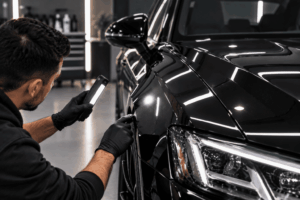
This is why photos can be useful for an initial quote but do not always tell the entire story. Certain paint defects, previous repairs and surface failures are much easier to judge in person under proper lighting.
Once the surface is considered suitable, the vehicle can then be cleaned and prepared for installation. The wrap process itself should begin with a stable vehicle—not with an installer trying to use vinyl to compensate for unfinished bodywork.
Repair the Surface First, Then Let the Wrap Do Its Job
A vinyl wrap is excellent at changing the appearance of a healthy vehicle. It can transform the colour, finish and overall character of the car without permanently repainting it. What it cannot do is turn damaged bodywork into a sound surface.
Light cosmetic marks may sometimes remain without preventing installation. Dents can sometimes stay if the paint is intact and the customer accepts that they will remain visible. But chipped paint, rust, peeling clear coat and other unstable surfaces need to be repaired first.
That approach protects both the quality of the installation and the customer’s expectations. A premium wrap applied over poor paint is still sitting on poor paint.
If you are considering a colour change and are unsure whether the condition of your vehicle is suitable, learn more about our car wrap services in Mississauga or contact It’s aWrap™ to arrange an inspection.