
Fresh tint can sometimes show light haze, small moisture areas or a slightly uneven appearance immediately after installation. Those conditions often improve as the film dries. At the same time, operating the windows too early, cleaning the inside of the glass or pressing on a visible bubble can interfere with an installation that otherwise would have settled normally.
At It’s aWrap™, our post-install instructions are deliberately conservative: keep the windows closed for several days, avoid cleaning the film while it is fresh and contact us rather than trying to correct anything yourself.
Do Not Roll the Windows Down Immediately
The film applied to the side windows extends down below the visible glass line. When the window is lowered, the lower edge passes through the weather seals inside the door. If the adhesive has not had enough time to develop, that movement can catch or shift the film.
STEK currently specifies a minimum of 48 hours before operating newly tinted windows. At It’s aWrap™, we give customers a larger safety margin because curing conditions in Ontario can vary significantly.
During warmer summer conditions, we recommend keeping the windows closed for approximately three to five days. During colder weather, we generally extend that to about one week.
That extra time is particularly useful during winter because lower temperatures slow the drying and stabilization process. A vehicle parked indoors in warm conditions and one sitting outside during a cold Ontario week are not curing under the same circumstances.
There is little downside to waiting an extra day. Rolling the window down early simply to test whether the film is ready creates a risk that does not need to be taken.
Moisture and Light Haze Can Be Normal at First
Automotive window film is installed using a liquid application solution. Most of that moisture is removed during installation, but a small amount can remain between the film and glass while the adhesive settles.
During that period, a newly tinted window may occasionally look slightly hazy, cloudy or uneven when viewed from a particular angle. Small moisture areas can also be visible under certain lighting.
Many minor visual changes improve noticeably within the first day or two, but there is no universal deadline by which every trace of moisture must disappear. Film construction, temperature, humidity, sunlight and the amount of residual installation solution all influence drying time.
STEK’s current care guidance specifically recognizes temporary haziness, water marks, residual water beads, cloudiness and slight optical distortion as conditions that can occur during stabilization. It also notes that complete drying can take considerably longer in some films and environments.
That distinction is important. A window that looks slightly hazy the day after installation is not automatically defective. What matters is whether the appearance is gradually improving as the film dries.
Do Not Press Bubbles or Try to Push Moisture Out
Seeing a small bubble or moisture pocket often creates the instinct to press it toward the edge of the window. That is exactly what we do not want customers doing.
Do not push the film with your fingers, a card or a household squeegee. Do not puncture a bubble with a needle. Do not peel an edge back to see what is underneath, and do not apply a heat gun or hair dryer in an attempt to make the area disappear faster.
Fresh window film is still stabilizing on the glass. Pressing or manipulating it can shift the adhesive, introduce a crease or contaminate an edge that was otherwise curing normally.
If you notice something, leave it alone and monitor whether it changes. If the area is clearly getting worse, an edge is lifting or the appearance is not improving as expected, contact the installer so it can be assessed properly.
Wait Before Cleaning the Inside of the Glass
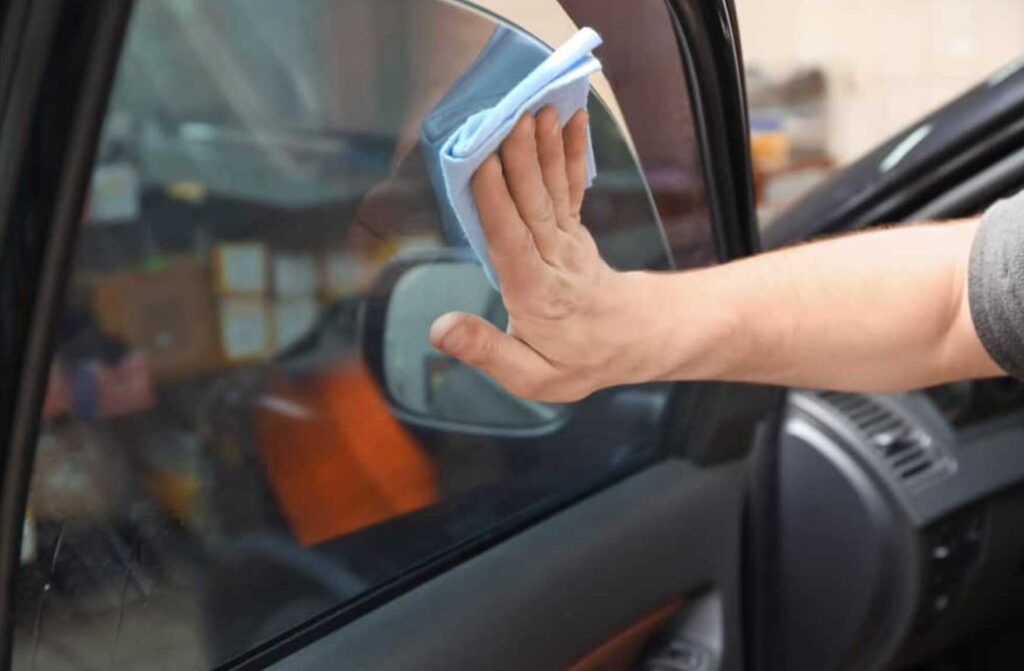
The outside surface of the window can still be washed normally because automotive tint is installed on the inside of the glass. The part that needs special care is the interior surface where the film has been applied.
During the initial cure, there is no reason to clean that side of the glass unless absolutely necessary. STEK currently advises against cleaning the film for at least seven days after installation and recommends a longer wait before deeper cleaning or using cleaning chemicals.
Once the initial period has passed, the film should be cleaned gently with a soft, clean microfiber cloth and a cleaner that is compatible with automotive window film. Abrasive pads, razor blades and aggressive glass cleaners have no place on the tinted surface.
For the complete long-term cleaning routine, see our guide to cleaning tinted car windows. That article covers regular maintenance; during the first week, the better approach is simply to minimize unnecessary contact.
Be Careful With Defrosters and Frozen Windows in Winter
Winter introduces another issue that has very little to do with the film itself: frozen glass.
If a side window is frozen into its weather seal, do not repeatedly operate the switch to force it down. Even after the normal roll-down waiting period has passed, the glass should be properly defrosted before being operated.
STEK also currently recommends avoiding use of the defroster during the initial seven-day period after film installation. That is most relevant to rear glass, where the tint is installed over the defroster grid.
After the initial cure, the factory rear defroster can be used normally. The important precaution is during those first days while moisture and adhesive are still stabilizing.
Do Not Judge the Final Appearance on Installation Day
Tint should be installed cleanly, but a fresh installation and a fully cured installation are not visually identical in every situation.
The glass may look slightly different under direct sunlight, bright shop lighting and at night. Residual moisture can create temporary variations in clarity that become less noticeable as the film dries.
This is why examining every square centimetre of the glass immediately after installation and assuming any visible moisture is permanent can be misleading. Give the film the curing time it needs before judging the final result.
That does not mean an owner should ignore an obvious installation problem. Large lifting areas, a film edge that is visibly peeling back, significant contamination beneath the film or an issue that is clearly worsening rather than improving should be brought to the installer’s attention.
The difference is between allowing normal drying to take place and being told to accept a genuine defect indefinitely. Those are not the same thing.
When Should You Contact the Installer?
If the tint is gradually clearing and the moisture areas are becoming smaller or less visible, continued drying is usually the sensible next step.
Contact the installer sooner if an edge is lifting, the film has shifted, a large area appears to be separating from the glass or something has happened to the film while it was curing.
If a small haze or moisture area simply has not disappeared as quickly as expected, it is also perfectly reasonable to ask us to look at it. Cold or humid weather can extend curing substantially, and an in-person inspection is often the easiest way to distinguish residual moisture from an installation issue.
At It’s aWrap™, if something does require correction, we would rather inspect it properly than have the customer attempt a DIY repair. Where an installation or warrantable issue is confirmed, it can be addressed appropriately rather than covered up with a temporary fix.
The First Week Should Be Uneventful
Good window tint aftercare is mostly about what you do not do.
Keep the windows closed for the recommended period. Do not clean or scrub the newly installed film. Do not press moisture pockets or bubbles. Avoid stickers, suction mounts and other accessories directly on the film while it is fresh. In winter, make sure frozen windows are fully defrosted before operating them.
After that initial period, the film transitions into normal ownership. The windows can be operated normally, and regular cleaning becomes straightforward as long as coating-safe materials and gentle techniques are used.
If you are considering tint for your vehicle, learn more about our window tinting services in Mississauga and Oakville. If your tint has already been installed and you are concerned about how it is curing, contact It’s aWrap™ rather than trying to adjust the film yourself.