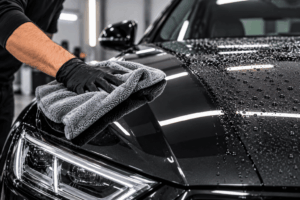
If you’ve been researching ways to protect your vehicle’s paint, you’ve almost certainly come across two of the most popular options: Paint Protection Film (PPF) and Ceramic Coating.
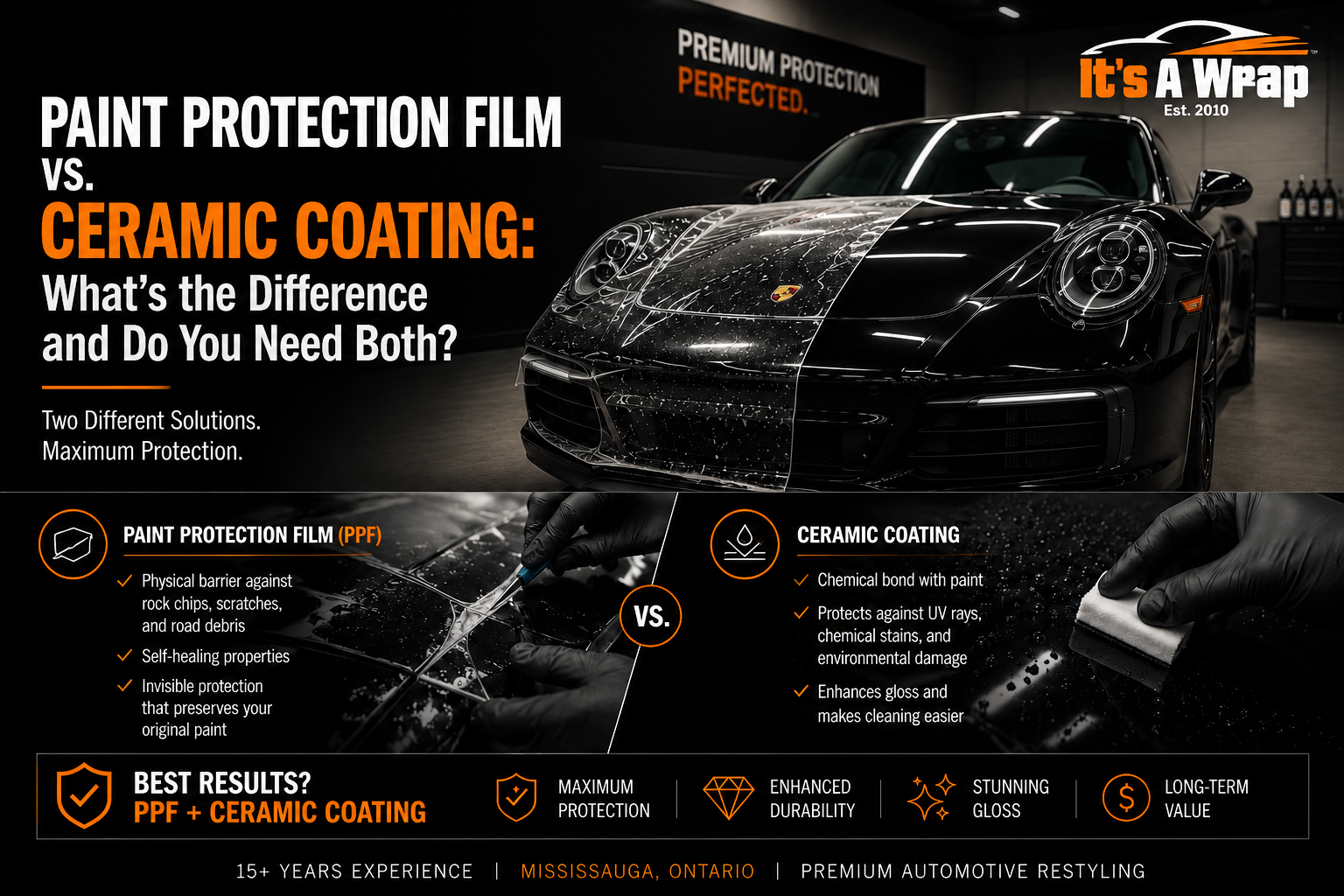
Although they’re often mentioned together, Paint Protection Film and Ceramic Coating serve very different purposes. One is designed to absorb physical impacts like rock chips and scratches, while the other creates a durable, hydrophobic layer that makes your vehicle easier to clean and better protected from contaminants and UV exposure.
One of the biggest misconceptions we hear from customers is that they have to choose one or the other. In reality, they aren’t competing products—they’re complementary. In fact, combining both provides one of the highest levels of paint protection currently available.
After installing thousands of paint protection packages on everything from daily drivers to luxury and exotic vehicles, we’ve found that understanding the strengths of each product helps customers make the best long-term investment for their vehicle.
| Feature | Paint Protection Film (PPF) | Ceramic Coating |
|---|---|---|
| Rock Chip Protection | ✅ Excellent | ❌ No |
| Scratch Resistance | ✅ Excellent | ⚠️ Minor Resistance |
| Self-Healing Technology | ✅ Yes (Premium Films) | ❌ No |
| Hydrophobic Properties | ✅ Good | ✅ Excellent |
| UV Protection | ✅ Yes | ✅ Yes |
| Chemical & Bird Dropping Resistance | ✅ Very Good | ✅ Excellent |
| Easier Vehicle Washing | ✅ Yes | ✅ Excellent |
What Is Paint Protection Film (PPF)?
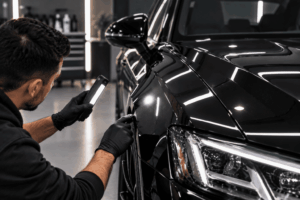
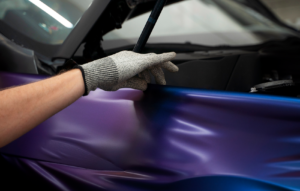
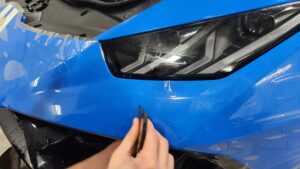
Paint Protection Film, commonly known as PPF or a clear bra, is a transparent urethane film installed over your vehicle’s painted surfaces. It acts as a physical barrier between your paint and the road, absorbing impacts that would otherwise damage the finish.
Modern premium films are engineered to be incredibly durable while remaining virtually invisible once installed.
PPF is specifically designed to protect against:
- Rock chips
- Road debris
- Light scratches
- Swirl marks
- Bug splatter
- Bird droppings
- Tree sap
- Road salt
- UV exposure
Many premium Paint Protection Films also feature self-healing technology. Minor scratches and swirl marks disappear when exposed to heat from the sun or warm water, allowing the film to maintain its appearance over time.
Unlike waxes or coatings, PPF is thick enough to absorb physical impacts before they reach your vehicle’s paint.
What Is Ceramic Coating?
Ceramic Coating is a liquid polymer that chemically bonds to your vehicle’s paint, creating a durable sacrificial layer over the surface.
Unlike Paint Protection Film, ceramic coating doesn’t absorb impacts or prevent rock chips. Instead, it excels at protecting your paint from environmental contaminants while making maintenance significantly easier.
Once cured, Ceramic Coating creates an extremely smooth, hydrophobic surface that repels water, dirt, and many common contaminants.
Benefits include:
- Outstanding water beading
- Easier vehicle washing
- Reduced dirt accumulation
- Protection from UV rays
- Resistance to bird droppings and tree sap
- Improved gloss and depth
- Better resistance to chemical staining
If you enjoy keeping your vehicle clean, Ceramic Coating dramatically reduces the effort required to maintain that freshly detailed appearance.
Paint Protection Film vs. Ceramic Coating
Although they’re often compared, PPF and Ceramic Coating solve completely different problems.
Paint Protection Film protects against physical damage.
Ceramic Coating protects against environmental damage.
Think of it this way:
- PPF protects your paint from impacts.
- Ceramic Coating protects your paint from contamination.
One doesn’t replace the other.
For example, Ceramic Coating won’t stop a rock travelling at highway speed from chipping your paint. Likewise, while PPF offers some hydrophobic properties, it generally won’t provide the same level of water repellency or ease of maintenance as a professionally installed Ceramic Coating.
Can You Apply Ceramic Coating Over Paint Protection Film?
Absolutely—and it’s one of the most popular combinations we install.
Once the Paint Protection Film has been professionally installed, Ceramic Coating can be applied directly over both the film and any remaining painted surfaces.
This gives you the best characteristics of each product:
- Impact protection from the PPF
- Outstanding hydrophobic performance
- Easier maintenance
- Additional resistance to contaminants
- Enhanced gloss and appearance
Applying Ceramic Coating over Paint Protection Film also helps keep the film cleaner, making routine maintenance quicker and helping preserve its appearance over time.
Which Areas Should Be Protected With PPF?
Not every vehicle requires full-body Paint Protection Film.
For most Ontario drivers, the highest-risk areas are the front of the vehicle where road debris is constantly impacting the paint.
These commonly include:
- Front bumper
- Full hood
- Full fenders
- Side mirrors
- Headlights
- Rocker panels
- Rear wheel arches
- A-pillars (optional)
- Roof leading edge (optional)
This is why many vehicle owners choose a front-end PPF package, followed by Ceramic Coating across the entire vehicle.
It provides excellent protection while remaining more cost-effective than wrapping the entire vehicle in PPF.
Why Many Vehicle Owners Choose Both
After years of installing both products, we’ve found that the majority of customers looking for long-term paint protection ultimately choose a combination of Paint Protection Film and Ceramic Coating.
Paint Protection Film is installed where physical damage is most likely to occur, while Ceramic Coating is applied across the entire exterior to improve gloss, simplify maintenance, and protect against environmental contaminants.
Together, they provide a level of protection that neither product can achieve on its own.
Common Misconceptions
Does Ceramic Coating Prevent Rock Chips?
No. Ceramic Coating is not thick enough to absorb impacts from rocks or road debris. If rock chip protection is your priority, Paint Protection Film is the correct solution.
Does Paint Protection Film Replace Ceramic Coating?
Not entirely. While many premium PPF products include hydrophobic top coats, Ceramic Coating generally offers superior water repellency, easier maintenance, and stronger chemical resistance.
Can Ceramic Coating Be Applied Over PPF?
Yes. In fact, applying Ceramic Coating over Paint Protection Film is one of the best ways to maximize both protection and ease of maintenance.
Is Full-Body PPF Necessary?
Not for everyone. Many drivers achieve an excellent balance of protection and value by installing PPF on high-impact areas while Ceramic Coating protects the rest of the vehicle.
Which Option Is Right for You?
If your primary concern is preventing rock chips, scratches, and road debris damage, Paint Protection Film is the clear choice.
If your goal is making your vehicle easier to clean, improving gloss, and protecting against UV rays and contaminants, Ceramic Coating is an excellent investment.
If you want the most comprehensive protection available, combining both products provides the best of each technology.
Protect Your Investment With It’s aWrap™
At It’s aWrap™, we’ve been helping vehicle owners throughout Mississauga, Oakville, Milton, Burlington, Toronto, and the surrounding GTA protect their vehicles since 2010.
Our experienced installers can recommend the right combination of Paint Protection Film and Ceramic Coating based on your vehicle, driving habits, and budget, ensuring you receive the level of protection that’s right for you.
Contact us today to learn more about our Paint Protection Film and Ceramic Coating packages or to request a personalized quote.