It’s one of the first questions people ask after receiving a quote for Paint Protection Film:
“Why does PPF cost so much?”
When compared to services like ceramic coating, window tint or a traditional wax, the price of Paint Protection Film can seem surprisingly high. A full front installation can cost well over a thousand dollars, while full vehicle coverage often ranges into several thousand.
At first glance, it may appear you’re simply paying for a sheet of clear film. In reality, Paint Protection Film is one of the most technically advanced products installed on a modern vehicle, and much of its cost comes from the technology behind the film and the skilled labour required to install it correctly.
At It’s aWrap™, we’ve been installing Paint Protection Film since 2010 for drivers throughout Mississauga, Oakville, Milton, Burlington and Toronto. Here’s what actually determines the cost of PPF—and why many vehicle owners consider it one of the best long-term investments they can make.
You’re Not Paying for Plastic—You’re Paying to Protect Your Paint
One of the biggest misconceptions about Paint Protection Film is that it’s simply a layer of clear plastic applied over your vehicle’s paint.
Modern PPF is considerably more advanced than that.
Premium films are engineered with multiple layers that work together to protect your vehicle from everyday damage while remaining virtually invisible once installed.
Depending on the manufacturer, these layers can include:
- A self-healing top coat that helps fine swirl marks disappear with heat.
- UV-resistant technology that helps reduce yellowing over time.
- Optically clear polyurethane designed to preserve your vehicle’s original finish.
- Advanced adhesives that securely bond to the paint while allowing professional removal when necessary.
- Hydrophobic surface properties that make the film easier to clean.
Developing these materials requires years of engineering, testing and refinement. That’s one of the reasons premium Paint Protection Film costs significantly more than standard vinyl or lower-quality protective films.
Most of What You’re Paying for Is Skilled Installation
The film itself is only part of the overall cost. A significant portion of every PPF installation reflects the time, precision and experience required to apply it properly.
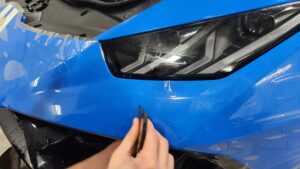
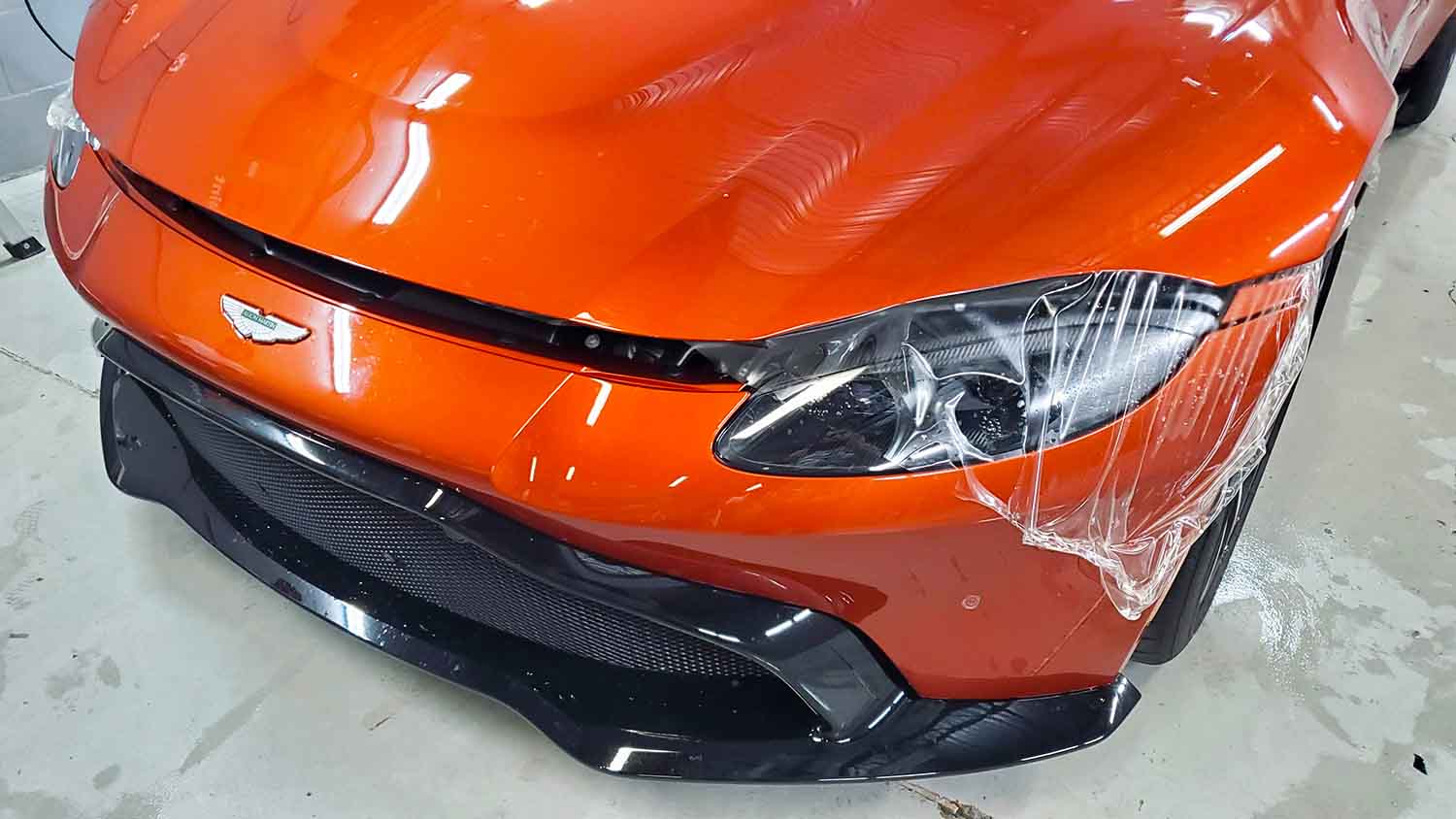
Unlike many automotive accessories, Paint Protection Film cannot simply be placed on the vehicle and trimmed quickly. Every panel must be carefully prepared, positioned and installed to minimise contamination while ensuring a clean, nearly invisible finish.
Depending on the coverage package, installation may involve:
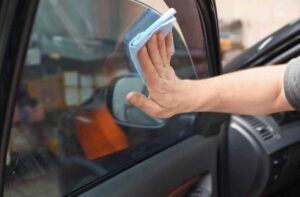
- Thorough paint preparation before installation.
- Computer-cut patterns designed specifically for your vehicle.
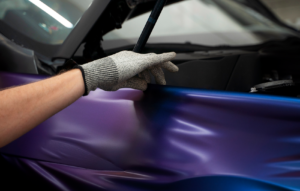
- Heat-forming the film around complex curves.
- Wrapping exposed edges wherever possible.
- Carefully positioning the film to avoid stretch marks or distortion.
- Removing trapped moisture and air during installation.
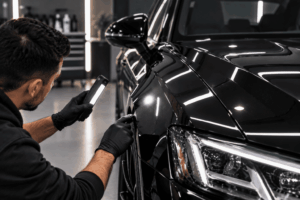
- Final inspection and quality control before delivery.
Even with modern plotting software, installing PPF remains a highly skilled trade that takes years to master. Two installers can work with the exact same film and produce very different results depending on their experience and attention to detail.
Every Vehicle Requires a Different Installation
No two vehicles require the same amount of work.
A flat hood on one vehicle may install relatively quickly, while another may include sharp body lines, deep recesses, aggressive curves or complex bumper designs that significantly increase installation time.
Sports cars, luxury vehicles and high-performance models often require more intricate work around:
- Large front bumpers.
- Air intakes.
- Headlights.
- Mirrors.
- Spoilers.
- Carbon fibre trim.
This is why the cost of protecting a Tesla Model Y may differ from a Porsche 911, Corvette or Mercedes-Benz, even if the amount of film used appears similar.
Vehicle complexity—not simply vehicle size—is one of the biggest factors that influences pricing.
Premium Paint Protection Film Is Designed to Last for Years
Quality Paint Protection Film isn’t intended to protect your vehicle for a few months—it’s designed to provide years of defence against everyday road hazards.
Premium films from leading manufacturers are engineered to resist:
- Stone chips.
- Road debris.
- Bug acids.
- Bird droppings.
- Tree sap.
- Light scratches and swirl marks.
- UV exposure.
Many premium products also include manufacturer warranties against issues such as yellowing, cracking or delamination when installed and maintained according to their guidelines.
If you’re comparing different products, our guide to the best Paint Protection Film brands explains the differences between some of the industry’s leading manufacturers.
Why Cheap Paint Protection Film Often Costs More Later
It’s natural to compare quotes when investing in Paint Protection Film. However, the lowest price doesn’t always represent the best long-term value.
Lower-cost installations may use entry-level films, take shortcuts during installation or provide limited warranty coverage. While they may reduce the initial investment, they can also increase the likelihood of future problems such as lifting edges, premature yellowing, poor optical clarity or adhesive failure.
If the film needs to be removed and replaced after only a few years, you’ve effectively paid for the installation twice.
Our article on cheap Paint Protection Film explains why choosing solely based on price can become significantly more expensive over the life of your vehicle.
Is Paint Protection Film Worth the Investment?
Whether Paint Protection Film is worth the cost ultimately depends on how you use your vehicle and how long you plan to keep it.
If you’ve recently purchased a new vehicle, own a luxury or performance model, or simply want to preserve your paint for years to come, PPF is often one of the most effective forms of protection available.
Unlike waxes, sealants or ceramic coatings, Paint Protection Film creates a physical barrier that helps absorb the impact of small stones and road debris before they reach your paint. Ceramic coatings provide excellent gloss and make your vehicle easier to clean, but they are not designed to prevent rock chips in the same way as PPF.
If you’re unsure which option is right for your vehicle, our guide comparing Paint Protection Film vs. Ceramic Coating explains how the two products differ and why many owners choose to combine them.
For drivers who want the highest level of protection, Paint Protection Film often delivers value that extends well beyond its initial cost by helping preserve one of the most expensive parts of the vehicle—the factory paint.
Repairing Paint Damage Can Cost Far More Than Protecting It
One of the easiest ways to look at the value of Paint Protection Film is to compare it with the cost of repairing damaged paint.
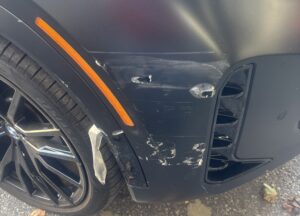
A single stone chip may seem minor, but repainting modern vehicles can quickly become expensive. Matching factory paint, blending adjacent panels and maintaining the vehicle’s original finish often costs considerably more than many owners expect.
While Paint Protection Film isn’t designed to prevent every type of damage, it significantly reduces exposure to many of the everyday hazards that gradually affect a vehicle’s appearance, including:
- Highway stone chips.
- Road debris.
- Bug splatter.
- Bird droppings.
- Tree sap.
- Light scratches caused by regular washing.
Protecting the original paint is often less expensive—and far less inconvenient—than repairing it later.
When Paint Protection Film Might Not Be the Right Choice
One of the most common misconceptions is that every vehicle should receive Paint Protection Film. In reality, that’s not always the case.
Depending on your situation, PPF may not provide the same value for every owner.
For example, you may decide against Paint Protection Film if:
- Your vehicle already has significant paint damage that you don’t intend to repair.
- You plan to sell or trade the vehicle in the near future.
- Your vehicle is used infrequently and rarely driven on highways.
- Your budget is better suited to protecting only the highest-impact areas rather than the entire vehicle.
Many owners choose a partial coverage package instead of protecting the entire vehicle. Areas such as the front bumper, hood, fenders and mirrors typically receive the greatest amount of road debris, making them popular starting points for Paint Protection Film.
If you’re deciding how much protection you need, our guide on choosing the right PPF coverage explains the different coverage options and who they’re best suited for.
Frequently Asked Questions
Why is Paint Protection Film more expensive than ceramic coating?
Paint Protection Film uses a thicker, impact-resistant polyurethane film that requires significantly more material and installation time. Ceramic coating is a liquid coating applied directly to the paint and is designed primarily to improve gloss, simplify maintenance and add chemical resistance rather than protect against stone chips.
Does more expensive PPF perform better?
Higher-priced films often include improved optical clarity, longer warranties, better stain resistance and enhanced self-healing technology. However, the quality of the installation is just as important as the film itself.
Can Paint Protection Film be removed?
Yes. Professionally installed Paint Protection Film can typically be removed without damaging the factory paint when removed correctly.
How long does Paint Protection Film last?
The lifespan depends on the manufacturer, installation quality and environmental conditions. Many premium films are designed to provide protection for many years when properly maintained.
Can Paint Protection Film be waxed or ceramic coated?
Yes. Many vehicle owners apply a ceramic coating over Paint Protection Film to make cleaning easier and improve water repellency. If you prefer traditional maintenance, read our guide on whether you can wax a vehicle with Paint Protection Film.
Paint Protection Film Installation in Mississauga
Paint Protection Film is undoubtedly one of the larger investments you can make in your vehicle, but understanding what goes into the product—and the installation—helps explain why.
You’re not simply paying for a sheet of clear film. You’re investing in advanced materials, skilled craftsmanship and long-term protection designed to preserve your vehicle’s factory finish against the hazards of everyday driving.
At It’s aWrap™, we’ve been installing premium Paint Protection Film since 2010 for drivers throughout Mississauga, Oakville, Milton, Burlington and Toronto. Whether you’re looking to protect a brand-new vehicle or simply want advice on the right coverage package, our team is happy to help.
Learn more about our Paint Protection Film services, browse our recent installations, or contact us for a free consultation and personalized quote.