
If your vehicle has Paint Protection Film (PPF), you may be wondering whether waxing is still necessary—or even safe. The good news is that yes, you can wax a car with PPF, provided you use the right products and follow proper maintenance practices.
For drivers across Mississauga, Oakville, Milton, Burlington, and the Greater Toronto Area, protecting your vehicle from road salt, UV exposure, gravel, and environmental contaminants is essential. While premium PPF already provides outstanding protection, the right PPF maintenance routine can help preserve its appearance and performance for years.
At It’s aWrap™, we’ve spent more than 15 years protecting and restyling vehicles in Mississauga and the GTA, including extensive hands-on experience installing and maintaining Paint Protection Film. Here’s what every vehicle owner should know before applying wax to PPF.
Can You Wax Over Paint Protection Film?
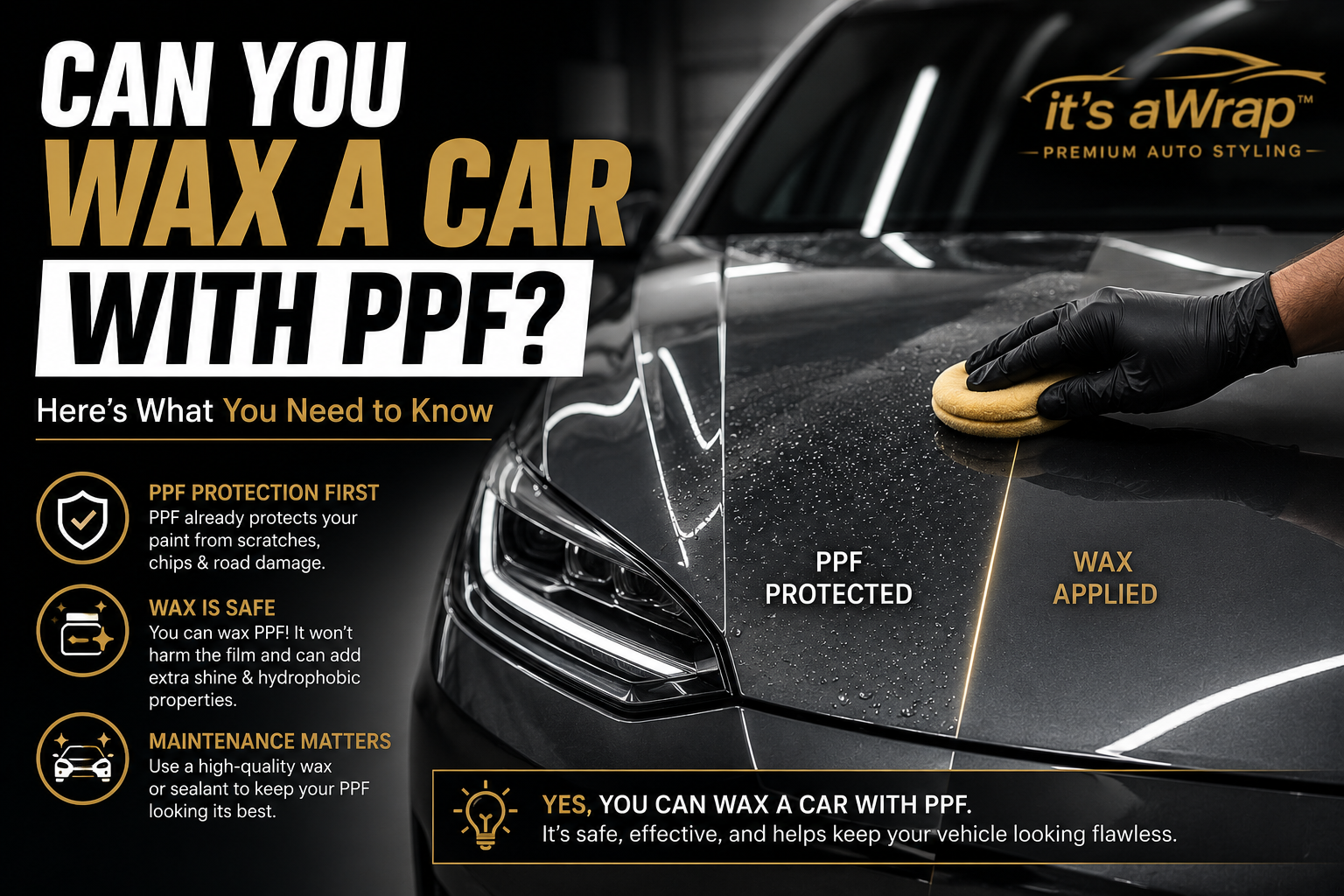
Yes. Most modern Paint Protection Films are designed to withstand waxing and routine maintenance. In fact, applying a PPF-safe wax or sealant can help improve gloss, enhance water beading, and make routine washing easier.
However, not all waxes are created equal. Using the wrong product can leave residue, reduce clarity, or interfere with the film’s self-healing top layer. Always check the film manufacturer’s care instructions when you’re unsure whether a particular product is compatible.
When Waxing PPF Makes Sense
- Older PPF that is no longer as hydrophobic as when first installed
- Vehicles parked outdoors year-round
- High-mileage commuters regularly driving on the 401, 403, QEW, or Gardiner
- Owners looking to enhance gloss and water repellency
- Vehicles exposed to heavy road contamination and seasonal debris
When You Should Not Wax PPF
Avoid waxing if:
- Your PPF was recently installed and the installer’s recommended curing period has not passed
- The wax contains abrasive polishing compounds
- The product contains strong solvents or petroleum-based cleaners not approved for PPF
- Your film already has a professionally applied ceramic coating and the coating manufacturer recommends a different maintenance product
- The surface has not been properly washed and decontaminated
What We See Most Often at Our Mississauga Shop
One of the biggest misconceptions we encounter is that all automotive waxes are safe for PPF.
Through years of installing and maintaining PPF-protected vehicles in Mississauga and the GTA, we’ve found that one of the most avoidable problems is simply using the wrong maintenance product.
Vehicle owners can unknowingly apply aggressive cleaner waxes or paint correction products designed for painted surfaces. These products may create hazing, reduce gloss, or prematurely wear the self-healing topcoat found on many premium films.
If you’re unsure which products or washing methods are appropriate, our guide to common PPF care mistakes covers several habits that can affect the appearance or longevity of the film.
What Types of Wax Should You Avoid?
Avoid products containing:
- Abrasive polishing agents
- Heavy cleaner compounds
- Strong solvents not approved for PPF
- Oxidation-removal formulas
- Aggressive cutting or correction compounds
If a product is designed to aggressively cut paint, remove oxidation, or correct paint defects, don’t assume it’s safe for PPF. Check the film manufacturer’s care instructions or use a product specifically identified as PPF-safe.
Ontario Weather Makes Proper Maintenance More Important
Ontario presents unique challenges for vehicle protection. During winter, roads throughout Mississauga, Oakville, Milton, Burlington, and the GTA are exposed to salt, sand, slush, and de-icing materials. These contaminants can accumulate quickly on both paint and protective films.
Before applying any wax or sealant, the vehicle should be thoroughly washed to remove:
- Road salt
- Brake dust
- Industrial fallout
- Tar deposits
- Seasonal contamination
Applying wax over contamination can lead to streaking, an uneven finish, and reduced film clarity. Ontario’s changing seasons also mean that PPF care shouldn’t be exactly the same throughout the year. Our Ontario seasonal PPF care guide explains how maintenance requirements can change between winter and warmer months.
What About Ceramic-Coated PPF?
If your Paint Protection Film already has a ceramic coating applied, traditional waxing is often unnecessary.
Ceramic coatings can provide many of the same benefits that vehicle owners seek from wax, including:
- Excellent water repellency
- Improved gloss
- Easier cleaning
- Enhanced contamination resistance
- Longer-lasting surface protection
Rather than applying traditional wax, ceramic-coated vehicles are typically better maintained using products that are compatible with the coating, such as appropriate maintenance sprays or coating boosters.
This is one reason many Ontario drivers choose to combine PPF and ceramic coating: PPF provides the physical barrier against road debris and impacts, while ceramic coating can make the protected surface easier to maintain.
How Often Should You Wax PPF?
There isn’t one schedule that applies to every vehicle. For many drivers using a traditional PPF-safe wax, application every 4–6 months may be sufficient, but you should always follow the recommendations for the specific film and maintenance product you’re using.
The appropriate maintenance schedule can vary depending on:
- Annual mileage
- Storage conditions
- Weather exposure
- Whether the vehicle is ceramic coated
- The type of wax or sealant being used
- The manufacturer’s maintenance recommendations
A garage-kept weekend vehicle, for example, won’t experience the same contamination and weather exposure as a daily commuter travelling throughout the GTA year-round.
Real Example: BMW X5 PPF Restoration in Mississauga
A Mississauga client brought in a BMW X5 equipped with Paint Protection Film that appeared dull and hazy on the hood.
Initially, the owner believed the film was failing. After inspection, we discovered the issue wasn’t the PPF itself—it was a heavy abrasive paste wax designed for restoring oxidized paint.
The product had affected the film’s top surface, reducing its gloss and clarity. Following a professional decontamination and restoration process, we were able to improve the finish and apply a PPF-safe protection product.
It’s a good example of why the maintenance product you put on top of PPF matters. Protecting the paint with quality film is only part of the equation; caring for that film correctly helps you get the most from the investment.
Frequently Asked Questions
Can wax damage Paint Protection Film?
Yes, the wrong product can affect PPF. Waxes containing abrasive compounds, aggressive cleaners, or incompatible solvents should be avoided. A non-abrasive product specifically identified as safe for PPF is the better choice.
Can you polish PPF?
Some Paint Protection Films may tolerate very light correction using compatible products and techniques, but aggressive polishing should be avoided. The safest approach is to follow the film manufacturer’s recommendations or have the film inspected professionally before attempting correction.
Is ceramic coating better than wax for PPF?
For long-term hydrophobic performance and easier maintenance, a ceramic coating is generally the more durable option. Wax is less expensive and easier to apply, but typically needs to be reapplied much more frequently.
How long does PPF last?
Premium Paint Protection Film can often last for many years, but its actual lifespan depends on the specific film, installation quality, maintenance, storage, mileage, and environmental exposure. Manufacturer warranties also vary by product, so it’s better to consider the specifications of the film installed on your vehicle rather than assuming every PPF will have the same lifespan.
What is the best way to maintain PPF?
Regular washing, prompt removal of contaminants, careful decontamination when necessary, and the use of PPF-safe maintenance products are among the best ways to preserve film appearance and performance.
Final Verdict: Yes, You Can Wax a Car with PPF
So, can you wax a car with PPF?
Yes. You can safely wax a car with PPF when the right products are used.
A compatible wax or sealant can help maintain gloss, improve water beading, and make your Paint Protection Film easier to keep clean. The key is avoiding abrasive or aggressive products and understanding that ceramic-coated PPF may require a different maintenance routine than uncoated film.
For Ontario drivers facing road salt, gravel, harsh winters, summer UV exposure, and year-round environmental contamination, proper maintenance is an important part of getting long-term value from Paint Protection Film.
If you’re considering PPF or need professional guidance on an existing installation, explore our Paint Protection Film services in Mississauga. For a broader look at coverage, benefits, costs, and protection options, read our complete Ontario Paint Protection Guide.