For drivers in Mississauga, Oakville, Milton, Burlington, Toronto, and surrounding areas, Ontario driving conditions add another consideration. Potholes, steep entrances, road debris, winter temperatures, and year-round driving can expose poorly fitted aftermarket components very quickly.
This guide compares DIY and professional body kit installation in Ontario to help you determine which approach makes sense for your vehicle, the kit you’ve purchased, your experience level, and the finish you expect.
At It’s aWrap™, we’ve been protecting and restyling vehicles since 2010. That hands-on experience has taught us an important lesson about aftermarket parts: the quality of the kit matters, but so does the quality of the fitment.
What Does Body Kit Installation Actually Involve?
A common misconception is that aftermarket body parts simply arrive ready to bolt onto the vehicle. Sometimes they do. Often, there is more work involved.
Depending on the vehicle, manufacturer, material, and quality of the kit, installation can involve:
- Removing factory trim, bumpers or panels
- Test-fitting aftermarket components
- Checking panel gaps and alignment
- Trimming or making minor fitment adjustments
- Preparing mounting points and hardware
- Surface preparation before finishing or installation
- Carefully securing components without damaging surrounding paint
Fibreglass components can require substantial preparation, while carbon fibre, polyurethane (PU), and ABS components each have their own installation considerations. Even a high-quality part may require adjustment because of vehicle tolerances or differences between aftermarket and factory mounting points.
If you haven’t purchased a kit yet, our guide to choosing the right body kit in Ontario covers materials, fitment, vehicle compatibility, and other factors worth considering before ordering.
DIY Body Kit Installation: Pros and Cons
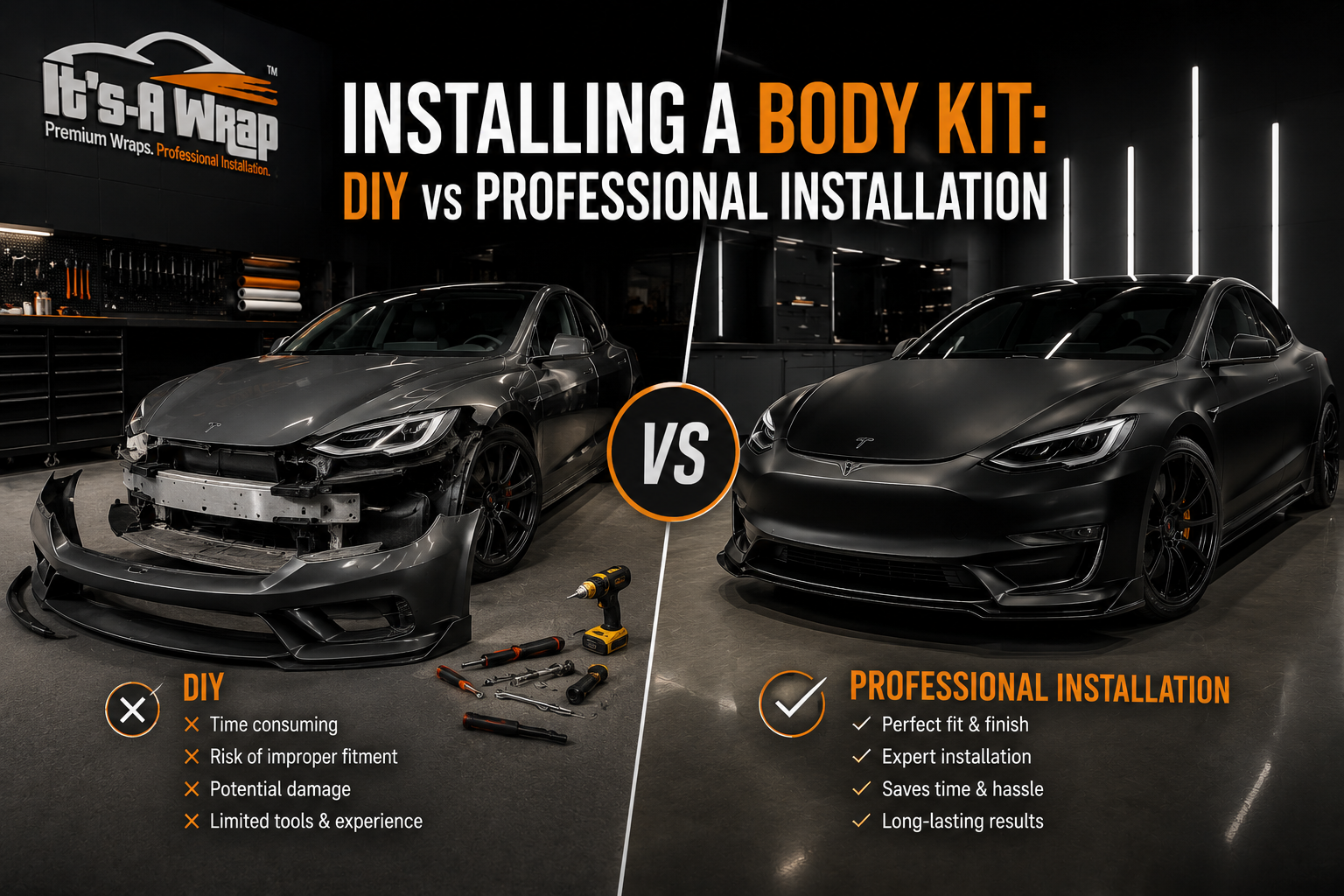
DIY installation can make sense for experienced enthusiasts, particularly when installing a relatively simple component. But the difficulty changes considerably when you move from a small spoiler or lip to bumpers, side skirts, diffusers, or a complete body kit.
Pros of DIY Body Kit Installation
- Lower labour cost: Doing the work yourself eliminates professional installation charges.
- Hands-on experience: For enthusiasts who enjoy working on their vehicles, installation can be a rewarding project.
- Flexible schedule: You can work on the vehicle at your own pace rather than scheduling an appointment.
Cons of DIY Body Kit Installation
- Fitment can be difficult: Aftermarket panels don’t always align perfectly out of the box.
- Risk of damaging the component: Over-tightening, drilling incorrectly, or forcing a poorly fitting part can cause cracks or other damage.
- Risk to factory paint: Tools, hardware, poorly aligned panels, and repeated test-fitting can scratch or damage surrounding surfaces.
- Specialized tools may be required: More involved installations can require tools and equipment that many owners don’t have at home.
- The job can take considerably longer: What looks straightforward in an installation video may require repeated fitting and adjustment in practice.
- Finishing becomes more complicated: If the component will be painted, wrapped, or protected with PPF, surface preparation and final fitment become even more important.
For a small bolt-on component with good manufacturer fitment, DIY may be perfectly reasonable for someone with the right experience. A full kit is a very different project.
Professional Body Kit Installation: Pros and Cons
Professional installation becomes more valuable as the complexity and value of the components increase.
A professional installer can evaluate how the part actually fits the individual vehicle rather than assuming every aftermarket component will line up exactly as advertised.
Advantages of Professional Installation
- More precise fitment and alignment
- Proper mounting and hardware selection
- Experience working around factory paint and body panels
- Ability to identify fitment problems before final installation
- Preparation for subsequent wrapping or PPF when applicable
- A cleaner, more integrated finished appearance
This becomes especially important with carbon fibre components. Carbon fibre can look incredible, but forcing a component into position or putting excessive stress around a mounting point can damage an expensive part.
You can learn more about our professional body kit installation service in Mississauga and the types of exterior upgrades we work with.
Disadvantages of Professional Installation
- Higher upfront cost: Professional labour adds to the total cost of the project.
- Appointment required: Installation needs to be scheduled and the vehicle may need to remain at the shop depending on the complexity of the work.
For many owners, however, paying for proper installation can be preferable to correcting damaged components, poor alignment, damaged paint, or a failed DIY installation later.
DIY vs. Professional Body Kit Installation on Ontario Roads
Ontario roads can be demanding on lowered vehicles and aftermarket exterior components.
Potholes, uneven pavement, steep parking entrances, road debris, snow accumulation, ice, and significant seasonal temperature changes all need to be considered when modifying a vehicle.
This is particularly important for front lips, splitters, side skirts, diffusers, and other components that reduce ground clearance.
Potential Problems With a Poorly Installed Kit
Improper fitment or mounting can contribute to:
- Loose components or hardware
- Increasing panel gaps
- Vibration or movement at highway speeds
- Stress around mounting points
- Cracking of rigid components
- Contact between aftermarket components and factory paint
A professional installation can’t prevent a low splitter from hitting a pothole or steep driveway, but proper mounting and fitment can help ensure the component isn’t compromised before it even encounters Ontario roads.
Does the Body Kit Material Affect Installation?
Absolutely. The material is one of the biggest factors determining how difficult a body kit can be to install.
Carbon Fibre
Carbon fibre is lightweight, rigid, and popular on performance and luxury vehicles. Its finished appearance is one of its biggest advantages, but it needs to be handled carefully during fitting and installation. Poorly positioned mounting points or excessive force can damage an expensive component.
Fibreglass
Fibreglass kits can provide significant design flexibility, particularly for more aggressive aftermarket styling. However, fitment can vary substantially between manufacturers, and some components require sanding, filling, shaping, or other preparation before achieving an acceptable finish.
Polyurethane (PU)
Polyurethane is more flexible than fibreglass and can tolerate some movement and minor impacts. Its flexibility can be advantageous for lower components, although proper preparation and mounting are still important.
ABS Plastic
ABS components are common for lips, diffusers, spoilers, and other exterior accessories. Good-quality ABS parts can offer relatively straightforward fitment, but manufacturing quality still matters.
The material alone doesn’t tell you whether a kit is good. Manufacturing tolerances, mounting design, vehicle compatibility, and installation quality all influence the finished result.
Should You Protect a New Body Kit With PPF?
It can make sense, particularly for painted or exposed carbon fibre components located in high-impact areas.
Front splitters, bumper extensions, side skirts, and other low-mounted components are exposed to road debris and contamination. Depending on the material and finish, Paint Protection Film may be an option for protecting vulnerable surfaces after installation.
PPF won’t prevent damage from striking a curb or a severe impact, but it can provide a sacrificial barrier against smaller road debris, surface abrasion, and everyday contamination.
For examples of vehicle transformations and exterior work completed at our Mississauga shop, you can also browse the It’s aWrap™ portfolio.
How to Decide Between DIY and Professional Installation
The right answer depends on the component and your experience.
DIY May Make Sense If:
- You have relevant mechanical or bodywork experience
- The component is relatively simple to install
- The manufacturer provides reliable mounting hardware and instructions
- You have the appropriate tools and workspace
- You are comfortable test-fitting and making minor adjustments
Professional Installation Is Usually the Better Choice If:
- You are installing a complete body kit or widebody conversion
- The components require substantial modification or preparation
- You are working with expensive carbon fibre parts
- Fitment around factory panels needs to be particularly precise
- The vehicle is lowered or regularly driven in Ontario winters
- The components will subsequently be wrapped or protected with PPF
- You aren’t comfortable drilling, trimming, removing factory components, or making fitment adjustments
The more expensive the vehicle and body kit become, the less attractive experimenting with fitment becomes.
Why Choose It’s aWrap™ for Body Kit Installation in Mississauga?
It’s aWrap™ has been protecting, restyling, and customizing vehicles since 2010. Body kit installation fits naturally alongside the other exterior services we perform, including vehicle wrapping, PPF, ceramic coating, and powder coating.
Our approach focuses on fitment first. Before a component is permanently secured, we evaluate its alignment, mounting points, surrounding panels, and overall appearance on the vehicle.
We work with a range of aftermarket components and materials, including:
- Carbon fibre components
- Fibreglass body parts
- Polyurethane components
- ABS exterior parts
- Front lips and splitters
- Side skirts
- Rear diffusers
- Spoilers and exterior trim
- Multi-piece and full body kits
Our Mississauga location serves customers from Oakville, Milton, Burlington, Toronto, and throughout the GTA.
Final Thoughts: Is Professional Body Kit Installation Worth It?
DIY body kit installation can be a rewarding project when you’re experienced, properly equipped, and working with a straightforward component.
But full kits, expensive carbon fibre components, complex bumpers, and parts requiring significant adjustment leave much less room for error. In those situations, professional installation can help achieve cleaner fitment while reducing the risk of damaging the kit or the vehicle itself.
If you’re planning an exterior upgrade, start by choosing a quality kit that’s appropriate for your vehicle and intended use. Then decide whether the complexity of the installation matches your experience.
For professional body kit installation in Mississauga, contact It’s aWrap™ to discuss your vehicle, the components you’ve selected, and the finished look you’re trying to achieve.