

Peeling or Bubbles? Signs Your Tint Needs Replacement ASAP
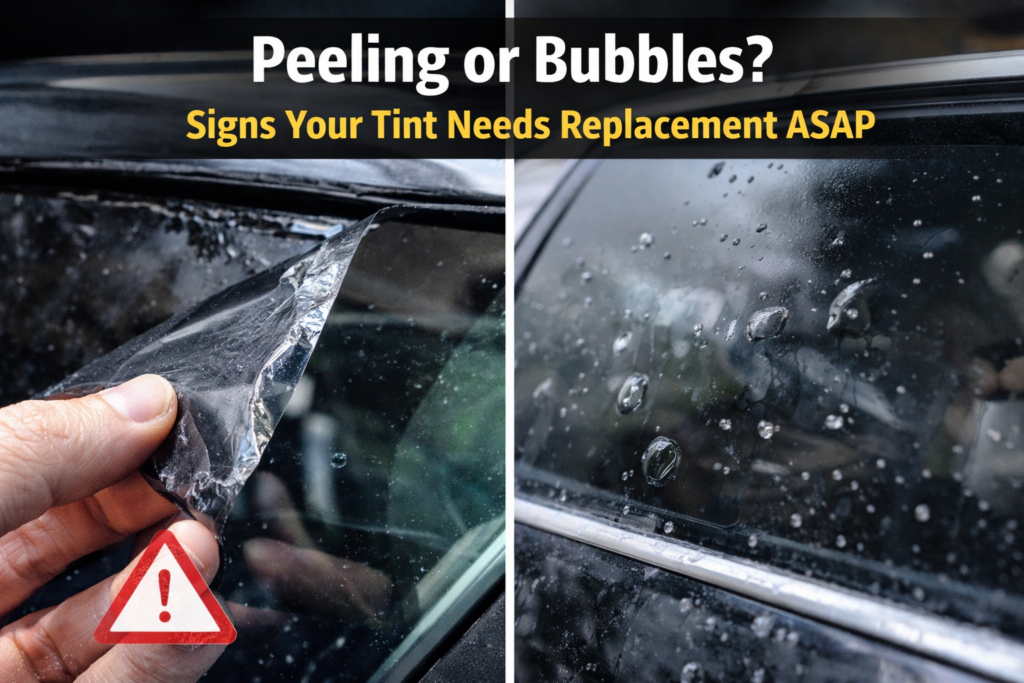
Window tint enhances comfort, privacy, and heat control for thousands of drivers across Mississauga, Oakville, Milton, Burlington, and Toronto. But over time, even high-quality tint can begin to show signs of wear. If you’ve noticed bubbling, peeling, fading, or distortion, your tint may be past its lifespan — especially in Canada’s harsh climate.
At It’s aWrap™, with more than 15 years of experience and over 600 five-star reviews, we’ve inspected, repaired, and replaced every kind of tint failure imaginable. Many Ontario drivers are unsure when tint damage is cosmetic — and when it means the film needs immediate replacement.
This guide explains the most common warning signs that your tint has failed, why they happen, and when you should book a replacement to protect your visibility and vehicle interior.
1. Bubbling Between the Film and the Glass
Bubbles are the most recognizable sign of tint failure. They usually appear as small patches at first, then spread across the window.
Common causes include:
- Adhesive breakdown due to age
- Cheap or dyed film exposed to Canadian UV
- Poor installation technique
- Moisture intrusion through worn edges
Bubbles distort visibility — especially deadly during night driving or in rainy conditions. If bubbling increases over weeks or months, replacement is the safest option. You can learn how long tint should last in Ontario conditions from our Canadian tint lifespan guide.
2. Peeling Around the Edges
Peeling usually starts at the top of the window or along the edges where moisture, salt, and friction accumulate. Ontario winters accelerate this problem due to constant freeze–thaw cycles and heavy road salt.
Once peeling begins, it spreads quickly and cannot be reversed. If the film lifts from the glass, replacement is the only effective solution.
3. Purple or Faded Tint
If your tint is turning purple, the dye has degraded due to UV exposure. This is extremely common with cheap films installed by non-professional shops or DIY kits — especially in Canada, where UV indices are surprisingly strong in summer.
Faded tint loses the ability to block heat and UV rays, exposing your interior to damage. For better performance and lifespan, consider upgrading to carbon or ceramic tint. Our carbon vs ceramic tint comparison explains the differences.
4. Scratches Caused by Ice Scrapers or Dirty Window Channels
Canadian winters make this issue very common. Snow brushes, ice scrapers, and frozen window channels create scratches that cut into the film surface. Over time, these marks spread and cause the tint to look hazy or streaky.
Proper seasonal care can help, but deep scratches usually require full replacement. For care tips, review our tinted window do’s and don’ts.
5. Distortion or Blurriness While Driving
If your tint appears wavy, hazy, or blurry — especially on your rear window — this is a sign of adhesive separation or heat damage. Distortion affects visibility and becomes dangerous during night driving or merging onto highways.
Rear defroster grids can also cause accelerated tint failure if the film quality is low or incorrectly installed.
6. Tint That Never Fully Dried After Installation
If bubbles or moisture pockets remain for more than 4–6 weeks after installation, the tint was likely installed improperly. High-quality films dry clear when installed correctly — even during colder months.
This is why Mississauga and Oakville drivers benefit from professional tinting, as outlined in our professional tinting advantages.
7. Gaps or Light Lines Along the Edges
Poor trimming or shrinking causes visible gaps that let in light. These lines usually appear immediately after low-quality installations and get worse as the tint ages. Proper installation ensures edge-to-edge coverage without gaps or inconsistencies.
Why Canadian Weather Makes Tint Fail Faster
Ontario’s climate puts extraordinary stress on window films due to:
- Freeze–thaw cycles causing expansion and contraction
- Strong UV exposure in summer months
- Rear defroster use creating rapid temperature spikes
- Road salt creeping into window seals
Drivers curious about how weather affects tint performance can explore our window tint protection guide for Ontario roads.
When You Should Replace Your Tint Immediately
You should consider replacement if you notice:
- Bubbles growing in size
- Peeling edges
- Tint turning purple
- Reduced visibility at night
- Film separating from the rear defroster grid
- Deep scratches or scuffing
Driving with damaged tint isn’t just cosmetic — it can reduce visibility and increase glare, especially during winter nighttime driving in Ontario.
Ontario Case Study: Mississauga Driver With Severe Peeling
A Mississauga client visited our shop with bubbling tint across all rear windows. The film had been installed 4 years earlier at a budget shop. Due to winter salt, moisture damage, and poor adhesive quality, the tint had peeled almost halfway down the window.
We fully removed the failed film, restored the glass, and installed a new ceramic tint. The outcome was dramatically clearer visibility, a deeper finish, and long-term UV and heat protection.
How to Prevent Tint Failure in the Future
To extend tint lifespan, follow these tips:
- Use ceramic or carbon films for best performance
- Wait 3–5 days before rolling down windows after installation
- Avoid ammonia-based cleaners
- Be cautious with ice scrapers near edges
- Keep window channels clean
For a complete guide to tint longevity, refer to our tint lifespan article.
Final Thoughts
Peeling and bubbles are more than cosmetic problems — they’re signs your tint has reached the end of its life or was installed poorly. Replacing damaged tint early improves your visibility, protects your interior, and restores the clean, sleek finish your vehicle deserves.
If you’re dealing with bubbles or fading, schedule a replacement at our Mississauga & Oakville window tinting page.