Quality automotive window tint can last for years, but it doesn’t last forever. Age, film quality, installation quality, sun exposure, cleaning habits, and everyday wear can eventually affect its appearance and performance.
If you’ve noticed bubbling, peeling, fading, scratches, haze, or distortion, it may be time to remove the old film and replace it.
At It’s aWrap™, we’ve been installing automotive window tint in Mississauga since 2010. Here are seven of the most common signs we look for when determining whether existing tint can stay or should be replaced.
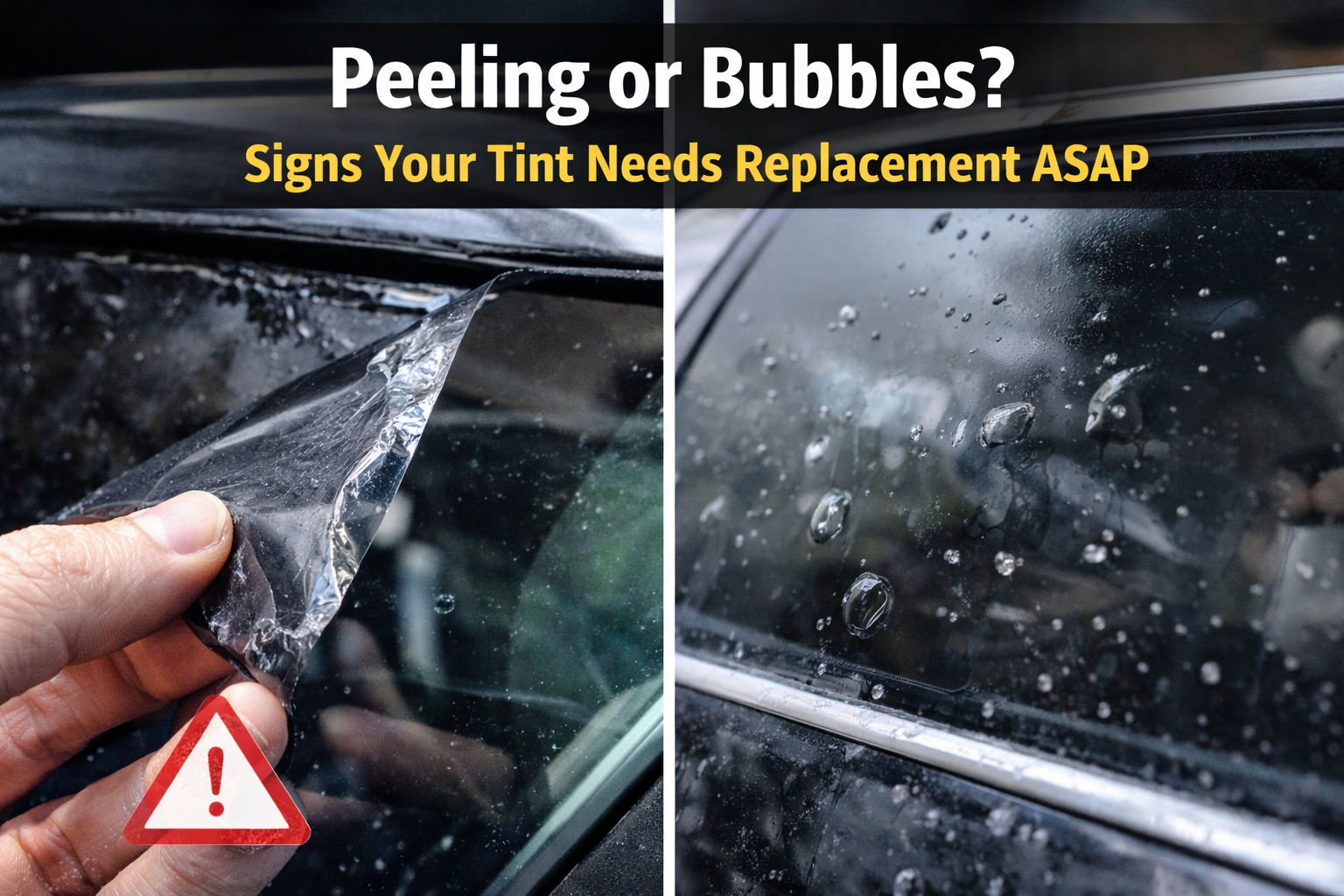
1. Persistent Bubbling Under the Tint
Bubbles are one of the easiest signs of failing window tint to recognize—but it’s important to distinguish actual film failure from the normal curing process after a new installation.
Freshly installed tint can temporarily have a slightly hazy or uneven appearance as residual installation moisture evaporates. This should gradually disappear as the film cures.
Older tint that suddenly develops bubbles is different. Persistent bubbling can indicate that the film’s adhesive is deteriorating or that the original installation has failed.
Common causes can include:
- Age-related adhesive deterioration
- Low-quality film
- Improper surface preparation or installation
- Long-term heat and sun exposure
Once an older film begins extensively bubbling or separating from the glass, replacement is generally a better solution than attempting to repair individual areas.
If you’re wondering how old your film may be, read our guide to how long window tint lasts in Canadian conditions.
2. Tint Peeling Away From the Glass
Peeling typically appears around an edge of the film and may gradually spread farther across the window.
This can happen as the adhesive ages, but premature peeling can also result from improper installation, contamination during installation, or damage to the edge of the film.
On roll-down windows, repeated contact near an already damaged edge can make the problem progressively worse.
Once a significant portion of the film has separated from the glass, simply pressing it back into place isn’t a reliable repair. The affected film will normally need to be removed and replaced.
3. Purple, Faded or Discoloured Tint
One of the classic signs of aging dyed window film is a noticeable purple or faded appearance.
Over time, lower-quality dyed films can experience colour degradation from prolonged exposure to sunlight and UV radiation. Instead of maintaining a neutral charcoal or black appearance, the film may gradually develop a purple tone.
Even when visibility isn’t affected, severe fading or discolouration is a good indication that the film has aged and may be worth replacing.
Modern carbon and ceramic films are designed to provide greater colour stability and performance than many basic dyed films. If you’re considering an upgrade, our ceramic vs carbon window tint comparison explains the differences.
4. Deep Scratches or Physical Damage
Window tint is installed on the inside surface of automotive glass, so normal exterior scraping of ice from your windshield or side windows shouldn’t come into contact with the film.
Damage is more likely to occur from the interior or from objects contacting the film on a partially lowered window.
Common causes include:
- Sharp objects contacting the inside glass
- Seatbelts or cargo repeatedly striking the window
- Improper cleaning tools
- Damaged or contaminated window seals
- Scraping stickers or residue from the inside of tinted glass
A small cosmetic scratch doesn’t necessarily mean the entire window needs to be retinted. However, deep scratches, gouges, or widespread damage generally cannot be repaired invisibly.
For proper cleaning and care, see our do’s and don’ts for tinted windows.
5. Hazy, Wavy or Distorted Visibility
Good automotive window film shouldn’t noticeably distort your view through the glass.
If an older tint has become permanently hazy, wavy, blurry, or distorted, the film or adhesive may be deteriorating.
This is particularly important on windows that are critical to driving visibility. If damaged tint makes it harder to see vehicles, pedestrians, mirrors, or road conditions—especially at night—it should be assessed rather than treated as a purely cosmetic problem.
Rear-window tint can also become more complicated to replace because of the defroster lines bonded to the glass. Old film should be removed carefully to reduce the risk of damaging them.
6. New Tint That Doesn’t Clear After Curing
Not every bubble or hazy area immediately after installation indicates a problem.
Window tint is applied using a wet installation process, and some residual moisture can remain between the film and glass while the film cures. Drying time varies depending on the film, temperature, sunlight, humidity, and time of year.
Cold Ontario weather can make this process take longer than it would during a warm summer.
What you don’t want to see is contamination, creases, fingers, large persistent bubbles, or other defects that remain after the film has had adequate time to cure.
If you’re unsure whether what you’re seeing is normal curing or an installation issue, have the installer inspect it before attempting to press, puncture, or peel the film yourself.
7. Excessive Gaps or Uneven Edges
A very small gap near the edge of a roll-down window can be normal depending on the installation method. A visible edge by itself doesn’t automatically mean the tint was installed incorrectly.
However, large or inconsistent gaps, crooked cuts, lifting corners, or obviously uneven edges can indicate poor installation or film failure.
These problems are particularly noticeable when sunlight creates a bright line between the edge of the tint and the edge of the glass.
Does Ontario Weather Affect Window Tint?
Automotive window film is installed inside the vehicle, so it isn’t directly exposed to road salt, snow, or rain like exterior vehicle protection products are.
Ontario’s climate can still affect tint indirectly, particularly through:
- Strong summer sun and UV exposure
- High interior temperatures when vehicles sit outside
- Cold temperatures that can extend curing time after installation
- Frequent use of windows during changing seasonal conditions
Film quality and installation quality remain major factors in how well automotive tint ages over time.
Can Damaged Window Tint Be Repaired?
In most cases, automotive tint isn’t repaired in the same way that paint or glass can be repaired.
If one tinted window is badly scratched, bubbling, peeling, or discoloured, the normal solution is to remove the film from that window and install new film.
You don’t necessarily need to replace tint on every window. However, if the existing film is several years old, matching the exact shade and appearance of a newly tinted window can sometimes be difficult because the older film may have changed slightly over time.
When Should Window Tint Be Replaced?
Consider having your tint inspected or replaced if you notice:
- Persistent bubbles in older film
- Peeling or lifting edges
- Purple or severe discolouration
- Permanent haze or optical distortion
- Deep scratches or gouges
- Adhesive separation
- Installation defects that remain after curing
Cosmetic fading isn’t necessarily urgent. Visibility problems are different. If deteriorated film interferes with your ability to clearly see through a window while driving, it should be addressed promptly.
How to Make Your Next Window Tint Last Longer
Quality film and professional installation make a significant difference, but proper care also helps extend the useful life of automotive tint.
- Choose a quality automotive window film
- Allow the film to cure before rolling down newly tinted windows
- Follow the installer’s aftercare instructions
- Use tint-safe glass cleaners
- Avoid abrasive pads and aggressive cleaning tools
- Keep sharp objects away from the inside surface of tinted glass
- Address damaged edges before they become substantially worse
Choosing between film technologies also matters. Carbon can provide excellent value, while ceramic tint is generally the better option for drivers prioritizing heat rejection and premium performance. Read our ceramic vs carbon tint guide before choosing your replacement film.
Window Tint Removal and Replacement in Mississauga
Bubbles, peeling, discolouration, and permanent haze are usually signs that old window tint has reached the point where replacement makes more sense than trying to save it.
The old film and adhesive need to be removed properly before new tint is installed, particularly on rear windows equipped with defroster lines.
If you’re unsure whether your current film needs replacing, our team can inspect its condition and recommend whether replacement is necessary.
Learn more about our window tinting services in Mississauga and Oakville or contact It’s aWrap™ for a tint removal and replacement quote.