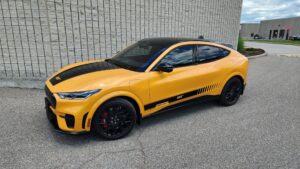
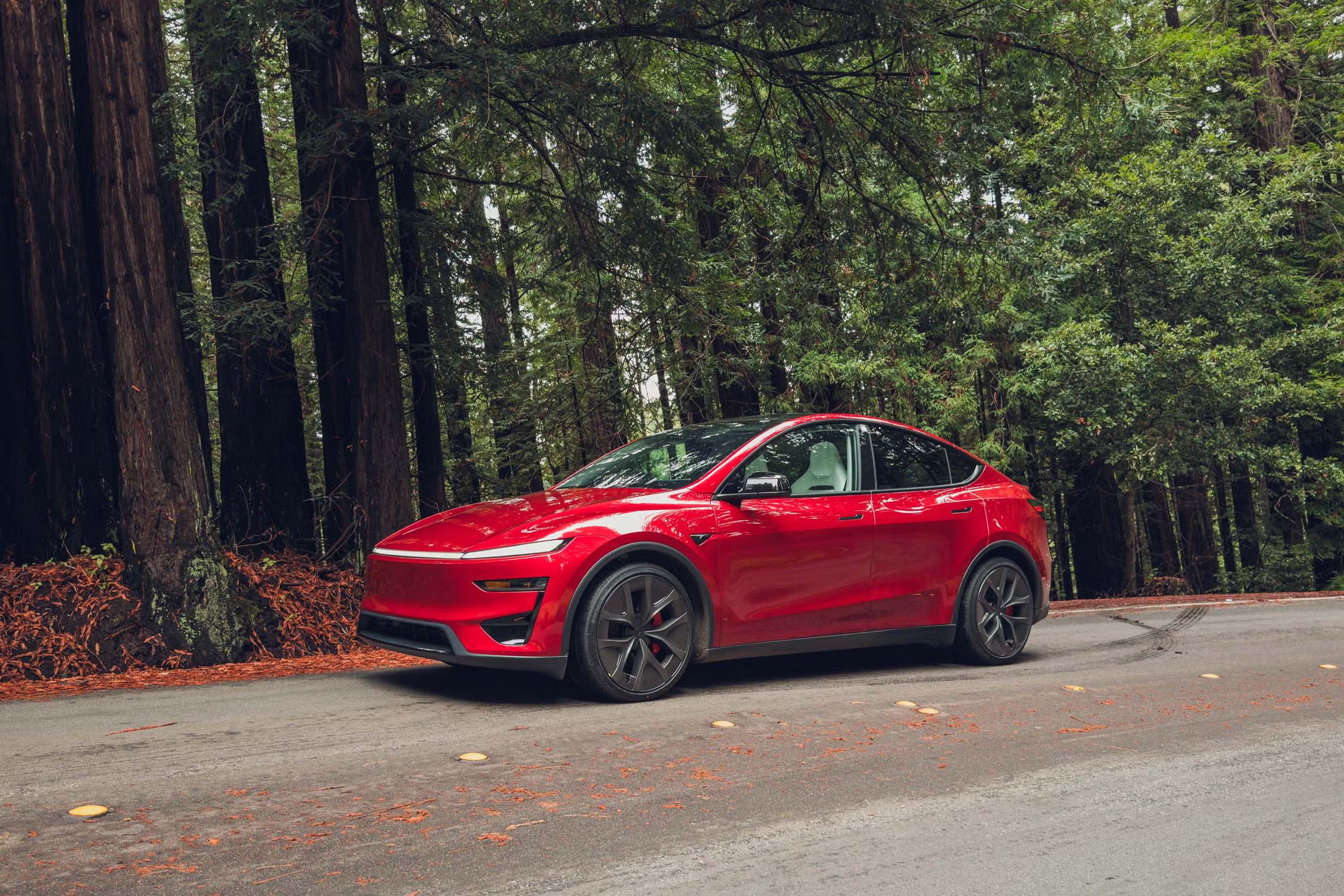
Electric and hybrid vehicles are becoming increasingly common across Mississauga, Oakville, Milton, Burlington, Toronto, and the rest of the GTA. Along with the benefits of electrified driving, many of these vehicles also introduce a different cabin design: large windows, expansive glass roofs, digital displays, and interiors that can absorb a significant amount of solar heat.
That makes high-quality window tint particularly useful for EV and hybrid owners.
At It’s aWrap™, we’ve spent more than 15 years tinting vehicles in Mississauga, including Tesla Model 3 and Model Y vehicles, Hyundai IONIQ models, hybrids, and other EVs.
The biggest benefits aren’t about magically adding kilometres to your battery range. They’re much more practical: reducing solar heat, improving cabin comfort, blocking UV radiation, reducing glare, and making it easier for your climate-control system to keep the cabin comfortable.
Here’s what Canadian EV and hybrid owners should know.
1. Ceramic Tint Can Significantly Reduce Solar Heat
This is arguably the biggest reason to consider premium window tint on an EV.
When sunlight passes through automotive glass, solar energy heats the seats, dashboard, centre console, and other interior surfaces. Once those surfaces become hot, your air conditioning has to work to bring the cabin back to a comfortable temperature.
High-performance window films are designed to reject a portion of that incoming solar energy before it enters the cabin.
For EV and hybrid owners, that can mean:
- A more comfortable cabin on hot days
- Less intense heat when entering a vehicle that’s been parked outside
- Reduced solar load while driving
- Less reliance on aggressive air-conditioning settings for comfort
This is particularly noticeable during Ontario summers when a vehicle sits outside for several hours.
2. Why Heat Rejection Matters for an EV
Unlike a gasoline vehicle that can use engine waste heat for cabin heating, an EV’s climate-control systems ultimately draw energy from the vehicle’s electrical system.
Air conditioning also consumes energy.
That doesn’t mean installing window tint will suddenly produce a dramatic increase in driving range. There are too many variables involved to make that claim responsibly.
However, reducing the amount of solar heat entering the cabin can reduce the cooling demand placed on the climate-control system.
For EV owners concerned about efficiency, it’s another reason to choose a high-performance film based on heat rejection rather than simply choosing the darkest tint available.
3. EVs Often Have a Lot of Glass
One reason tint can make such a noticeable difference on modern EVs is simply the amount of glass surrounding the occupants.
Vehicles such as the Tesla Model 3 and Model Y are known for their large glass areas, while many other EVs and hybrids use panoramic roofs and expansive windows to create bright, open interiors.
That looks great—but more glass also means more opportunity for solar energy to enter the cabin.
This is where film performance matters.
A high-quality ceramic film can provide substantial heat rejection without requiring extremely dark windows.
That’s particularly important because tint darkness and heat rejection aren’t the same thing.
A darker, inexpensive film isn’t automatically better at rejecting heat than a lighter premium ceramic film.
Learn more in our guide to the advantages of ceramic window tint.
4. Window Tint Helps Protect EV Interiors From UV Exposure
Modern EV interiors frequently include large touchscreens, synthetic upholstery, leather, plastics, trim, and other surfaces that spend years exposed to sunlight.
Quality automotive window film can block the vast majority of harmful UV radiation, helping reduce long-term exposure for both occupants and interior materials.
That can help reduce:
- Fading and discolouration
- UV exposure to upholstery and interior trim
- Sun exposure on frequently driven sides of the vehicle
- Long-term deterioration of certain interior materials
UV protection is also important to distinguish from heat rejection. A film can provide excellent UV protection without being extremely dark.
For more information, read our guide to window tint and UV protection.
5. Reduced Glare Can Make Screen-Heavy Interiors More Comfortable
Digital displays have become common across the automotive industry, but EVs have pushed the trend particularly far.
Tesla is an obvious example, with many vehicle functions controlled through a large centre display. Other EVs and hybrids increasingly use digital gauge clusters, centre screens, and glossy interior surfaces.
Strong sunlight can create glare on these surfaces and make the cabin uncomfortable during certain driving conditions.
Properly selected window tint can help reduce incoming visible light and glare from:
- Direct sunlight
- Low-angle morning and evening sun
- Bright reflections from surrounding vehicles and surfaces
- Snow-covered surroundings during Ontario winters
Tint won’t eliminate every reflection, but reducing excessive incoming light can make a screen-heavy cabin more comfortable.
6. Ceramic Tint Is Particularly Useful for EVs
Not all window tint performs the same way.
Basic dyed film primarily provides colour, privacy, glare reduction, and UV protection. Higher-performance films can offer substantially better solar heat rejection.
For an EV or hybrid, this makes ceramic window tint particularly attractive.
Depending on the specific product, premium ceramic films can offer:
- High solar heat rejection
- Strong infrared rejection
- Excellent UV protection
- Good optical clarity
- Long-term colour stability
- Heat rejection without requiring extremely dark tint
This last point is particularly useful for drivers who want heat rejection but don’t necessarily want very dark windows.
If you’re deciding between film types, see our ceramic vs carbon window tint comparison.
7. What About Window Tint During Canadian Winters?
There’s an important misconception worth addressing.
Automotive window tint should not be treated as insulation for your vehicle.
While window film changes the way solar energy passes through the glass, it isn’t comparable to insulating a building. You shouldn’t install tint expecting dramatically faster warm-up times or a meaningful increase in winter EV range.
For EV owners, features such as scheduled preconditioning, heated seats, heated steering wheels, heat-pump efficiency, and charging habits generally play much larger roles in winter energy consumption.
Window tint still provides useful winter benefits, however.
It can help reduce glare from low winter sunlight and bright snow, while UV protection remains beneficial throughout the year.
We’ve covered this topic separately in our guide explaining whether window tint makes your car warmer in winter.
8. Does Window Tint Increase EV Range?
This is another area where we’d be careful with claims.
We wouldn’t tint an EV specifically to increase its range.
Solar-control film can reduce the amount of heat entering the cabin, potentially reducing the cooling load required to maintain a comfortable interior on sunny days.
But actual energy consumption depends on numerous factors, including:
- Outside temperature
- Vehicle efficiency
- HVAC settings
- Driving speed
- Battery temperature
- Whether the vehicle was preconditioned
- Film performance
- Amount and angle of glass
So while reducing solar heat load is beneficial, promising a specific improvement in range would be misleading.
Choose tint primarily for comfort, heat rejection, UV protection, glare reduction, and privacy—not as a range modification.
9. What About Tesla Glass Roofs?
Tesla Model 3 and Model Y owners frequently ask whether their glass roofs should also be tinted.
The answer depends on the vehicle, existing factory glass, the amount of heat or brightness bothering the occupants, and the specifications of the film being considered.
Many modern panoramic roofs already incorporate factory treatments designed to reduce UV and/or solar energy. Adding aftermarket film should therefore be evaluated based on the actual glass and the film manufacturer’s recommendations rather than assuming every glass roof requires additional tint.
This is also an area where professional installation matters. Large and curved pieces of glass can require considerably more installation skill than a conventional side window.
10. What Tint Percentage Is Best for an EV or Hybrid?
There isn’t one perfect percentage.
Your choice should consider:
- How much privacy you want
- Nighttime visibility
- The vehicle’s existing factory glass
- Ontario tint regulations
- The performance of the particular film
- Whether your priority is appearance, glare reduction, or heat rejection
Again, don’t assume you need extremely dark tint to get good heat rejection.
A high-performance ceramic film can provide excellent solar control while maintaining considerably more visible light than a very dark film.
Before choosing your shade, read our guide to Ontario window tint laws.
Carbon vs Ceramic Tint for an EV
Both can be good choices, but we’d generally recommend ceramic when maximum heat rejection is the priority.
| Feature | Carbon Tint | Ceramic Tint |
|---|---|---|
| UV Protection | Excellent | Excellent |
| Heat Rejection | Good | Excellent |
| Glare Reduction | Good | Excellent |
| Optical Clarity | Good | Excellent |
| Cost | Lower | Higher |
| Best For | Value-focused tinting | Maximum comfort and performance |
The actual specifications vary significantly between manufacturers and product lines, so compare the performance data of the specific films rather than relying solely on the words “carbon” or “ceramic.”
Is Ceramic Tint Worth It on a Tesla?
For many Tesla owners, yes—particularly if cabin heat is one of your main complaints.
The Model 3 and Model Y have relatively large glass areas, and a high-performance ceramic film can make the cabin noticeably more comfortable during sunny weather.
The same principle applies to other EVs and hybrids with large glass areas.
We’ve tinted vehicles from Tesla, Hyundai, Kia, BMW, Mercedes-Benz, Audi, Toyota, Lexus, and other manufacturers, and the appropriate film ultimately depends more on the vehicle’s glass, your comfort expectations, and your budget than the powertrain itself.
Window Tinting for EVs & Hybrids in Mississauga
For EV and hybrid owners, window tint isn’t about squeezing out a questionable range increase. The real advantages are much more straightforward:
- Less solar heat entering the cabin
- Better summer comfort
- Reduced glare
- UV protection
- More privacy
- Protection for interior materials
And if heat rejection is your main objective, film quality matters considerably more than simply choosing the darkest shade.
At It’s aWrap™, we offer carbon and ceramic window tint options for EVs, hybrids, and conventional vehicles from our Mississauga shop.
Final Thoughts
Window tint can be an excellent upgrade for an electric or hybrid vehicle, particularly because many modern electrified vehicles feature large glass areas and screen-heavy interiors.
The strongest benefit for EV owners is solar heat rejection. By reducing the amount of solar energy entering the cabin, quality ceramic tint can make the interior considerably more comfortable and reduce the cooling demand placed on the climate-control system.
But we wouldn’t sell tint by promising additional EV range or major winter battery savings. Those benefits are too dependent on other variables.
Choose window tint for what it does extremely well: heat rejection, UV protection, glare reduction, privacy, and everyday comfort.
To explore carbon and ceramic tint options for your Tesla, EV, hybrid, or conventional vehicle, visit our window tinting services in Mississauga and Oakville.