If your vinyl wrap is bubbling or starting to lift, the cause is often related to how the film was installed. However, bubbling and edge lifting are two different problems, and the right response depends on where the issue appears, how much film is affected, and how long it has been exposed.
A small section lifting along an edge may be repairable if it is caught early. Bubbling that becomes visible weeks after installation is a different matter. And when lifted film has been exposed to dust and contamination for months, the adhesive may no longer be suitable for reattachment.
At It’s aWrap™, our installation team assesses the condition of the film before recommending a repair or replacement. Here is what causes these problems and what you should do if you notice them.
How to Tell the Difference Between Bubbling and Edge Lifting
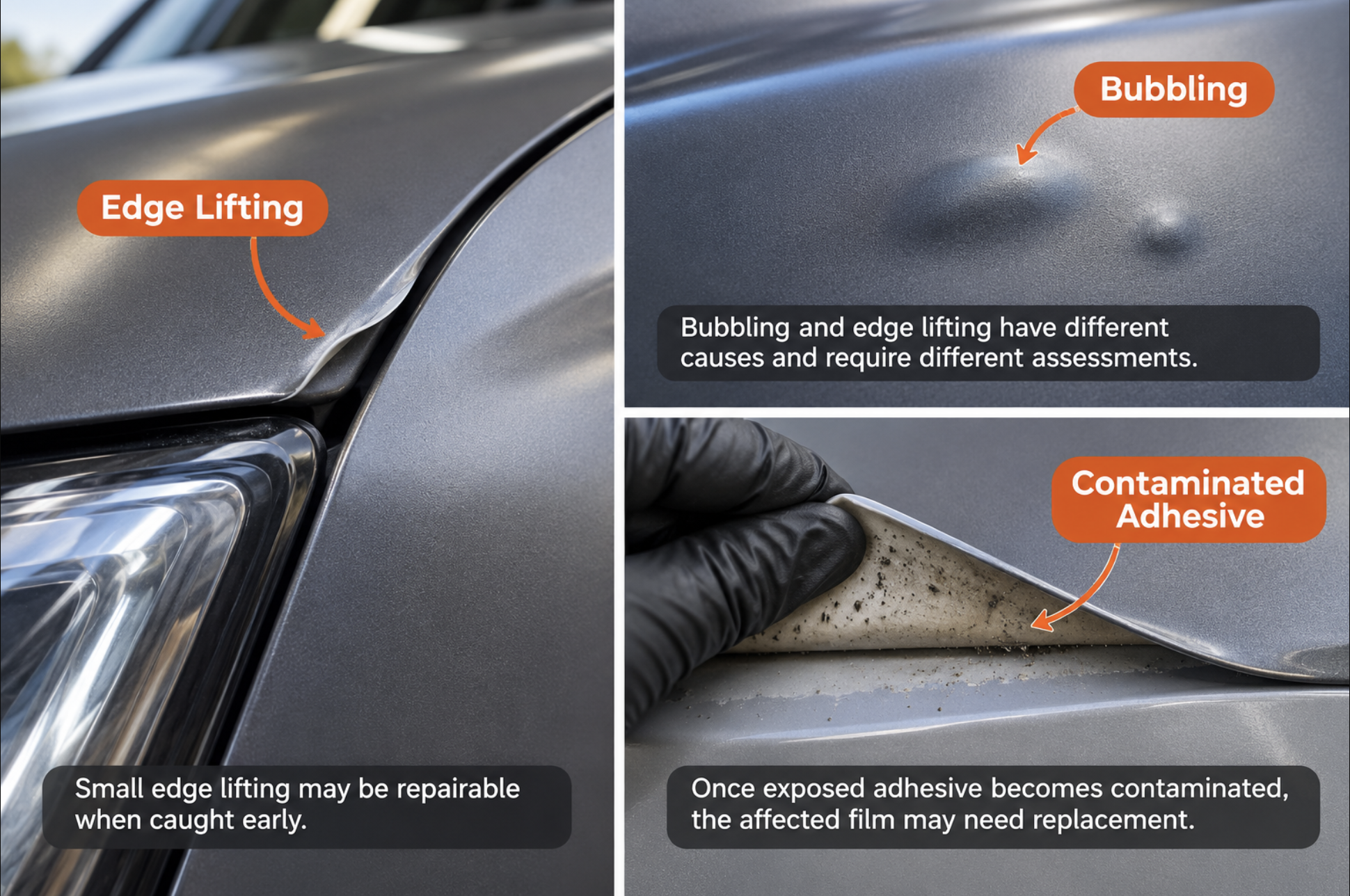
Although they can look similar at first, bubbles and lifting are not the same type of failure.
Bubbling occurs when an area of the vinyl film is raised above the vehicle’s surface, creating a visible pocket beneath the material. It can happen when air is not properly worked out during installation or when the film has not been applied with consistent squeegee pressure.
Edge lifting occurs when the vinyl begins separating from the vehicle at an edge, seam, corner, or other transition. Instead of a raised pocket in the middle of the film, you can see the material pulling away from the panel.
The distinction matters because the repair options are different. A small amount of lifting along an edge may be recoverable, while a bubble that appears weeks after installation may not be something an installer can simply push flat.
Why Does a Vinyl Wrap Bubble?
One of the main causes of bubbling is improper squeegee technique during installation. The squeegee is used to apply pressure across the film, helping it make consistent contact with the vehicle’s surface while moving air out from underneath.
If the installer misses an area, uses inconsistent pressure, or does not properly work the film during application, air can remain trapped beneath the vinyl. The result may not always be immediately obvious.
In some cases, bubbling becomes visible weeks after the installation, sometimes around a month later. This can be frustrating because the vehicle may initially appear fine. However, a bubble that develops later is not necessarily something that can be corrected by simply running a squeegee over the surface after the fact.
Proper installation technique is important here. In its vehicle application guidance, 3M emphasizes firm, even, overlapping squeegee strokes. It also explains that missed areas can leave bubbles or wrinkles that may become points of premature film failure. You can review the 3M vehicle application bulletin for its technical recommendations.
Moisture and surface contamination can also interfere with adhesion. For example, 3M warns that moisture trapped beneath a graphic can cause bubbling and premature failure, while wax residue can significantly reduce adhesion. This is why proper vehicle preparation is just as important as the application itself.
If you notice a bubble after the vehicle has been wrapped, avoid puncturing it, pressing it aggressively, or attempting to heat the film yourself. Have the area assessed by a professional installer first.
Why Is My Vinyl Wrap Lifting at the Edges?
Edge lifting is generally associated with installation problems. The film needs to be properly applied and secured around the edges of panels, seams, corners, and contoured areas. If those areas are not handled correctly, the material can begin pulling away from the vehicle.
Several installation factors can contribute to this.
Insufficient pressure along the edges: The film needs to be properly pressed down at its edges and overlaps. If these areas are missed during installation or do not receive the required finishing work, adhesion may be insufficient.
Stretching and complex vehicle contours: Recessed areas, deep channels, curves, and other difficult surfaces require careful application. Stretching film too much or failing to finish these areas correctly can leave tension in the material, increasing the risk of it pulling back.
Inadequate surface preparation: Dust, moisture, wax, oils, and other residues can interfere with the adhesive’s ability to bond to the vehicle. The surface must be properly cleaned and dried before the film is applied.
High-pressure washing: Directing a pressure washer at the edge of a wrap can force water underneath the film and contribute to lifting. 3M specifically advises against directing high-pressure spray at film edges. For routine maintenance, follow our guide on how to wash a wrapped car.
If your vehicle has an existing wax, sealant, or ceramic coating, disclose that before a wrap is installed. Surface treatments need to be considered as part of the preparation process. Their effect depends on the specific product and film system, so they should not automatically be assumed to be the cause of a problem.
Can a Lifting or Bubbling Vinyl Wrap Be Repaired?
Not every case requires a new wrap, but not every case can be repaired either. The important factors are the location of the damage, how far the film has lifted, the condition of the adhesive, and how long the affected area has been exposed.
At It’s aWrap™, our installers distinguish between a small edge lift that may still be recoverable and film that has become contaminated or damaged.
Small lifting along an edge may be repairable without replacing the entire film piece. If the affected area is very minor and the adhesive is still in suitable condition, an installer may be able to rework the edge and secure it again.
Lifting that has spread beyond a small edge area is a different situation. Once the adhesive is exposed, dust and other contaminants can collect underneath the film. If the material has been left in this condition for an extended period, such as several months, the adhesive can dry out and lose its ability to bond reliably.
At that point, simply pressing the vinyl back down is not a proper repair. The affected film is already compromised, and the appropriate solution is generally to replace the complete piece covering that panel.
This does not automatically mean the entire vehicle needs to be rewrapped. Depending on the affected area, replacement may be limited to the specific panel piece.
Why We Don’t Recommend Patching Small Areas of a Wrap
When a section of vinyl is damaged, patching a small area may seem like a cheaper or quicker alternative to replacing the affected piece. However, it rarely produces the finish we want to deliver.
A small patch can leave visible edges, seams, or differences in appearance between the original film and the replacement material. Even when the repair is technically secure, the result may look inconsistent with the surrounding wrap.
For that reason, It’s aWrap™ does not recommend patching small areas of a vinyl wrap. If a section is too damaged to be properly repaired, replacing the complete affected piece is the more professional approach and provides a cleaner, more consistent finish.
What Should You Do If Your Vinyl Wrap Starts Lifting or Bubbling?
If you notice bubbling or lifting, the best approach is to have it inspected before the problem gets worse.
- Take clear photos: Photograph the affected area from a few angles so the size and location of the issue are visible.
- Note when it appeared: Let your installer know whether you noticed it immediately after installation or only several weeks or months later.
- Don’t pull the film back: Peeling the material further can expose more adhesive to dust and contamination.
- Don’t attempt a DIY repair: Avoid puncturing bubbles, applying household adhesives, or using a heat gun to try to flatten the film.
- Avoid directing pressure at the affected edges: High-pressure water can make an existing edge-lifting issue worse.
Most importantly, don’t wait several months to have lifting assessed. A small edge issue may still be repairable when caught early, but leaving the adhesive exposed can turn a minor problem into a full film-piece replacement.
How to Reduce the Risk of Vinyl Wrap Lifting and Bubbling
Good results start with proper installation. A quality vinyl wrap is not just about the film brand or colour; preparation, application technique, and finishing all play an important role in how well it stays adhered to the vehicle.
When choosing an installer, look for a shop that understands how to work with different vehicle surfaces, contours, recessed areas, and panel edges. Proper surface preparation, consistent squeegee pressure, and the correct finishing process should be part of the installation.
After installation, follow the care instructions for the specific film used. Avoid aggressive washing around film edges, and use appropriate washing methods to prevent unnecessary stress on the material. Different manufacturers and film systems can have different application and aftercare requirements, so there is no single set of instructions that applies to every wrap.
If you are researching a new wrap, you can learn more about our vinyl wrap installation services in Mississauga and Oakville. If your existing wrap is showing more general signs of wear, our article on how long vinyl wrap lasts explains what to expect as the material ages.
Have Your Vinyl Wrap Inspected by an Installer
Bubbling and lifting should not be treated as interchangeable problems. Bubbling can point to issues with squeegee technique during installation, while edge lifting may be repairable if it is minor and caught early. Once lifting has spread and the exposed adhesive has become contaminated, replacing the affected film piece is often the only way to restore a clean finish.
At It’s aWrap™, we assess the affected area before recommending the next step. Whether your wrap needs a minor edge repair or a complete replacement of the affected piece, the goal is to achieve a clean, professional result rather than a temporary fix.
Contact It’s aWrap™ to discuss your vinyl wrap concern and arrange an assessment.