
Window tint is one of the most popular upgrades for drivers across Mississauga, Oakville, Milton, Burlington, and Toronto. Beyond changing the appearance of your vehicle, quality automotive tint can reduce solar heat, block UV radiation, reduce glare, add privacy, and make the cabin more comfortable.
But how long does window tint actually last in Canada?
There isn’t one lifespan that applies to every film. Film quality, construction, installation, sun exposure, vehicle storage, and maintenance all influence how long automotive tint will continue to look and perform as intended.
At It’s aWrap™, we’ve been working with automotive films in Mississauga since 2010. In this guide, we’ll explain what determines window tint lifespan, how Ontario conditions affect it, and what you can do to help your tint last as long as possible.
How Many Years Does Car Window Tint Last?
A professionally installed, high-quality automotive window film can last for many years. Premium films are specifically engineered to resist fading, discolouration, bubbling, and adhesive failure over prolonged exposure.
Rather than judging a film solely by whether it’s labelled dyed, carbon, or ceramic, it’s important to consider the specific product, manufacturer warranty, film construction, and quality of installation.
A low-quality film may begin showing signs of deterioration relatively early, while a premium film backed by a strong manufacturer warranty can continue performing well for substantially longer.
This is one reason we recommend choosing established automotive window-film products rather than selecting tint based only on the lowest installation price.
What Actually Determines Window Tint Lifespan?
Several factors have a greater effect on tint longevity than simply living in a cold climate.
1. Film Quality
The quality of the film itself is one of the biggest factors.
Lower-quality films may be more susceptible to:
- Fading or colour changes
- Adhesive deterioration
- Bubbling
- Hazing or reduced optical clarity
- Premature peeling
Premium automotive films use more advanced materials, adhesives, and construction methods designed for long-term exposure inside a vehicle.
2. UV and Solar Exposure
Despite Canada’s cold winters, vehicles in Ontario still receive substantial sunlight throughout the year.
Long-term solar exposure can gradually degrade lower-quality film and adhesive systems. Vehicles regularly parked outside may therefore experience more exposure than vehicles kept in a garage or covered parking.
Quality films are engineered to withstand this exposure and maintain their appearance for considerably longer.
3. Installation Quality
Even premium tint can perform poorly if it isn’t installed correctly.
Proper installation requires careful glass preparation, accurate film cutting, correct shrinking and positioning, and a clean working environment. Contamination or poor edge work can create problems that become more noticeable as the film ages.
Learn more about why installation matters in our guide to professional automotive window tinting.
4. How the Vehicle Is Used and Stored
A vehicle parked outdoors every day experiences different conditions from one stored in a garage.
Factors such as prolonged sun exposure, frequent window operation, interior temperatures, contamination around window seals, and physical contact with the film can all affect its condition over time.
5. Cleaning and Maintenance
Window tint is installed on the interior surface of automotive glass, so proper interior cleaning matters.
Abrasive materials and unsuitable cleaners can scratch or damage the film. Using a soft microfibre cloth and a tint-safe cleaner helps preserve its appearance.
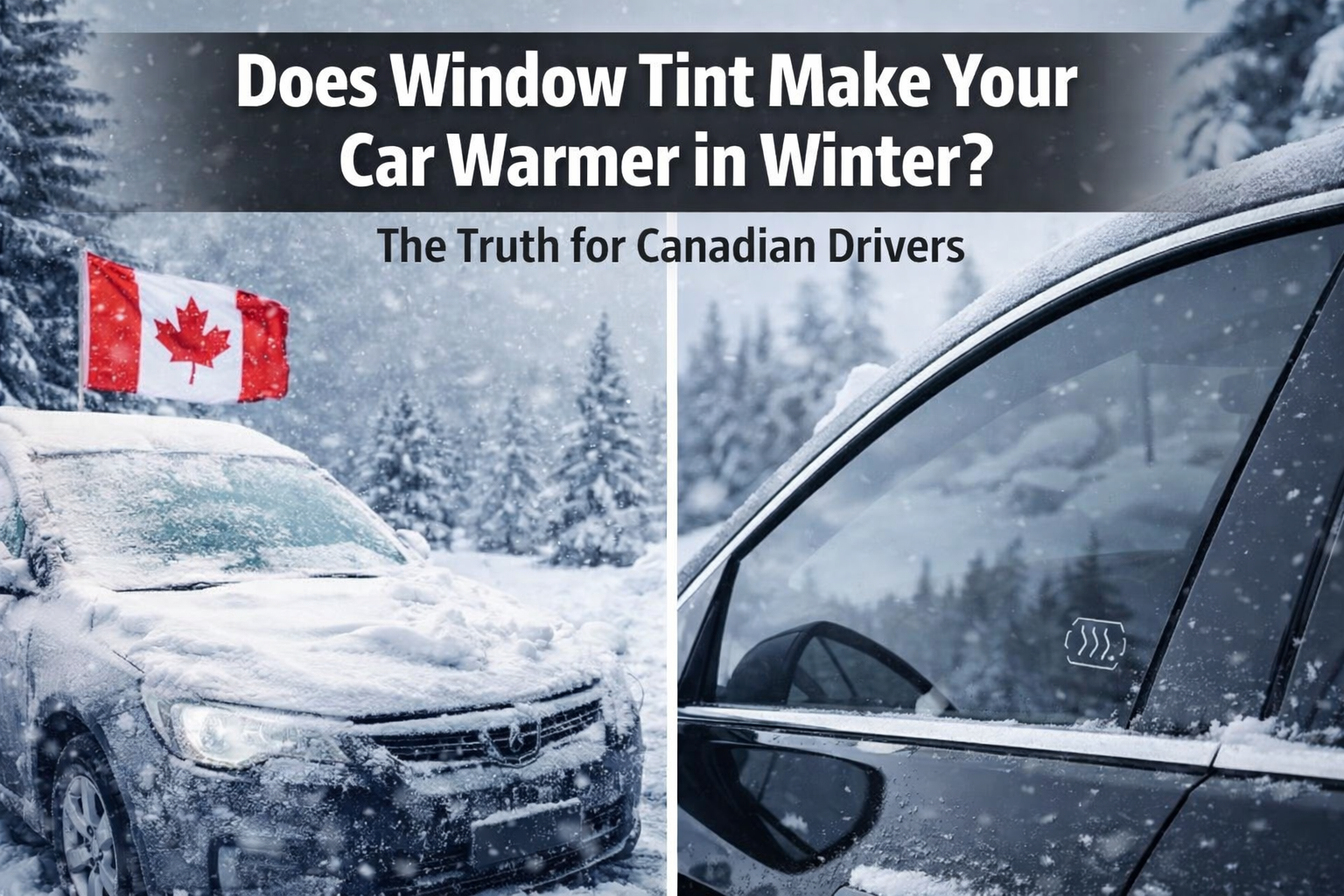
Does Canadian Winter Damage Window Tint?
Canadian winters don’t automatically ruin professionally installed automotive tint.
Quality window films are designed to function across the temperature ranges vehicles experience throughout the year. Once the film has fully cured, normal winter temperatures and the use of a factory rear-window defroster should not cause properly installed quality tint to fail.
Winter can, however, create some practical risks.
Ice, dirty window channels, aggressive scraping, and improper cleaning can physically damage tint. Extra care is particularly important around the edges of roll-down windows.
The period immediately after installation also matters. Tint can take longer to cure during cold weather, so you may need to wait longer before rolling the windows down or judging small moisture pockets that are still drying.
Dyed vs Carbon vs Ceramic Tint: Does the Type Matter?
Yes, but film category alone doesn’t tell you everything about quality or lifespan.
Dyed Window Tint
Dyed film is generally positioned as an economical option. Quality varies considerably between manufacturers, and inexpensive dyed films are often more susceptible to fading or colour changes over time.
Carbon Window Tint
Carbon films are a popular step up for drivers looking for good appearance and performance without moving to a premium ceramic product. Quality carbon tint can provide excellent colour stability and long-term performance.
Learn more in our carbon window tint guide.
Ceramic Window Tint
Ceramic tint is generally the premium option for drivers prioritizing heat rejection and optical clarity. Its construction allows high-performing ceramic films to reject significant solar energy without relying on a dark shade alone.
At It’s aWrap™, STEK is one of our preferred window-film options for drivers looking for premium performance and clarity.
For a closer comparison, see our ceramic vs carbon window tint guide.
Does Darker Tint Last Longer?
Not necessarily.
The darkness of a tint is measured by its visible light transmission (VLT), but a darker shade doesn’t automatically mean the film is higher quality or will last longer.
A premium lighter film can outperform a cheap dark film in durability, UV rejection, heat rejection, and colour stability.
Choose your tint percentage based on your desired appearance, visibility, performance, and Ontario’s applicable tint requirements—not because you expect a darker film to last longer.
How to Make Window Tint Last Longer
A few simple habits can help protect your tint over the long term:
- Follow the installer’s curing instructions before rolling down newly tinted windows
- Use tint-safe glass cleaner rather than harsh or abrasive products
- Clean with a soft microfibre cloth
- Avoid scraping the inside of tinted glass
- Be careful around film edges when cleaning
- Keep window channels reasonably clean to reduce scratching on roll-down windows
For more maintenance advice, read our do’s and don’ts for tinted windows.
How Do You Know When Window Tint Needs Replacing?
Age alone doesn’t determine when tint needs replacement. If an older film still looks clear, remains securely bonded to the glass, and performs properly, there may be no reason to replace it simply because it has reached a certain number of years.
Instead, watch for signs of actual film failure:
- Bubbling between the film and glass
- Peeling or lifting edges
- Purple or noticeable colour changes
- Haze or reduced optical clarity
- Deep scratches or physical damage
- Adhesive separation
If you’re seeing these problems, read our guide to signs your window tint needs replacement.
Is Premium Window Tint Worth It in Ontario?
For drivers planning to keep their vehicle for several years, investing in a quality film usually makes more sense than choosing tint solely on price.
Premium film can provide better heat rejection, optical clarity, colour stability, and overall performance while also being backed by stronger manufacturer warranties.
That’s particularly valuable for vehicles that spend significant time outdoors or are driven daily throughout Southern Ontario.
Final Thoughts
So, how long does window tint last in Canadian weather? There isn’t a universal expiration date.
Quality automotive tint can perform well for many years, even through Ontario summers and winters. Film quality, professional installation, solar exposure, vehicle storage, and proper maintenance ultimately matter more than the Canadian climate alone.
If your existing tint is bubbling, peeling, fading, or becoming difficult to see through, it may be time for replacement. If you’re installing new tint, choosing a quality carbon or ceramic film from the beginning can provide better long-term performance.
Explore our window tinting services in Mississauga and Oakville to compare available options or request a quote.