At It’s aWrap™, we’ve been wrapping and protecting vehicles in Mississauga since 2010. After thousands of installations and more than 700 five-star reviews, we’ve learned that the best results usually come from getting a few important decisions right before installation even begins.
Here are some of the practical things we recommend considering before investing in a vehicle wrap or PPF in Mississauga and the GTA.
1. Start With the Right Material for the Job
Film quality matters, but there isn’t one material that’s automatically best for every vehicle or every application.
For colour-change wraps, we work with established manufacturers such as 3M, Avery Dennison, and KPMF. For Paint Protection Film, STEK and 3M are among our preferred options, with different films available depending on the finish and protection the customer wants.
What matters is using a proven automotive film that’s appropriate for the application rather than choosing an unknown product simply because it lowers the price.
We’ve seen inexpensive films look acceptable immediately after installation but become much less appealing once they’re exposed to summer heat, winter temperatures, road salt, washing, and normal daily use.
If you’re comparing PPF specifically, our guide to the top Paint Protection Film brands explains what separates the major options.
2. Preparation Is Just as Important as the Film
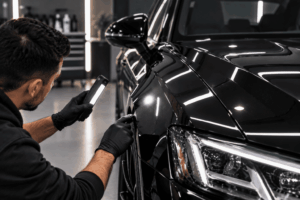
A premium film installed over a poorly prepared vehicle will not produce a premium result.
Before installation, the surface needs to be thoroughly cleaned and inspected. Depending on the vehicle and service, preparation can include:
- Removing dirt and road contamination
- Cleaning waxes, sealants, oils, and residue from the surface
- Decontaminating the paint when necessary
- Cleaning around edges, badges, trim, and other installation areas
- Inspecting the paint for chips, scratches, repairs, or failing clear coat
- Correcting paint defects when appropriate before PPF installation
This becomes especially important with clear PPF because you’re protecting the paint you already have. Film can provide an impressive gloss and extremely clear finish, but it doesn’t magically repair every defect underneath it.
Used vehicles therefore sometimes require more preparation than new ones. That doesn’t mean they aren’t good candidates for PPF—it simply means the condition of the paint should be evaluated first.
3. Installation Environment Matters
Wrap and PPF installation should be performed indoors in a clean, controlled environment.
Dust, wind, temperature changes, and outdoor contamination make precision film installation considerably more difficult. This is particularly important with clear PPF, where contamination underneath the film can be much more noticeable.
At our Mississauga shop, installations are completed indoors where our installers can properly clean, position, stretch, align, and finish the material.
The shop itself won’t make an inexperienced installer good—but the right environment gives an experienced installer the conditions required to do the job properly.
4. Don’t Choose PPF Coverage Based on Price Alone
More coverage isn’t automatically the right answer for every driver.
The better question is: where does your vehicle actually need protection?
For someone commuting regularly on the 401, 403 or QEW, the front bumper, hood, fenders, and mirrors experience considerably more road debris than many other areas of the vehicle. A full-front PPF package can therefore provide excellent protection without the expense of wrapping every painted panel.
Full-body PPF makes more sense for owners who want substantially more complete protection—particularly on higher-value, enthusiast, luxury, exotic, or long-term ownership vehicles.
Other drivers may benefit from targeted coverage on areas such as:
- Rocker panels
- Rear wheel impact areas
- Door edges
- Door cups
- Rear bumper loading areas
- Gloss-black exterior trim
A good installer should help you choose coverage based on how you use the vehicle rather than automatically pushing the most expensive package.
5. Understand the Difference Between a Car Wrap and PPF
This is one of the most important distinctions to understand before requesting a quote.
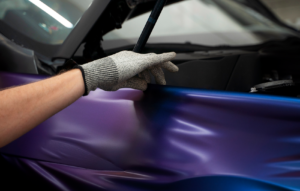
Vinyl wrap is primarily a customization product. It allows you to change the colour or finish of the vehicle without permanently repainting it.
Paint Protection Film is primarily a protection product. Its thicker urethane construction is designed to absorb the kinds of minor impacts and abrasions encountered during normal driving.
Traditional clear PPF preserves the existing appearance of the vehicle, while coloured PPF increasingly allows customers to combine a colour transformation with the physical protection associated with PPF.
If your priority is appearance, a vinyl colour change may make more sense. If your priority is preventing stone chips and protecting factory paint, PPF is generally the appropriate product. If you want both, coloured PPF is worth considering.
6. Don’t Judge an Installer Only by the Lowest Quote
Price matters. But with wraps and PPF, the cheapest quote can become expensive if the installation has to be removed and redone.
When comparing shops, look beyond the number on the estimate and ask:
- What exact film is being installed?
- How long has the shop been installing wraps or PPF?
- Can you see examples of completed work?
- How are edges and complex areas handled?
- What preparation is included?
- What warranty applies to the film?
- What happens if an installation issue develops?
Look closely at the portfolio as well. Bumpers, mirrors, corners, recessed areas, panel transitions, and edges usually tell you much more about installation quality than a photo taken several metres away.
7. New Vehicles Should Be Protected Before the Damage Happens
One pattern we’ve seen repeatedly is customers waiting until after the first few stone chips appear before deciding they want PPF.
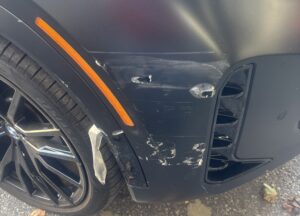
PPF can protect against future damage, but it cannot reverse a chip that’s already gone through the paint.
If you’ve purchased a new vehicle and already know you want to keep the paint in excellent condition, installing PPF early makes sense—particularly if you have a long highway commute or expect to keep the vehicle for several years.
This applies to Teslas, BMWs, Mercedes-Benz models, Porsches, trucks, daily commuters, and practically any vehicle whose paint you want to preserve. PPF isn’t exclusively a luxury-car product.
8. Tesla Owners Should Pay Particular Attention to High-Impact Areas
We protect a large number of Tesla Model 3 and Model Y vehicles at our Mississauga shop. One reason PPF is popular with Tesla owners isn’t that PPF works differently on a Tesla—it’s that many of these vehicles accumulate significant highway mileage and owners want to preserve the clean, painted front end.
The front bumper, hood, fenders, and mirrors are the obvious starting points. Rocker panels and areas around the rear wheels can also experience significant road contamination and debris depending on the model and driving conditions.
Rather than automatically recommending full-body protection, we look at the owner’s mileage, driving environment, ownership plans, and budget before recommending coverage.
Our Tesla protection packages combine some of the services commonly requested by Model 3 and Model Y owners.
9. Give a New Wrap or PPF Time to Settle
When you pick up a freshly wrapped or PPF-protected vehicle, the installation isn’t necessarily at its final appearance immediately.
Depending on the product and installation method, small moisture pockets or slight visual variations can be part of the normal settling process, particularly with PPF. Your installer should explain what is normal and when something should be inspected.
Avoid aggressively washing the vehicle immediately after installation. Follow the specific aftercare instructions provided for the film installed on your vehicle.
If an edge appears to be lifting or something doesn’t look right, don’t start cutting, pressing, or applying random chemicals yourself. Bring it back to the installer for inspection.
10. Aftercare Can Make a Major Difference
Once the vehicle leaves the shop, maintenance becomes part of protecting your investment.
For both wraps and PPF, we generally recommend:
- Regular hand washing
- Using automotive-safe, pH-neutral cleaning products
- Removing bird droppings, insects, tree sap, and other contamination promptly
- Avoiding aggressive brushes and abrasive products
- Being careful with pressure washers around film edges
- Following the film manufacturer’s maintenance recommendations
Ontario winters make this especially important. Road salt, slush, grime, and de-icing chemicals shouldn’t be allowed to sit on the vehicle indefinitely.
For owners who want easier maintenance, a compatible ceramic coating can also be applied over many wrap and PPF products.
11. Don’t Ignore Small Problems
A small lifted edge is much easier to address than an area that has collected months of dirt underneath it.
The same principle applies to damaged PPF. If a piece of film takes a significant impact, inspect it. One of the advantages of PPF is that a damaged section can often be removed and replaced rather than repairing the painted panel underneath—assuming the film successfully absorbed the damage.
We’ve removed PPF from vehicles after impacts where the film itself was visibly scratched or damaged while the paint underneath remained in excellent condition. That’s exactly what the product is there to do.
12. Ceramic Coating and PPF Do Different Jobs
Another common misconception is that ceramic coating replaces Paint Protection Film.
It doesn’t.
Ceramic coating is excellent for hydrophobic performance, easier cleaning, gloss, and resistance to environmental contamination. It does not provide the same physical barrier against stone impacts that PPF provides.
That’s why the two products can work well together. PPF provides the physical protection, while a compatible ceramic coating can make the protected surface easier to maintain.
Which combination makes sense depends on the vehicle and what you’re trying to protect it from.
13. Think About Removal Before Installation
A quality wrap or PPF isn’t intended to stay on the vehicle forever.
Eventually, the material will reach the end of its service life or you may simply want a different look. Proper removal is another reason material quality and professional installation matter.
Don’t leave severely aged or failing vinyl on a vehicle indefinitely. If the film begins showing significant deterioration, have it evaluated rather than waiting until removal becomes unnecessarily difficult.
This is especially relevant for commercial vehicles and colour-change wraps that spend most of their lives outdoors.
14. The Best Package Is the One That Matches How You Actually Use the Car
There is no universal “best” protection package.
A weekend sports car, a leased daily driver, a highway-driven Tesla, and a commercial work van have completely different priorities.
Before deciding what to install, consider:
- How long you plan to keep the vehicle
- How many kilometres you drive each year
- Whether you regularly drive on highways
- Whether the vehicle is parked indoors or outside
- Whether protection or customization is your primary goal
- How much maintenance you’re willing to perform
- Your realistic budget
Those answers are far more useful than simply asking for “the best PPF” or “the best wrap.”
What We’ve Learned After 15+ Years of Wrap and PPF Installation
The biggest lesson is surprisingly simple: the final result is never just about the film.
A premium product still needs proper preparation, skilled installation, appropriate coverage, and good aftercare. At the same time, you don’t necessarily need the most expensive product or the largest package to get a result that makes sense for your vehicle.
We’ve worked on everything from everyday commuters and work vehicles to Teslas, performance cars, luxury vehicles, and exotics. The customers who tend to be happiest long-term are the ones who understand exactly what they’re buying and choose the service around how they actually use their vehicle.
Final Thoughts
Whether you’re considering a colour-change wrap or Paint Protection Film, focus on the complete installation rather than the film name or price alone.
Choose a reputable material. Look closely at the installer’s work. Understand what is and isn’t being protected. Ask about preparation and aftercare. And choose coverage that matches your driving habits rather than automatically assuming more is better.
If you’re considering protecting your vehicle, you can explore our Paint Protection Film services in Mississauga. If customization is the priority, visit our car wrap service to see the colour-change options available.