If you’re researching Paint Protection Film, you’ll quickly discover that there are dozens of films, finishes and brands claiming to offer the best protection. But choosing the right PPF isn’t simply a matter of finding the most recognizable brand or the film with the longest list of features.
At It’s aWrap™, we’ve been installing Paint Protection Film since 2010 and have worked on vehicles throughout Mississauga, Oakville, Milton, Burlington and Toronto. One thing we’ve learned is that there isn’t a single “best” PPF for every vehicle or every owner.
The right choice depends on what you’re trying to protect, how you drive, how long you plan to keep the vehicle, the appearance you want and how much coverage makes sense for your budget.
This guide explains what we actually look at when helping customers choose Paint Protection Film—from optical clarity and self-healing performance to finish, coverage, warranty and installation quality.
Not All Paint Protection Film Is the Same
Most modern automotive PPF is designed around the same fundamental purpose: creating a sacrificial layer between your vehicle’s paint and the hazards it encounters on the road.
That includes protection against:
- Stone chips and road debris
- Light scratches and surface marks
- Bug splatter and bird droppings
- Road salt and environmental contamination
- Everyday wear on high-impact areas
However, two films designed for the same purpose can differ significantly in how they look, feel, install and age.
That’s why we don’t recommend choosing PPF based on one specification alone. A premium film should provide a combination of impact protection, clarity, a durable top coat, reliable adhesive and a finish that complements the vehicle.
What Makes a Good Paint Protection Film?
1. Optical Clarity
For clear PPF, one of the first things we evaluate is optical clarity.
The goal of a clear film is to protect the paint without noticeably changing its appearance. On a properly installed premium film, you should still be able to appreciate the depth, colour and gloss of the original paint.
This becomes especially noticeable on black and other dark-coloured vehicles, where excessive texture or distortion can be easier to see.
Customers sometimes focus heavily on protection specifications and overlook appearance. For us, both matter. If you’re covering a large portion—or all—of an expensive vehicle, the film needs to protect well and look good.
2. Self-Healing Performance
Self-healing is one of the most useful developments in modern PPF.
Premium films use a top coat designed to recover from light surface marks and fine scratches when exposed to heat. Warm weather, sunlight or controlled heat can allow minor marks in the top coat to become less visible.
But self-healing does not make PPF indestructible.
Deep scratches, significant impacts and damage that penetrates the film will not simply disappear. PPF is designed to absorb and reduce damage that otherwise would have reached the paint—not make a vehicle immune to damage.
If you’re weighing the limitations against the benefits, our guide to the disadvantages of Paint Protection Film provides a more complete look at what PPF can and cannot do.
3. Stain and Contaminant Resistance
This is particularly important for vehicles driven year-round in Ontario.
PPF can encounter road salt, dirty winter slush, insects, bird droppings, tree sap and other contaminants. A quality top coat should resist staining and make contamination easier to remove before it becomes a long-term appearance problem.
Maintenance still matters. No PPF should be treated as maintenance-free, and contaminants should not be allowed to sit indefinitely simply because the vehicle is protected.
4. Hydrophobic Properties
Many modern premium films incorporate hydrophobic surface properties that help water bead and make dirt easier to remove.
That’s useful, but we wouldn’t choose a PPF solely because it beads water impressively.
Hydrophobic behaviour is only one characteristic of the film. Impact protection, clarity, stain resistance, adhesive performance and the finished installation are more important than chasing the most dramatic water-beading demonstration.
5. Adhesive Quality
The adhesive is something customers rarely see but installers pay close attention to.
PPF has to remain securely attached through temperature changes, washing and years of normal vehicle use while still allowing an experienced installer to position and finish the material correctly.
Adhesive behaviour also becomes important around curves, edges, body lines and complex panels. This is one reason comparing PPF solely by thickness or warranty length doesn’t tell you the full story.
6. Long-Term Durability
A good PPF should maintain its protective and aesthetic qualities over years of normal use. But lifespan isn’t determined by the film alone.
It can be affected by:
- How much the vehicle is driven
- Whether it is stored indoors or outside
- Sun and weather exposure
- Ontario winter conditions
- How the vehicle is washed
- How quickly contaminants are removed
- Installation quality
We therefore treat manufacturer lifespan and warranty figures as useful information—not a guarantee that every installation will look identical after the same number of years.
Does PPF Thickness Matter?
Thickness is one of the specifications shoppers frequently compare when researching Paint Protection Film.
It matters, but thicker does not automatically mean better.
A PPF should provide enough physical protection to absorb common road impacts while maintaining clarity, flexibility and appropriate installation characteristics. Film construction, top-coat technology and adhesive quality are also important.
A thicker film with poor clarity or an inferior top coat isn’t automatically preferable to a well-engineered premium film that happens to have a different specification.
Rather than buying based on one number, compare the complete product and how it performs for your intended application.
Clear, Matte or Coloured PPF: Which Should You Choose?
PPF is no longer limited to virtually invisible clear film. Your desired appearance can now play a major role in choosing the right product.
Clear Gloss PPF
Clear gloss PPF is the traditional choice for drivers who like their factory paint and simply want to protect it.
It’s particularly suitable for new vehicles, luxury cars and owners who want protection without intentionally changing the vehicle’s appearance.
Matte or Satin PPF
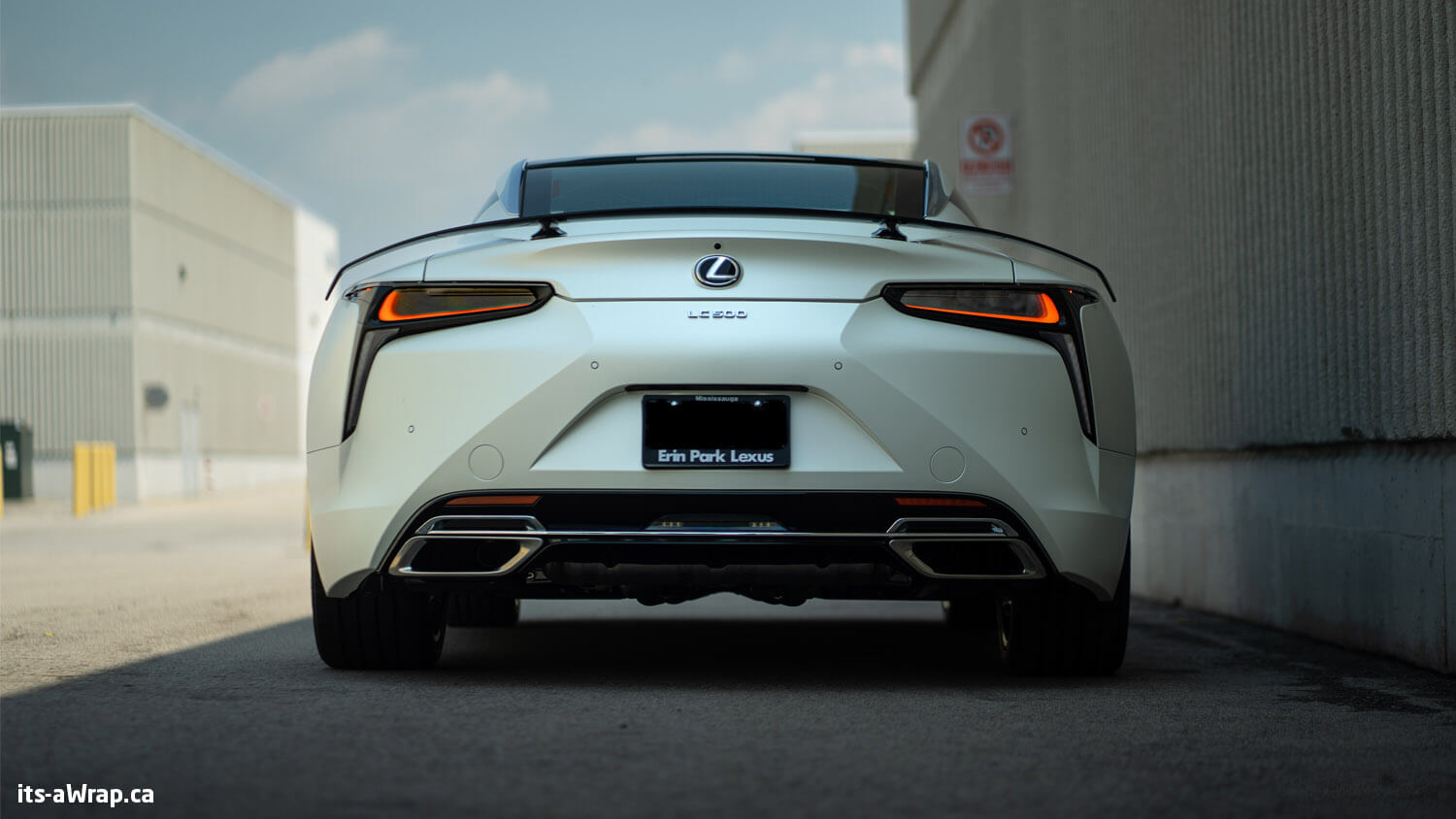
Matte and satin films can be used in two different ways. They can protect factory matte paint while preserving its appearance, or they can transform conventional gloss paint into a satin-style finish while providing physical protection.
For someone considering a visual transformation, this can make PPF an alternative to changing the appearance with conventional vinyl alone.
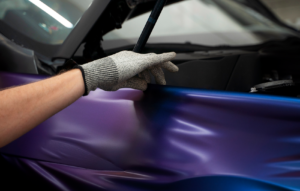
Coloured PPF
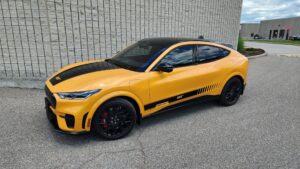
Coloured PPF combines a significant appearance change with the physical protection associated with Paint Protection Film.
It can be an attractive option for someone who wants a different colour but also prioritizes protection from stone chips and road debris.
There are important differences between coloured PPF and conventional vinyl, so we recommend understanding the purpose of each before choosing. Our guide to coloured PPF vs. vinyl wrap explains those differences in more detail.
You can also read our guide to choosing the right coloured PPF if you’re specifically considering a colour-changing protection film.
Does the PPF Brand Matter?
Yes—but brand shouldn’t be your only consideration.
Established manufacturers invest heavily in film construction, adhesives, top coats, optical clarity and product development. Choosing a reputable film also gives you a clearer understanding of exactly what is being installed on your vehicle and what manufacturer warranty may apply.
Based on the films we’ve worked with, STEK and 3M are currently our preferred options, while XPEL remains another established premium PPF manufacturer we’ve worked with previously.
However, this page isn’t intended to rank manufacturers. If that’s what you’re researching, we’ve created a separate comparison of the top 10 Paint Protection Film brands.
The more important point when choosing your film is to compare the specific product, not simply the logo on the box. Manufacturers can offer multiple product lines designed for different finishes, applications and price points.
Installation Quality Matters as Much as the Film
Choosing premium Paint Protection Film is important—but choosing the right installer is just as important.
Even an excellent film can produce disappointing results if the vehicle isn’t properly prepared or the material isn’t installed correctly.
Professional PPF installation requires several stages:
- Thorough cleaning and surface preparation
- Paint decontamination where required
- Accurate positioning and alignment
- Proper handling of curves and complex body panels
- Careful edge and seam finishing
- Contamination control throughout installation
- Final inspection before delivery
We’ve seen how much difference these details make. A PPF installation covers some of the most visible panels on the vehicle, so trapped contamination, poorly finished edges or incorrect film handling can affect both appearance and longevity.
When comparing quotes, don’t ask only “Which PPF brand do you use?” Ask how the vehicle is prepared, what film is being installed, what coverage is included and how the installer approaches edges and complex areas.
How Much PPF Coverage Do You Actually Need?
Choosing the right PPF also means choosing the right amount of protection.
You don’t necessarily need to cover the entire vehicle.
For many Ontario drivers, the highest priority areas are the surfaces most exposed to debris:
- Front bumper
- Hood
- Front fenders
- Mirror caps
- Other forward-facing or high-impact areas
Our guide to the best high-impact areas for PPF explains where protection tends to provide the greatest value.
A full-front package is often a practical middle ground for someone primarily concerned about highway stone chips. Full-body PPF makes more sense when the owner wants comprehensive protection, has a high-value vehicle, wants easier long-term paint preservation or is using matte or coloured PPF to change the entire appearance.
For a detailed comparison, see our guide to full-body vs. partial PPF coverage.
How Ontario Driving Conditions Affect Your PPF Choice
What works for a lightly driven vehicle in a warm climate isn’t necessarily the same protection strategy we’d recommend for a daily driver in the GTA.
Vehicles in Mississauga and surrounding areas encounter highway construction debris, loose stones, winter salt, sand, slush and repeated seasonal temperature changes.
Highway driving is particularly relevant. The front bumper, hood, fenders and mirrors repeatedly encounter debris thrown by vehicles ahead, which is why these areas are typically prioritized when a customer doesn’t want full-body coverage.
If you drive throughout the winter, proper maintenance also becomes important. Salt and contamination should be removed regularly rather than being allowed to remain on the film for extended periods.
We’ve covered these local factors further in our guide to Ontario road hazards and PPF protection.
Questions to Ask Before Choosing a PPF Installer
Before booking an installation, we recommend knowing the answers to a few practical questions:
- What exact PPF product will be installed? Don’t settle for simply being told it’s a “premium film.”
- What coverage is included? Confirm exactly which panels and areas are protected.
- What warranty applies? Understand both the manufacturer’s film warranty and any workmanship coverage offered by the installer.
- How is the vehicle prepared? Proper preparation affects both appearance and adhesion.
- How much experience does the installer have with PPF? Installation technique matters considerably.
- Can you see examples of completed vehicles? Finished work tells you more than marketing claims.
Price matters, but comparing two quotes without comparing the film, coverage and installation process can be misleading. If you’re wondering why professional PPF can represent a significant investment, read our explanation of why Paint Protection Film is expensive.
Which Paint Protection Film Is Right for You?
Rather than looking for one universal winner, start with what you actually want PPF to accomplish.
| Your Priority | What to Focus On |
|---|---|
| Protecting factory paint while preserving its appearance | Premium clear PPF with excellent optical clarity |
| Preventing front-end stone chips | High-quality film with full-front or targeted high-impact coverage |
| Changing gloss paint to a satin appearance | Matte or satin PPF |
| Changing the vehicle colour while adding protection | Coloured PPF |
| Protecting a high-value or enthusiast vehicle | Premium film, experienced installation and broader coverage |
| Keeping costs more controlled | Premium film strategically applied to high-impact areas |
This is how we approach PPF consultations at It’s aWrap™. We start with the vehicle and owner’s goals rather than automatically recommending the largest or most expensive package.
Frequently Asked Questions About Choosing PPF
What is the best type of PPF?
There isn’t one type of PPF that’s best for every vehicle. For most drivers who want to preserve the factory appearance, a premium clear self-healing film is the logical choice. Matte or satin PPF makes more sense when a different finish is desired, while coloured PPF can combine a colour change with physical paint protection.
Is more expensive PPF always better?
No. A higher price doesn’t automatically mean better film. Pricing can reflect film quality, coverage, vehicle complexity, preparation and installation labour. Compare the specific product and installation rather than price alone.
Should I choose PPF based on warranty length?
Warranty is important, but it shouldn’t be the only deciding factor. Read what the warranty actually covers and consider film quality, appearance, installer experience and manufacturer support alongside the advertised term.
Is clear or coloured PPF better?
They solve different problems. Clear PPF is ideal when you want to preserve your vehicle’s existing colour. Coloured PPF makes more sense when you want protection and a significant appearance change at the same time. Neither is automatically better.
Is full-body PPF worth it?
It can be for owners who want comprehensive paint protection, particularly on new, luxury, performance or high-value vehicles. For many daily drivers, however, protecting the front and other high-impact areas can provide much of the practical benefit at a lower cost. Our guide on whether PPF is worth it goes deeper into that decision.
Does the PPF installer really make a difference?
Absolutely. Surface preparation, contamination control, alignment, stretching, edge finishing and overall technique can all affect how PPF looks and performs. We would rather have a reputable premium film installed exceptionally well than choose a product based purely on brand recognition.
Choosing PPF for Your Vehicle in Mississauga
There isn’t a universal “best” Paint Protection Film for every driver. The right solution is the combination of film quality, finish, appropriate coverage and professional installation that matches how you use your vehicle.
At It’s aWrap™, we’ve been installing Paint Protection Film since 2010. When helping customers from Mississauga, Oakville, Milton, Burlington and Toronto choose PPF, we consider the vehicle, driving habits, desired appearance, ownership plans and areas most likely to experience damage.
If you’re ready to explore your options, learn more about our Paint Protection Film services, view completed vehicles in our portfolio, or contact It’s aWrap™ to discuss the right protection for your vehicle.