
Ceramic coating is one of those automotive products that is easy to oversell. Depending on where you hear about it, it can sound like permanent wax, invisible armour or a way to make paint almost impossible to damage. None of those descriptions really explains what a coating is good at.
A professional ceramic coating is a liquid surface treatment applied over properly prepared paint and allowed to cure into a durable protective layer. Its strengths are chemical resistance, water repellency, surface slickness and easier maintenance. A good coating can also enhance the gloss and depth of the finish underneath it, but it does not add the kind of physical thickness needed to stop stone chips or significant scratches.
That distinction is important. Ceramic coating can be an excellent form of protection when the goal is to preserve a well-prepared finish and make the vehicle easier to live with, but it works best when the owner understands what it is actually designed to do.
What Changes Once the Paint Is Coated?
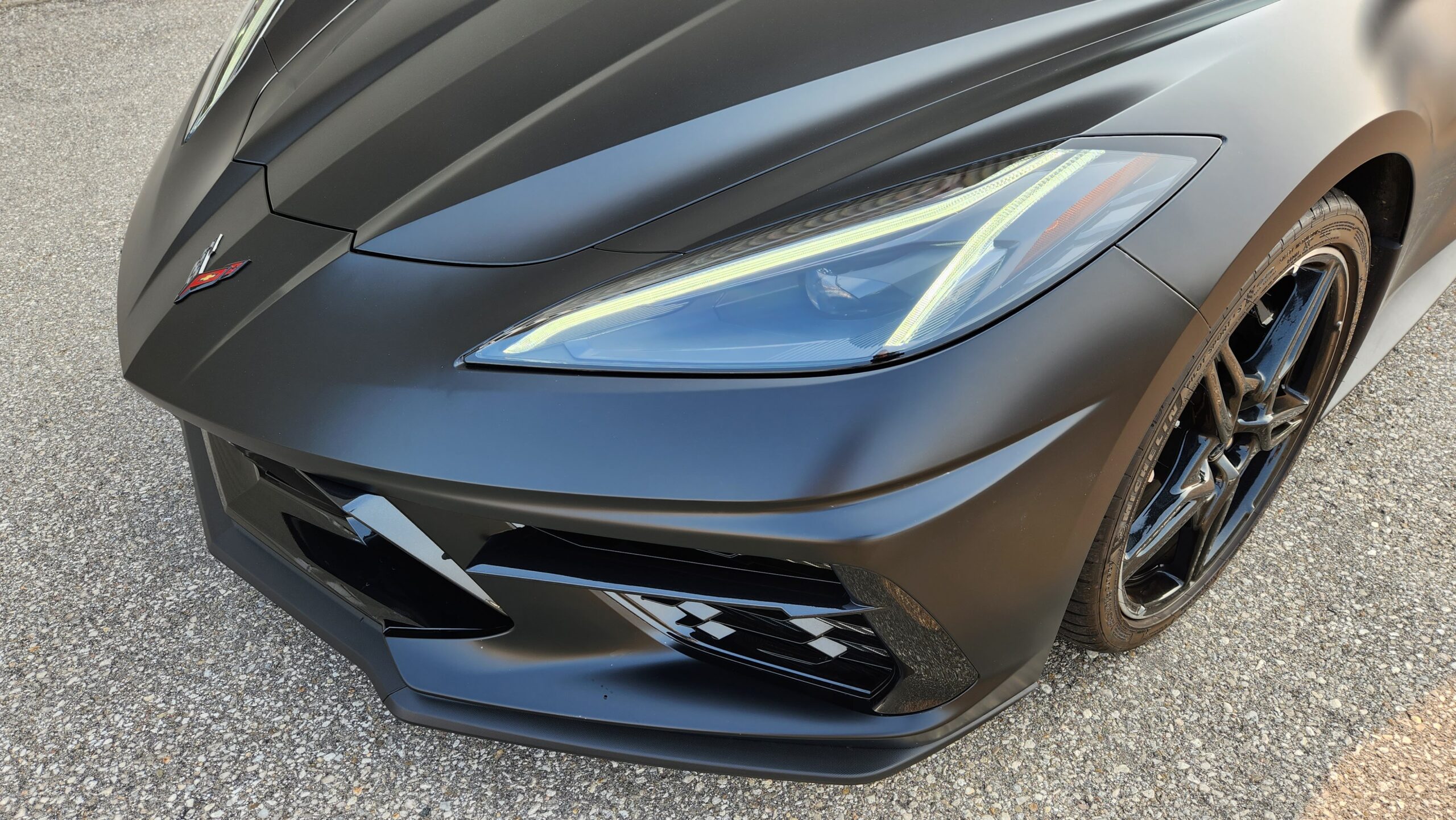
The clear coat on a vehicle may look perfectly smooth, but the surface still holds road film, oils and environmental contamination. Ceramic coating changes the way that surface interacts with water and contaminants. Once properly cured, the finish becomes noticeably slicker and more hydrophobic, so water tends to bead rather than spread broadly across the panel.
That behaviour is one reason coated vehicles are generally easier to wash. Dirt still reaches the car, bugs still hit the front bumper and Ontario winters still cover lower panels in salt and road grime, but those contaminants are interacting with the coating rather than directly with untreated clear coat. In practice, less stubborn contamination usually means less aggressive cleaning is required to bring the vehicle back to a clean finish.
The coating also provides additional resistance to chemicals and environmental exposure. This is particularly useful on a daily-driven vehicle that sees winter salt, bug residue, bird droppings, tree sap and a wide range of cleaning products throughout the year. It does not make those contaminants harmless, but it gives the paint an additional sacrificial surface and makes proper maintenance more forgiving.
At It’s aWrap™, our current ceramic system uses STEK Final Coat. STEK describes it as a CNT-infused coating designed around strong water repellency, chemical resistance, slickness and gloss enhancement. Those characteristics are a much better way to understand ceramic coating than thinking of it as a thick shell over the paint.
The Real Benefit Shows Up in Everyday Maintenance
The dramatic part of a ceramic coating installation is usually the gloss under shop lighting. The useful part happens afterward.
A vehicle that is regularly driven will never stay perfectly clean. The front end collects insects, horizontal panels collect dust and fallout, and winter driving leaves a film of salt and dirty moisture across the body. Ceramic coating does not prevent any of that from reaching the car, but it can make those contaminants easier to remove before they have a chance to become heavily bonded to the finish.
This matters because safe paint care is largely about avoiding unnecessary friction. The harder you have to scrub or repeatedly work a contaminated surface, the greater the opportunity to introduce wash marks. A slick, properly maintained coating makes routine cleaning easier, which in turn makes it easier to use a gentler wash process.
Gloss is part of the appeal as well. A coating can add clarity, slickness and depth to paint that has been prepared properly. Dark colours tend to make that effect especially noticeable, but the coating cannot manufacture a perfect finish underneath itself. The condition of the paint before installation still determines how good the finished vehicle can look.
Preparation Matters More Than Most Product Comparisons Suggest
There is a tendency to compare ceramic coatings almost entirely by brand name, advertised lifespan or chemistry. In the shop, the condition of the paint and the quality of the preparation often matter just as much.
Before a coating is applied, the vehicle needs to be properly washed and decontaminated. The paint then needs to be inspected rather than automatically polished according to a fixed recipe. A brand-new car can arrive with light wash marks, handling defects or minor swirls, while another new vehicle may have very little that needs correction. Older paint can range from extremely well maintained to heavily marked.
At It’s aWrap™, our ceramic packages include a one-stage correction process, but the work is still based on the condition of the vehicle. We do not believe in removing clear coat unnecessarily just because a car is being coated. If correction is needed, the goal is to improve the finish before protection goes on. If the paint is already in excellent condition, preparation should reflect that.
This is one of the reasons professional coating work involves more than applying liquid to a panel. Surface preparation, product application, levelling and curing all affect the result. Before pickup, the finish should also be inspected carefully under proper lighting so high spots, residue or other application issues are dealt with before the vehicle leaves.
For owners deciding whether this level of preparation is worth paying for, our DIY vs professional ceramic coating guide goes deeper into where the processes differ.
Ceramic Coating Has Limits — and They Matter
Ceramic coating protects the surface from contamination and makes the finish easier to maintain, but it is not designed to absorb physical impacts. A stone hitting the hood at highway speed carries far more energy than a thin coating layer can manage. If stone-chip protection is the priority, Paint Protection Film is the product designed for that job.
The same applies to scratches. Ceramic coating is not scratch-proof. The slicker surface can support safer washing and reduce how much effort is needed to clean the car, but a branch, key, dirty brush or other abrasive contact can still mark the finish. Hardness claims are often presented without enough context and can leave owners expecting a level of impact or abrasion protection that the product was never designed to provide.
It is not a rustproofing treatment either. A ceramic coating can help protect the painted exterior surface from environmental contamination, but it does not reach the inside of body panels, protect the underbody or repair exposed metal that has already begun to corrode.
And despite the strong water beading, coated vehicles can still develop water spots. Hydrophobicity changes the way water behaves on the surface; it does not remove calcium, magnesium or other dissolved minerals from the water. If mineral-rich droplets are allowed to evaporate on the paint, residue can remain behind.
Understanding these limitations does not make ceramic coating less useful. It simply puts the product in the correct role.
Wax, Ceramic Coating and PPF Are Not Versions of the Same Product
Wax, ceramic coating and PPF are often presented as a simple good-better-best progression, but that is not really how they work.
Wax and paint sealants are surface treatments primarily used for gloss, water behaviour and short-term protection. They can work very well, particularly for owners who enjoy maintaining their vehicles frequently, but they generally need to be renewed much more often. Ceramic coating targets many of the same surface-care goals with greater durability, stronger chemical resistance and easier ongoing maintenance. Our ceramic coating vs wax guide covers that decision in more detail.
Paint Protection Film solves a different problem. PPF is a comparatively thick urethane film intended to absorb impacts and abrasion before they reach the paint. That is why it is common to combine PPF and ceramic coating rather than choosing between them. The film handles the physical protection while the coating can improve surface slickness, water behaviour and maintenance on the protected panels.
The right protection therefore depends on what the owner is trying to prevent. Someone mainly concerned about washing, environmental contamination and keeping the finish easier to maintain has a different need from someone regularly driving on the highway who is primarily worried about stone chips.
A Ceramic-Coated Car Still Needs to Be Looked After
Calling ceramic coating “maintenance-free” creates another unrealistic expectation. A coating can reduce maintenance, but it does not eliminate it.
Over time, road film, minerals, iron particles and other contamination can build up on top of the coating. When that happens, the surface may feel less slick or stop beading as aggressively even though the coating itself is still present underneath. Proper washing and periodic decontamination are part of keeping the protection working as intended.
At It’s aWrap™, we recommend yearly professional maintenance for our longer-term ceramic packages. That gives us an opportunity to clean and assess the protected surface rather than waiting until contamination has accumulated for several years. Customers also do not need to wait for that annual interval if they notice persistent spotting, unusual contamination or a change in how the coating is behaving; the vehicle can be inspected earlier when needed.
Maintenance is also one reason advertised durability should be kept in perspective. How a coating performs over time depends on the product, preparation, environment, kilometres driven, storage and care. A vehicle that is hand washed and maintained regularly is living a very different life from one that spends every season outside and only sees an automatic wash occasionally.
Who Ceramic Coating Makes the Most Sense For
Ceramic coating is a strong fit for an owner who wants to preserve a good finish, make washing easier and add meaningful resistance against the contamination a vehicle encounters in normal use. The benefit is especially noticeable when the car is going to be kept for several years and maintained consistently rather than coated once and forgotten about.
It is not the right answer to every paint-protection problem. If the main concern is stone chips, PPF deserves priority. If the paint is already heavily damaged, correcting the finish may matter more than coating it immediately. And if the owner does not intend to maintain the vehicle at all, even a premium coating will not perform at its best indefinitely.
A proper ceramic coating service therefore starts with the vehicle rather than the bottle. The paint should be inspected, the preparation should match its condition and the owner should understand what the protection will—and will not—do before the work begins.
To see how we approach that process, visit our ceramic coating service in Mississauga and Oakville.